

Choosing exterior cladding changes façade appearance, weather resistance, maintenance workload, and long-term ownership cost. Composite cladding and timber cladding both work as ventilated rainscreen systems, yet material structure drives different moisture behaviour, movement, refinishing options, and ageing patterns.
Walls and Floors supplies composite cladding systems and interior wood wall panels. The guide below explains performance differences across durability, maintenance, lifespan, sustainability, coastal suitability, fire classification, aesthetics, installation, property value, and regulations.
Table of Contents
What Is the Main Difference Between Timber and Composite Cladding?
Timber cladding uses solid natural wood boards, while composite cladding uses engineered wood–polymer boards that reduce routine maintenance by combining wood fibres with polymer binders and stabilising performance against wet-weather exposure compared with many untreated or poorly maintained timber façades.
Material composition determines movement behaviour, moisture risk profile, maintenance cycle, and long-term façade performance in temperate maritime climates.
How Is Timber Cladding Constructed?
Timber cladding is constructed from solid wood boards fixed to a timber batten framework over a structural wall, forming a ventilated rainscreen system that manages moisture, supports airflow, and protects the building envelope from direct weather exposure.
Construction begins with the preparation of the structural substrate, which may be masonry, blockwork, or timber frame. A breathable membrane is typically installed to improve moisture management. Treated timber battens are then fixed vertically or horizontally depending on board orientation. Batten spacing commonly ranges between 400–600mm centres to provide consistent structural support.
A ventilation cavity of approximately 25–38mm is maintained between the cladding boards and the substrate. This cavity allows drainage and airflow, reducing condensation risk and improving durability. Timber boards are fixed using stainless steel screws or concealed fixing systems to prevent corrosion staining.
Board profiles such as tongue-and-groove, shiplap, feather edge, or square edge determine the visual finish and influence water-shedding performance. Correct ground clearance, typically a minimum of 150mm above finished ground level, reduces moisture exposure and prolongs service life.
Proper construction ensures structural stability, effective ventilation, and long-term façade performance in temperate maritime conditions.
How Is Composite Cladding Constructed?
Composite cladding is constructed from engineered boards made of recycled wood fibres and polymer resins, fixed to a batten framework over a structural wall to create a ventilated façade system that manages moisture, allows thermal movement, and protects the building envelope.
Manufacturing begins with blending wood fibres and thermoplastic polymers such as high-density polyethylene or polypropylene. The mixture is extruded into uniform boards. Many systems use co-extrusion technology, where a durable outer cap is bonded to the core to improve stain resistance, colour stability, and surface durability.
Installation follows rainscreen principles. A breathable membrane is applied to the structural substrate where required. Treated timber or metal battens are fixed to create a consistent subframe. Batten spacing typically ranges between 300–400mm centres depending on board specification and wind load requirements.
A ventilation cavity is maintained behind the boards to allow airflow and drainage. Composite boards are secured using concealed clips or colour-matched screws designed to accommodate thermal expansion. Expansion gaps are calculated according to manufacturer guidance to allow movement in fluctuating temperatures.
Correct construction ensures structural support, controlled expansion, adequate ventilation, and long-term façade stability in variable weather conditions.
What Are the Key Material Differences Between Timber Cladding and Composite Cladding?
Timber responds mainly to moisture change, while composite responds mainly to temperature change, so timber risk concentrates around water exposure and coating failure, while composite risk concentrates around thermal expansion allowances and limited repairability for deep scratches.
Key technical differences:
- Timber moisture absorption rises significantly without coatings and correct detailing in wet exposure.
- Composite water absorption is usually low, yet published values depend on the test method and the specific board construction.
- Timber density varies widely by species (often quoted around 350–750 kg/m³).
- Composite boards are typically denser than softwoods; published density depends on formulation and whether boards are hollow or solid core.
- Timber can be sanded and refinished after scratches and weathering.
- Composite cannot be structurally refinished; damaged boards usually require replacement.
The Building Research Establishment, 2020 durability guidance highlights moisture management as the primary performance driver for timber façades.

Does Timber Cladding Require More Maintenance Than Composite Cladding?
Timber cladding needs planned inspections and recoating to control UV and moisture degradation, while composite cladding normally needs periodic washing because factory colour and moisture resistance reduce the need for sealing cycles.
Timber maintenance drivers:
- UV degradation causes surface greying and fibre breakdown.
- Surface greying often starts within 6–12 months without coatings.
- Oils, stains, or paints require repeat application, commonly framed around 3–5 years depending on exposure and product system.
- Surface checking risk rises with wet–dry cycling.
Composite maintenance drivers:
- No sealing or repainting cycle in most systems.
- Occasional cleaning with water and mild detergent removes grime and algae film.
- Routine checks focus on clips, trims, and expansion joints rather than coatings.
Which Lasts Longer: Timber Cladding or Composite Cladding?
Timber cladding typically lasts between 15–60 years depending on species, exposure conditions, and maintenance regime, whereas composite cladding generally delivers a 25–35 year service life with lower ongoing maintenance requirements when installed in accordance with manufacturer specifications.
Softwood species such as treated Scandinavian Redwood commonly achieve 15–25 years in above-ground applications. Naturally durable hardwoods such as Western Red Cedar or modified timbers such as Accoya may exceed 40 years when ventilation and ground clearance standards are maintained. Lifespan performance depends heavily on moisture control and regular surface protection.
Composite cladding resists rot, insect attack, and fungal decay due to polymer encapsulation of wood fibres. Reduced water absorption limits structural degradation. Thermal expansion must be correctly accommodated during installation to prevent distortion.
Service life in both systems depends on correct batten spacing, adequate ventilation cavity depth, minimum 150mm ground clearance, and consistent inspection over time. Proper installation and maintenance remain decisive performance factors.
Is Timber Cladding More Sustainable Than Composite Cladding?
Timber cladding generally offers lower embodied carbon and acts as a long-term carbon store, whereas composite cladding incorporates recycled material content but relies on polymer binders that increase manufacturing energy demand.
Timber is a renewable construction material sourced from managed forests. During growth, trees absorb and store atmospheric carbon. Solid wood products retain that stored carbon throughout their service life. Sustainably sourced timber certified under FSC or PEFC schemes supports responsible forestry management and regeneration cycles.
Composite cladding commonly contains 50–95% recycled wood fibre combined with thermoplastic polymers such as HDPE or polypropylene. Recycled content reduces landfill diversion. Polymer production remains energy-intensive compared with untreated timber processing.
Longevity also influences sustainability. Composite systems often require fewer surface treatments and repainting cycles over 25–35 years. Timber requires periodic refinishing, which increases maintenance-related material use.
Overall sustainability depends on sourcing transparency, product lifespan, maintenance frequency, and end-of-life disposal considerations.
Which Performs Better in Wet Conditions: Timber Cladding or Composite Cladding?
Composite cladding generally performs more consistently in wet and coastal environments due to low water absorption rates and resistance to rot, whereas timber cladding requires careful species selection, protective detailing, and regular maintenance to achieve comparable durability.
Coastal properties experience wind-driven rain, elevated humidity, and salt-laden air. Composite boards typically absorb less than 1% water by weight, which reduces swelling and limits fungal decay risk. Polymer encapsulation protects internal fibres from sustained moisture exposure.
Timber is hygroscopic and responds to fluctuating moisture levels. Untreated softwood can absorb significantly higher moisture content, leading to dimensional movement and potential surface checking. Naturally durable hardwoods and modified timbers perform better in exposed conditions but still require correct ventilation and protective finishes.
Performance in high-rainfall regions depends on installation quality. A ventilated cavity, minimum 150mm ground clearance, corrosion-resistant fixings, and unobstructed drainage channels are essential for both systems.
In consistently damp or coastal settings, composite cladding offers lower maintenance demands and more predictable long-term stability.
Is Timber Cladding or Composite Cladding More Fire Resistant?
Fire performance varies by product specification, but untreated timber cladding typically achieves Euroclass D or E under BS EN 13501-1, while certain composite systems can achieve improved classifications when manufactured with fire-retardant additives and certified through independent testing.
Timber is a combustible material. Surface spread of flame depends on density, thickness, and treatment. Fire-retardant treatments can enhance reaction-to-fire classification, although performance depends on correct application and ongoing maintenance.
Composite cladding contains polymer binders, which are also combustible. Some manufacturers incorporate fire-retardant compounds to improve Euroclass ratings. Performance differs significantly between capped and uncapped systems and between standard and fire-rated product ranges.
Regulatory compliance is critical. Buildings above 11 metres in height in England are subject to stricter façade fire safety requirements under Approved Document B. Product selection must be supported by valid classification reports and installation guidance.
Fire performance assessment should always rely on certified test data rather than material type alone.
Timber Cladding vs Composite Cladding: Which Maintains Colour and Finish Longer?
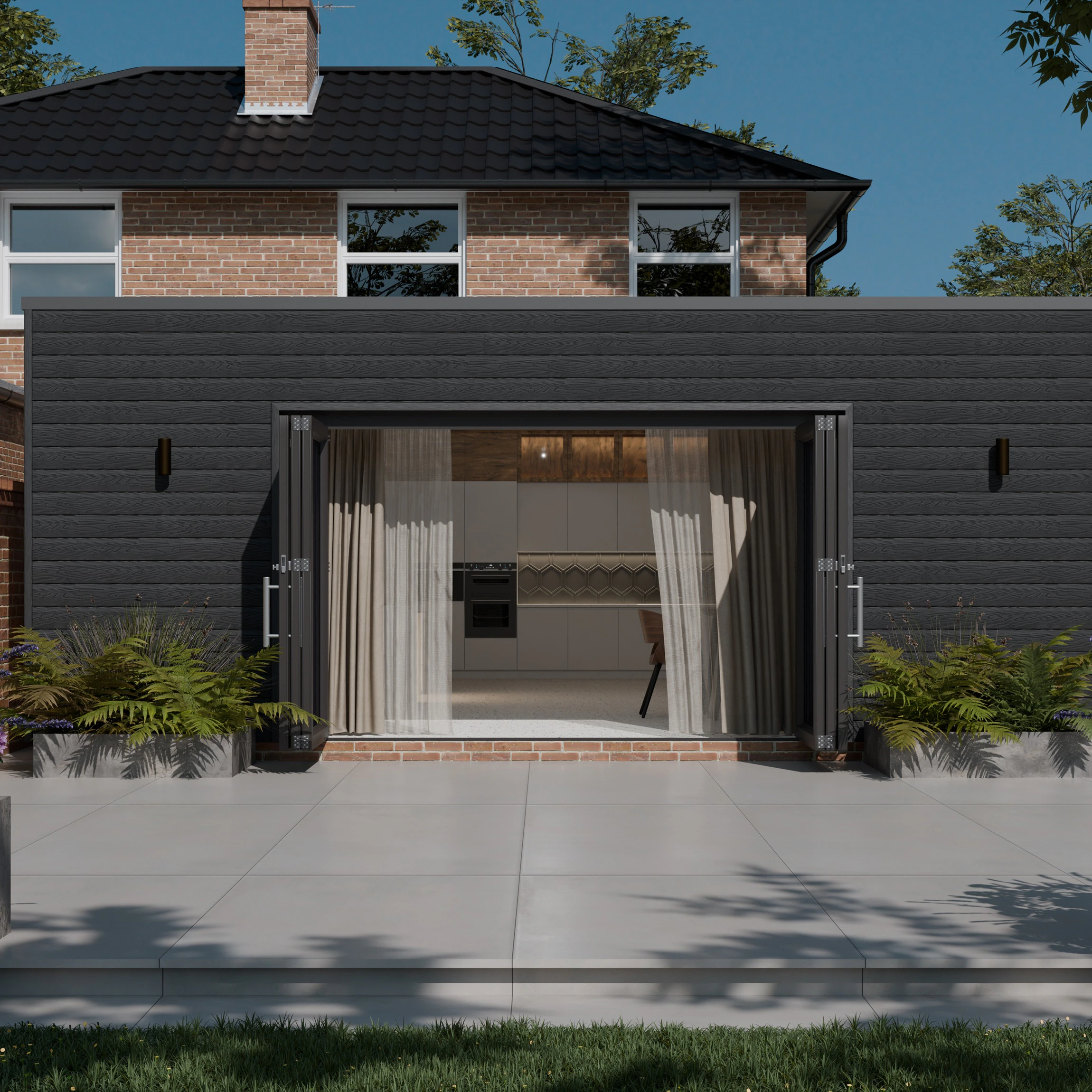
Timber cladding develops a natural silver-grey patina as ultraviolet exposure alters surface lignin, whereas composite cladding is designed to retain consistent factory pigmentation with limited tonal variation over its service life.
Timber appearance evolves gradually. Sunlight, rainfall, and air exposure soften original colour tones within 6–12 months. South-facing elevations weather more quickly than shaded façades. Oiled or stained finishes slow colour change but require reapplication to maintain uniformity.
Composite cladding is manufactured with integrated pigments and, in capped systems, a protective outer layer that resists fading and staining. Colour stability remains more uniform across elevations, particularly where maintenance schedules are followed.
Visual preference depends on architectural intent. Timber offers organic texture and evolving character. Composite delivers predictable colour consistency and a contemporary, low-variation finish over time.
Does Composite Cladding Cost More to Install Than Timber Cladding?
Composite cladding usually costs more upfront for materials, while timber cladding often costs more across ownership because recoating and access costs repeat, so total installed cost depends on façade height, detailing complexity, and the planned maintenance cycle rather than board price alone.
Installed cost breaks into three cost buckets: material supply, labour and access, then lifecycle maintenance.
Material supply costs (indicative 2026 supply-only per m²)
- Treated softwood cladding: £20–£40 per m²
- Mid-tier durable softwoods (e.g., larch): £35–£70 per m²
- Premium timber (e.g., cedar, oak, modified timber): £60–£120+ per m²
- Composite cladding: £50–£120 per m²
Pricing drivers:
- Composite rises with capped finishes, deeper embossing, and solid-core formats.
- Timber rises with durability class, section thickness, stability, and certification.
Labour, access, and complexity (indicative installation labour per m²)
- Straightforward single-storey access: £40–£60 per m²
- Two-storey or complex detailing: £55–£80+ per m²
Cost drivers that frequently dominate totals:
- Scaffolding and access equipment on upper elevations
- Substrate preparation and batten alignment
- Corner trims, starter rails, ventilation mesh, and flashing details
- Timber finishing on site, when specified
Whole-life cost over 20 years
- Timber commonly adds recoating cycles (often 3–5 years), access costs, and repair labour.
- Composite commonly adds periodic washing and occasional board replacement after impact damage.
A 20-year view often narrows the difference, especially on upper-storey façades where recoating access costs become the largest recurring expense.
When Should Composite Cladding Be Chosen?
Composite cladding should be chosen when low routine maintenance, moisture resistance, consistent colour retention, and predictable performance matter more than natural timber authenticity, especially on exposed elevations where recoating access costs dominate lifetime cost.
Composite selection fits:
- Coastal and high rainfall exposure zones
- Rental ownership and managed properties
- Time-limited households prioritising low exterior upkeep
- Contemporary façades needing uniform appearance
- Upper-storey elevations where maintenance access is expensive
Composite performance depends on installation discipline: expansion gaps, correct clips, compatible battens and membranes, and verified product certification.
When Should Timber Cladding Be Chosen?
Timber cladding should be chosen when a project prioritises natural material aesthetics, lower embodied carbon, architectural authenticity, and long-term design flexibility supported by a planned maintenance programme.
Timber suits developments where visual warmth and organic texture enhance the overall architectural concept. Barn conversions, rural extensions, garden rooms, and eco-focused builds frequently favour solid wood façades to complement surrounding landscapes.
Projects with strong sustainability objectives often select certified timber due to renewable sourcing and carbon storage benefits. Timber also allows refinishing, repainting, or colour adaptation over time, providing greater flexibility for future design changes.
Selection requires acceptance of routine inspection and periodic surface treatment. Proper ventilation detailing, minimum 150mm ground clearance, and species suitability for exposure conditions remain essential for long-term durability.
What Are the Aesthetic Differences Between Composite and Timber Cladding?
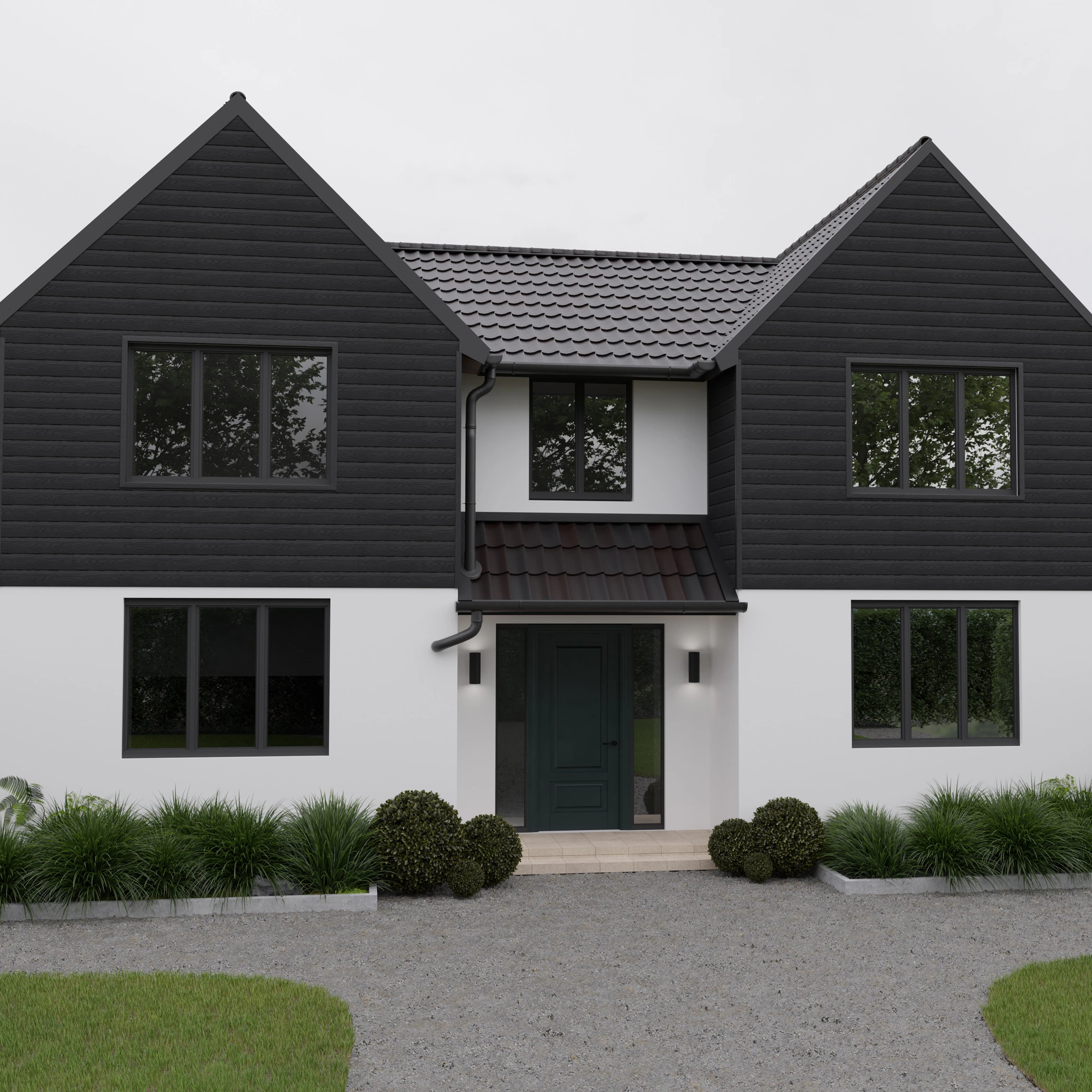
Composite cladding provides uniform colour, consistent texture, and a contemporary finish, whereas timber cladding delivers natural grain variation, tonal depth, and an evolving organic appearance shaped by environmental exposure.
Visual distinction begins with material origin. Composite cladding is manufactured using controlled pigmentation and moulded grain patterns. Surface texture is designed to replicate timber while maintaining uniformity across boards. Colour tones remain consistent from one length to another, creating a clean and predictable façade.
Timber cladding presents inherent variation. Growth rings, knots, and grain movement create individuality within each board. No two pieces are identical. This natural inconsistency produces visual depth and character that many architectural styles favour, particularly in rural or heritage settings.
Colour behaviour over time differs significantly. Timber responds to ultraviolet exposure as surface lignin breaks down. Initial tones soften within months, and untreated boards gradually develop a silver-grey patina. South-facing elevations weather more rapidly than shaded façades. Protective oils or stains can preserve original tones but require periodic reapplication.
Composite cladding is designed to retain factory pigmentation with limited tonal shift. Capped systems include a protective outer layer that resists staining and fading. With routine cleaning, colour remains stable across elevations for many years. This predictable finish supports modern residential architecture that prioritises clean lines and colour consistency.
Architectural context often guides selection. Timber complements traditional dwellings, barn conversions, and eco-focused developments seeking warmth and authenticity. Composite aligns with contemporary extensions and low-maintenance housing where visual uniformity and reduced upkeep are primary considerations.
Aesthetic preference ultimately depends on desired long-term appearance. Timber evolves visually and develops character through exposure. Composite maintains a steady, controlled finish that changes very little over time.
How Do Installation Times and Labour Costs Compare?
Timber cladding generally installs faster and at lower initial labour cost due to straightforward cutting and fixing methods, whereas composite cladding may require slightly longer installation time because of expansion gap calculations and proprietary fixing systems.
Timber boards are cut using standard carpentry tools and fixed directly to battens with stainless steel screws or concealed fixings. Moisture-related movement is predictable and familiar to most installers. Installation speed increases on simple elevations with minimal detailing.
Composite boards require more precise spacing to accommodate thermal expansion. Manufacturer-specific clips, starter profiles, and trim systems add installation stages. Expansion allowances at board ends and junctions must be calculated accurately to prevent distortion.
Labour costs in residential settings typically range between £40–£80 per m² depending on access, scaffolding requirements, and detailing complexity. Material costs for composite are usually higher per square metre than treated softwood, although long-term maintenance savings may offset part of the difference.
Overall project cost depends on façade size, elevation height, exposure conditions, and the complexity of corners, windows, and trim integration.
Which Cladding Material Adds More Value to a Property?
Value uplift depends more on design appropriateness, installation quality, and façade condition than on material category, because buyers respond to kerb appeal, perceived maintenance burden, and local architectural fit rather than composite-versus-timber labels.
Value-related factors:
Composite value signals:
- Low-maintenance exterior appeal
- Warranty narratives that support buyer confidence
- Contemporary appearance for modern developments
Timber value signals:
- Premium material perception in traditional and rural contexts
- Craft association with higher-quality renovation
- Strong kerb appeal when maintained consistently
The strongest value lever is façade quality: straight lines, correct trims, good base detailing, and consistent appearance without staining or patchy weathering.
Are There Planning Permission or Building Regulation Considerations?
Both timber and composite cladding can add value to a property, but they influence buyer perception in different ways. Timber often enhances character and sustainability appeal, while composite appeals to buyers who prioritise durability and low maintenance.
Timber cladding adds visual warmth and natural texture, which can improve kerb appeal on traditional homes, barn conversions, and rural extensions. Buyers focused on environmental considerations may also value renewable sourcing and carbon storage benefits associated with responsibly managed timber.
Composite cladding offers a consistent finish with limited maintenance requirements. Buyers seeking predictable long-term performance without repainting or refinishing often view composite as a practical advantage. Contemporary developments and suburban housing frequently align with this preference.
Property value uplift depends on architectural style, regional buyer expectations, and installation quality. A well-installed and well-maintained façade, whether timber or composite, strengthens perceived build quality and can enhance resale competitiveness in residential markets.
What Are the Pros and Cons of Composite Wall Cladding?
Composite cladding offers moisture resistance and low routine maintenance with consistent appearance, while disadvantages include higher upfront cost, limited scratch repairability, and performance variation between low-grade and premium capped systems.
Advantages
- Rot and decay resistance
- Low maintenance without painting or oiling
- Consistent appearance over time
- Dimensional stability in wet conditions
- Splinter-free surface and consistent board quality
- Broad colour options
- Recycled inputs common in many ranges, subject to product verification
Disadvantages
- Manufactured grain repetition and occasional sheen
- Higher initial cost than budget timber
- Scratches cannot be sanded out
- Damaged areas often require board replacement
- Expansion gaps and system fixings must be precise
- Quality variation between brands and price tiers
What Are the Pros and Cons of Timber Cladding?
Timber cladding offers natural character and refinishing flexibility with strong sustainability credentials when responsibly sourced, while disadvantages include planned recoating needs and moisture-related durability risk where species choice or detailing is poor.
Advantages
- Natural warmth and unique board character
- Paint and stain flexibility
- Carbon-storing renewable material when certified
- Repairable surface through sanding and refinishing
- Broad choice of species and profiles
- Strong craft and premium value perception
Disadvantages
- Recoating workload for stable appearance
- Durability depends heavily on species selection and detailing
- Rot and insect risk increases with trapped moisture
- Ongoing maintenance costs accumulate
- Potential splintering and checking in harsh exposure
Final Verdict
Composite cladding fits owners prioritising predictable low-maintenance performance, while timber cladding fits owners prioritising authentic natural appearance and refinishing flexibility with acceptance of a planned maintenance cycle, so the best choice depends on exposure, access cost, property style, and maintenance behaviour.
Choose composite cladding when:
- Minimal routine upkeep matters most
- Consistent colour retention matters across elevations
- Exposure is coastal, wet, or wind-driven
- Upper-storey access would make recoating expensive
- Contemporary uniform appearance fits the design
Choose timber cladding when:
- Natural authenticity and variation matter
- Sustainable certified wood sourcing is central to the brief
- Repainting or re-staining flexibility is important
- Property context favours natural materials
- Maintenance planning is realistic across ownership
Explore composite cladding options at Walls and Floors and request technical guidance for ventilation, trims, and fixings before ordering. Use the timber sections in this guide as a benchmark for comparing performance and maintenance expectations.


