

Fence panels in the UK typically cost between £20 and £200 per 1.83m (6ft) panel supply-only, while fully installed fencing averages £70–£150 per linear metre, depending on material type, panel height, ground conditions, access constraints, and removal of existing structures.
Fence panel costs represent the total financial outlay required to supply and install boundary fencing across a measured garden length. Total expenditure combines panel materials, structural posts, concrete foundations, fixings, labour, waste handling, and compliance considerations within residential properties across England, Scotland, and Wales.
Panel price alone does not reflect full project cost. Supply-only pricing excludes posts, concrete depth, labour time, access difficulty, disposal, and wind-load reinforcement. Installed per-metre pricing provides a more accurate budgeting framework because it captures structural and ground-related variables across the full boundary run.
Table of Contents
What factors influence fence panel pricing?
Fence panel pricing depends on material type, panel height, boundary length, post system, ground conditions, access constraints, wind exposure, and removal scope, with site complexity routinely driving 30–50% cost variation even where panel specification stays constant across comparable domestic projects.
Fence panel pricing varies primarily by material type, panel height, linear boundary length, post specification, soil condition, access constraints, wind exposure, and removal scope. Site complexity frequently influences total cost more than panel selection alone.
Material category selection
Material choice determines base purchase price and long-term maintenance profile.
- Timber remains widely used due to affordability and availability.
- Composite, aluminium, steel, and vinyl (PVC) systems increase material cost due to engineered manufacturing, corrosion resistance, and UV stabilisation processes.
Panel height and structural density
Taller panels require greater material volume, reinforced framing, and deeper embedment depth to resist wind loading.
A 6ft privacy fence requires stronger posts and greater concrete volume than a 4ft boundary fence. Increasing height from 4ft to 6ft can raise total installed cost by approximately 15–30%, depending on soil type and wind exposure.
Structural post system
Post specification directly affects durability and installation cost.
- Timber posts reduce initial purchase price but require preservative protection.
- Concrete posts increase upfront cost while extending structural lifespan and resistance to ground moisture.
Soil composition and ground conditions
Ground conditions influence excavation time and foundation requirements.
- Heavy clay slows digging and increases labour hours.
- Chalk, rubble, or compacted fill require mechanical tools.
- Poor drainage conditions require deeper foundations and greater concrete volume.
Access limitations
Narrow side passages and restricted access increase labour time because materials require manual transport rather than mechanical handling.
Wind exposure
Coastal locations and open terrain require deeper post embedment and reinforced panel systems. Increased wind load resistance increases both material specification and concrete usage.
Removal and disposal requirements
Replacement projects often involve breaking out old concrete footings, cutting embedded posts, and disposing of waste materials. Demolition work increases labour hours and disposal charges.
What are average fence panel material costs in the UK?
Average fence panel material costs range from about £20 to £200 per 1.83m (6ft) panel in the UK, with overlap timber at the lower end, closeboard and decorative timber in the mid-range, and composite or metal panels typically sitting in higher-cost tiers.
Average fence panel material costs vary by material type, structural specification, and finish quality. Timber sits at the lower-to-mid range, while composite and metal systems occupy premium tiers.
Fence panel cost comparison (supply only)
| Material Type | Typical Price Per 6ft Panel | Relative Cost Level | Maintenance Requirement | Typical Lifespan Range | Key Cost Drivers |
| Overlap Timber | £35 – £60 | Low | Regular treatment required | 8 – 15 years | Timber grade, treatment level, framing thickness |
| Closeboard Timber | £50 – £100 | Low–Mid | Periodic staining or preservative treatment | 10 – 20 years | Heavier framing, board thickness |
| Decorative Timber (Slatted/Venetian) | £80 – £120 | Mid | Treatment required | 10 – 20 years | Design complexity, finishing detail |
| Vinyl (PVC) | £70 – £160 | Mid–High | Minimal (wash only) | 15 – 25 years | UV stabilisers, profile thickness |
| Composite Fence Panel | £90 – £180 | High | Minimal (cleaning only) | 20 – 25+ years | Engineered board density, capped finish |
| Aluminium | £100 – £200 | High | Low (coating inspection) | 20 – 30+ years | Powder coating, extrusion quality |
| Steel (Galvanised/Coated) | £120 – £200+ | High | Low–Moderate | 20 – 30+ years | Steel gauge, galvanisation process |
| Chain-Link | £20 – £60 (panel equivalent) | Low | Very low | 15 – 25 years | Wire gauge, coating type |
Key observations
- Timber offers the lowest upfront entry cost but carries ongoing treatment requirements.
- Composite fence panels and metal systems require higher initial investment but reduce long-term maintenance expenditure.
- Decorative and privacy-focused designs increase pricing across material categories.
- Structural build quality and finish technology influence price more than material label alone.
How does fence height affect fence panel cost?
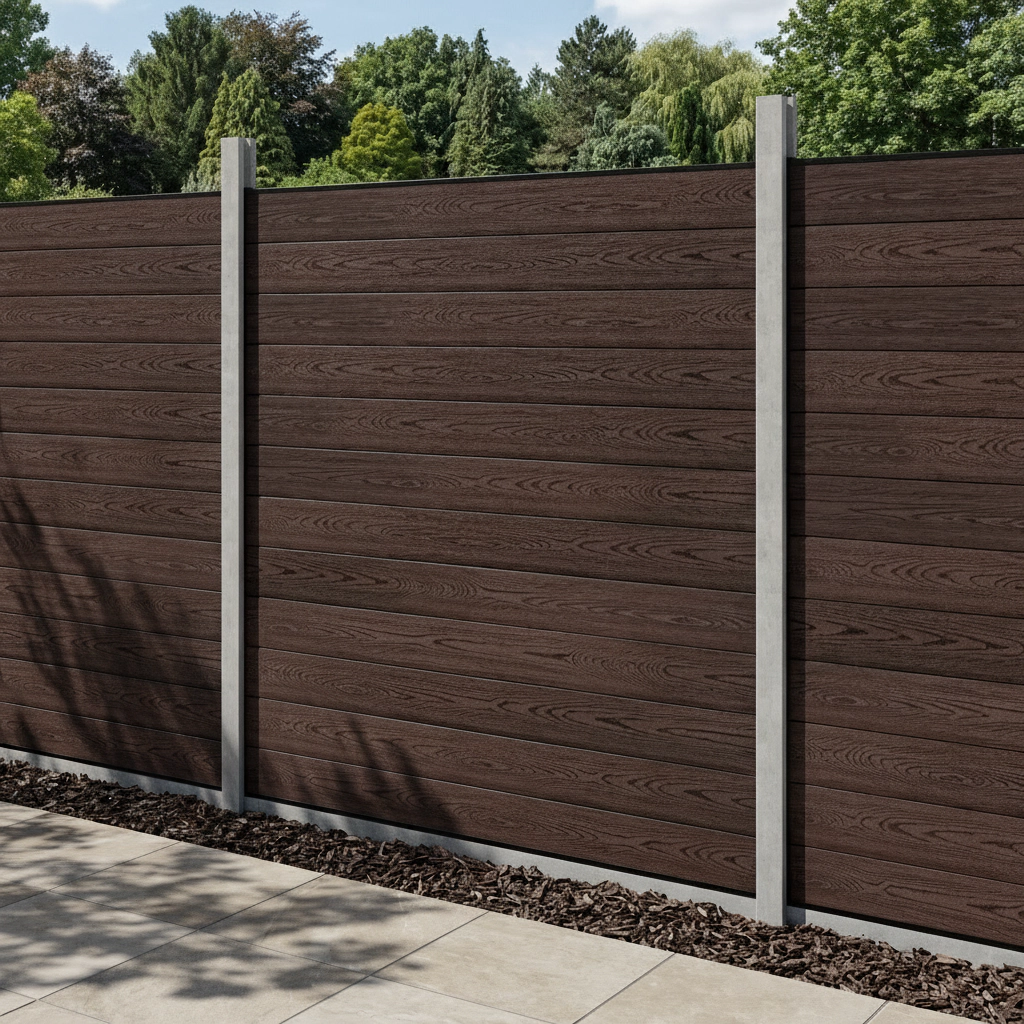
Fence height increases cost because taller panels need deeper foundations, stronger posts, more concrete, and higher wind-load resistance, with a 4ft to 6ft height increase typically raising installed cost by around 15–30% depending on soil type and exposure.
Fence height increases total cost because taller panels require deeper post foundations, more concrete, stronger posts, and additional wind-loading reinforcement.
Standard 6ft fencing typically requires 600–750mm post depth. Wind-exposed zones often require deeper embedment and increased concrete volume.
What is the difference between cost per panel and cost per metre?
Cost per panel describes the supply price for one 1.83m section, while cost per metre describes total installed cost spread across the boundary length, including posts, concrete, fixings, labour, and disposal, making per-metre pricing the most accurate budgeting metric.
A £60 panel covers 1.83 metres, equating to approximately £32.79 per metre for materials only. Installed per-metre pricing includes:
- Structural posts
- Concrete foundations
- Fixings and brackets
- Labour
- Waste removal
Installed fencing typically ranges between £70 and £150 per metre for standard timber systems.
How much does it cost to fence a garden in the UK?
Fencing a garden typically costs £700–£1,500 for 10 metres of standard 6ft timber fencing and £1,400–£3,000 for 20 metres, with total cost rising for composite fencing or metal systems, difficult excavation, removal work, gates, and restricted access.
These estimates include materials and installation. Boundary length directly scales material and labour expenditure.
How do you calculate the total fence project cost?
Total fence project cost equals panels plus posts plus concrete plus fixings plus gates plus labour plus disposal, calculated by converting boundary length into 1.83m bays, adjusting for corners and openings, and adding a 5–10% contingency for ground-condition uncertainty.
Calculation method
- Measure total boundary length precisely.
- Divide by 1.83m to estimate panel count.
- Add one post per bay plus additional posts at corners and gate openings.
- Include gravel boards where ground moisture risk exists.
- Add labour either per metre or per day rate.
- Include waste handling where replacement occurs.
- Apply contingency allowance of 5–10% for unforeseen ground conditions.
What do installed fence panel costs include?
Installed fence panel costs typically range from £70 to £150 per linear metre for standard domestic timber fencing, with totals increasing for composite or metal systems, decorative styles, restricted access, difficult ground, wind exposure reinforcement, and removal of existing structures.
Installed cost reflects the complete supply-and-fit process rather than panel price alone.
Installed pricing normally covers
- Fence panels
- Structural posts (timber or concrete)
- Concrete for post foundations
- Gravel boards where specified
- Fixings and brackets
- Labour for setting out, digging, aligning, and securing
- Basic site clean-up
How much does DIY fence installation cost?
DIY fence installation typically costs £45–£110 per metre for timber fencing because labour charges are removed, although tool hire, extended installation time, and correction work from misaligned posts or shallow foundations can reduce or eliminate expected savings.
What tools and equipment costs affect DIY fencing?
DIY fencing requires excavation tools, alignment equipment, concrete mixing capacity, cutting tools, fastening hardware, and safety gear, and equipment purchase or hire often offsets part of the labour saving, especially where auger hire or mixer hire becomes necessary.
Tool considerations include:
- Post-hole digger or mechanical auger
- Spirit level and tension line
- Concrete mixing tray or mixer hire
- Circular saw and drill/driver
- Safety equipment including gloves and eye protection
Tool acquisition may offset labour savings.
How do time and skill level affect DIY fence cost?
DIY installation time increases with soil density, slope variation, boundary complexity, and gate precision requirements, and longer installation time increases total cost through tool hire, corrective rework, and material waste when post spacing and alignment drift from specification.
What common DIY mistakes increase fencing costs?
DIY fencing costs increase when posts are set too shallow, spacing becomes inconsistent, drainage planning is ignored, or panels are fixed out of level, because structural instability drives premature repairs, panel replacement, and repeated concrete work.
Common cost escalation causes include:
- Inadequate post depth
Post depth determines structural stability under wind load and ground movement. Standard 6ft domestic fencing typically requires embedment of approximately 600–750mm. Shallower embedment reduces lateral resistance and increases the likelihood of leaning during high wind events.
Wind load exerts continuous pressure across panel surface area. Taller panels amplify this force. Where posts are set too shallow, concrete footing mass becomes insufficient to counteract lateral movement. Leaning often develops gradually before sudden displacement during storms.
Correcting shallow posts usually requires full removal. Breaking out cured concrete, excavating deeper holes, and re-pouring foundations significantly increases labour time and material cost. Post-depth accuracy during initial installation prevents compounded expenditure later.
- Incorrect spacing
Panel spacing must align precisely with manufacturer specifications, typically 1.83 metres between post centres for standard UK panels. Inconsistent spacing creates structural stress at panel edges and increases risk of warping or detachment.
Oversized gaps force panels into compression, causing bowing. Undersized gaps require trimming, which reduces structural integrity and increases moisture exposure at cut edges. Misalignment also complicates gravel board installation and disrupts visual continuity along the boundary.
Where spacing errors become apparent after concrete has set, post relocation becomes necessary. Relocation requires excavation, new concrete, and replacement fixings. Labour input increases substantially compared with correct initial positioning.
- Insufficient drainage planning
Drainage conditions influence post longevity and concrete stability. Posts set in waterlogged soil experience accelerated timber decay and increased freeze–thaw stress during colder months. Saturated ground reduces soil compaction strength around concrete foundations.
Proper drainage planning involves ensuring water does not pool at the base of posts. Gravel backfill around timber posts can improve water dispersion. Slight ground regrading may redirect surface runoff away from fence lines.
Failure to manage drainage often results in premature post rot or foundation heave. Replacement cycles shorten significantly where moisture remains constant around structural components.
- Improper panel alignment
Panel alignment affects both structural performance and visual uniformity. Panels installed out of level distribute wind load unevenly across fixings and posts. Over time, uneven load increases strain on connection points and encourages sagging.
Alignment errors also affect gate integration. Gates depend on square and level openings to prevent hinge stress and latch misalignment. Minor deviations at installation stage can produce operational issues within months.
Installed vs DIY: which offers better value?
Professional installation offers better value on complex or exposed sites because workmanship warranties and correct post foundations reduce failure risk, while DIY offers better value on straightforward runs with easy ground and existing tools because labour removal can save £25–£50 per metre.
Professional installers commonly provide 1–5 year workmanship warranties. DIY removes labour payments but increases responsibility for structural accuracy and durability.
Upfront cost differences
Installed fence costs typically range between £70 and £150 per metre for standard 6ft timber fencing, while DIY projects generally range between £45 and £110 per metre.
DIY fencing reduces immediate cash outlay by removing contractor labour, often saving £25–£50 per metre on straightforward timber installations. Savings depend on:
- Straight boundary layout
A straight boundary layout significantly reduces installation complexity and material waste. Standard fence panels in the UK measure 1.83 metres wide, which allows full-width bays to be installed efficiently along a linear run. When the boundary remains straight, fewer panel cuts are required and post spacing remains consistent. Installation time shortens because alignment adjustments are minimal and structural load remains evenly distributed.
Irregular boundaries increase labour input. Corners require additional posts and careful positioning to maintain structural strength. Curved or stepped layouts introduce measurement variation, offcut waste, and repeated alignment checks. Each directional change slows progress and increases the risk of spacing inaccuracies. Longer uninterrupted runs preserve DIY cost efficiency because installation rhythm remains consistent.
- Easy soil excavation
Soil condition directly affects digging time and physical effort. Loamy or lightly compacted soil allows manual excavation using a post-hole digger without excessive strain. Concrete setting becomes straightforward when holes can be dug to consistent depth and diameter.
Heavy clay increases resistance and slows excavation progress. Chalk layers, rubble, or construction debris require mechanical assistance. Where mechanical auger hire becomes necessary, daily rental fees reduce projected savings. Difficult ground also increases fatigue, which may extend installation across additional days. Longer project duration increases exposure to weather disruption and potential material movement before concrete cures fully.
- No structural corrections required
Structural corrections erode DIY savings rapidly. Accurate initial measurement and spacing prevent costly rework. Uneven ground levels may require stepped installation rather than level runs. Misaligned previous posts, concealed underground obstructions, or inaccurate boundary measurement can force repositioning after excavation has begun.
Where posts are set incorrectly and concrete has cured, removal becomes labour intensive. Breaking out set concrete requires tools and additional materials for reinstatement. Corrective work increases concrete consumption and extends project duration. Precision at the layout stage protects both cost and structural integrity.
- Access to tools without hire cost
Tool ownership strongly influences total DIY expenditure. Fence installation requires excavation tools, levelling equipment, cutting tools, fastening equipment, and concrete mixing capability. Where these tools are already available, labour savings remain intact.
Tool hire changes the financial equation. Hiring a mechanical auger or concrete mixer introduces daily cost exposure. Transporting hired equipment to properties with limited side access may be impractical, increasing reliance on manual labour. Extended hire duration due to slow excavation or weather delays compounds cost.
DIY fencing delivers maximum financial benefit where boundary runs are straight, soil conditions are favourable, structural corrections are unnecessary, and required tools are already available. As complexity increases, labour time and equipment costs progressively narrow the price difference between DIY installation and professional contracting.
Long-term cost considerations
Long-term performance depends more on installation quality than on whether the work is DIY or professionally installed.
Financial risk areas include:
- Inadequate post depth leading to lean or collapse
- Incorrect spacing causing structural weakness
- Insufficient concrete volume in exposed sites
- Gate sag from under-specified posts
What additional fencing costs should be included in a budget?
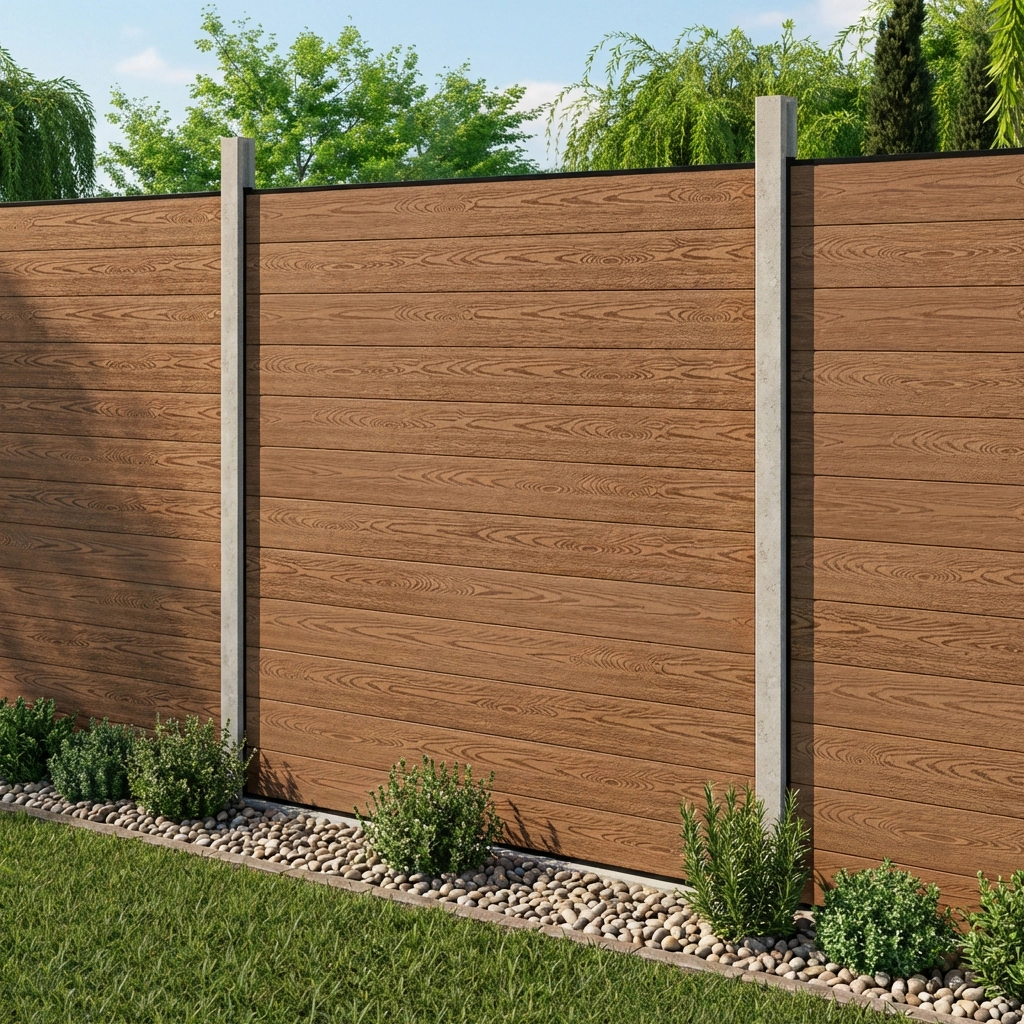
Additional fencing costs commonly include posts and concrete, gates and hardware, removal of old fencing, and landscaping adjustments, and these items often determine final budget accuracy because secondary scope can add several hundred pounds beyond panel and labour pricing.
Typical additional cost ranges:
- Posts and concrete: £20–£50 per post
- Gates and hardware: £80–£300+ per opening
- Removal of old fencing: £300–£800
- Landscaping adjustments: £200–£1,000+
How much do fence posts and concrete foundations cost?
Fence posts typically cost £15–£25 for timber or £25–£40 for concrete, with concrete at £5–£12 per post hole, and standard 6ft fencing usually needs 600–750mm embedment depth, increasing in exposed areas and at corners or gate posts.
Fence posts and concrete foundations form the structural backbone of the boundary system. Each panel bay requires a supporting post, and every post requires secure embedment.
Corner posts and gate posts often require heavier specification and additional reinforcement to resist lateral load. Under-specifying post depth or concrete volume frequently leads to leaning or structural failure.
How much do gates and gate hardware add to fencing cost?
Gates increase fencing cost because openings need reinforced posts and deeper footings, with basic timber side gates at £70–£120 supply-only, composite or metal gates at £150–£400+, and hardware such as hinges, latches, drop bolts, and anti-sag kits adding further cost.
Typical additional costs per gate opening:
- Basic timber side gate (supply only): £70–£120
- Composite or metal gate: £150–£400+
- Heavy-duty hinges: £15–£40 per pair
- Latches and locking hardware: £10–£60
- Drop bolts and anti-sag kits: £15–£50
How much does removal of old fencing cost?
Removal of old fencing typically costs £300–£800 because demolition labour and waste charges rise with boundary length, concrete footing size, access restrictions, and waste volume, and concrete-set posts or embedded footings increase labour time compared with timber-only removal.
Replacement projects often cost more than new installations due to demolition and disposal requirements. Skip hire or waste transfer charges vary by region.
How much do landscaping adjustments cost for fencing?
Landscaping adjustments typically add £200–£1,000+ to total fencing cost because sloped ground, mature root systems, paving interfaces, and drainage constraints increase excavation complexity, material usage, labour time, and foundation depth requirements beyond standard straight-run installations.
Landscaping adjustments become necessary when the proposed fence line intersects uneven terrain, established planting, hard landscaping, or existing water movement patterns. These conditions alter installation methodology and structural specification.
Landscaping-related costs may include:
Soil regrading on sloped boundaries
Sloped boundaries require either stepped panel installation or ground regrading to achieve level fence lines. Stepped configurations increase post quantity and concrete usage because each elevation change requires independent structural support.
Regrading involves cutting high points and redistributing soil to reduce gradient severity. Excavation and compaction increase labour hours. In steeper gardens, retaining boards or gravel stabilisation may be required to prevent soil washout beneath panels.
Cost impact increases with gradient severity and soil density.
Tree root cutting or stump removal
Established trees along boundary lines frequently obstruct post-hole excavation. Structural roots increase digging time and may require mechanical cutting equipment.
Root removal affects:
- Excavation duration
- Concrete hole sizing
- Post alignment accuracy
- Drainage behaviour
Stump removal often requires mechanical grinding. Mechanical access restrictions further increase labour time. In dense root systems, post repositioning may be required to avoid structural compromise.
Turf lifting and reinstatement
Fence replacement commonly disturbs adjacent turf areas during excavation and spoil removal. Turf lifting involves cutting and temporarily removing grass sections to allow trenching or post-hole excavation.
Reinstatement requires:
- Soil re-levelling
- Compaction
- Repositioning turf
- Watering and settlement monitoring
Where turf damage is extensive, new topsoil and reseeding may be required. Reinstatement work increases project duration and material cost.
Paving edge adjustments
Fence lines positioned beside patios, driveways, or paving slabs require careful edge modification. Post holes near hard landscaping often require partial slab lifting or edge trimming.
Paving adjustments may involve:
- Cutting paving slabs
- Removing and resetting blocks
- Reinforcing edging restraints
- Repointing joints
Incorrect handling risks cracking slabs or destabilising driveway edges. Labour precision increases time requirement.
Drainage correction
Existing drainage patterns influence post embedment and long-term structural stability. Water pooling at fence lines increases timber rot risk and undermines concrete foundations.
Poor drainage increases freeze–thaw stress during winter months. Reinforcement prevents long-term leaning and foundation displacement.
What is the long-term value of different fence panel materials?
Long-term fence value depends on material durability, installation quality, maintenance frequency, and exposure, and higher-specification composite or metal systems often reduce lifetime cost through longer service life and fewer repair cycles compared with lower-cost timber panels replaced after 8–10 years.
Long-term value is not determined by upfront price alone. Replacement frequency and maintenance workload determine lifetime expenditure.
Maintenance costs by material
Material selection determines recurring expenditure patterns. Timber requires ongoing protective treatment. Composite and metal systems reduce repainting cycles and structural decay risk.
Lifespan expectations
Fence lifespan varies by material durability, installation quality, soil moisture, and wind exposure. Treated timber commonly lasts 10–20 years. Premium systems often exceed that range under favourable conditions.
Impact on property value
High-quality boundary fencing enhances privacy, security perception, and visual coherence within residential settings, supporting positive buyer assessment during property evaluation.
Return on investment (ROI)
Fence ROI derives primarily from extended service life and reduced repair cycles rather than direct proportional resale uplift alone.

What are the best cost-saving tips for fence installation?
Fence installation costs reduce most reliably through correct material selection for exposure level, efficient 1.83m bay planning, controlled height specification, targeted gravel board use, advance site preparation, bulk purchasing, corrosion-resistant fixings, avoidance of emergency callouts, and routine maintenance that delays full replacement cycles.
Choosing the right material for your budget
Material selection aligned with site exposure and maintenance tolerance prevents overspending on unnecessary specification while avoiding under-specification that leads to premature structural failure.
Timing your project for lower costs
Scheduling installation outside peak seasonal demand often improves contractor availability and negotiation flexibility while reducing urgent repair premiums following storm damage periods.
Getting multiple contractor quotes
Obtaining multiple detailed quotations ensures transparent scope comparison and identifies differences in structural specification, material quality, and warranty coverage.
Optimise panel layout
Design the fence run to minimise unnecessary cuts and short sections. Standard panels measure 1.83m wide, so planning divisions around full-width bays reduces waste and additional post requirements.
Limit unnecessary height increases
Choose fence height based on genuine privacy or security needs rather than defaulting to 6ft across the entire boundary.
Use gravel boards strategically
Install gravel boards at ground level to reduce direct soil contact with timber panels and delay base rot.
Prepare the site in advance
Clear vegetation, remove minor obstructions, and mark service lines before installation begins.
Combine projects where possible
Coordinate fencing with other landscaping or garden works to reduce mobilisation and waste disposal duplication.
Buy materials in bulk
Ordering full project quantities at once can reduce delivery charges and unlock bulk discounts.
Choose durable fixings
Use corrosion-resistant screws, brackets, and hinges to reduce early hardware failure.
Avoid emergency installation
Storm damage often increases demand and raises pricing. Planned replacement during stable periods tends to generate more competitive quotes.
Maintain the fence regularly
Annual inspections, tightening loose fixings, and addressing minor damage promptly can extend service life.
Conclusion:
Fence panel cost accuracy depends on total installed scope rather than panel price alone, because material choice, height, boundary length, posts, concrete depth, soil conditions, access, removal work, and installation quality combine to set the final figure, with per-metre installed pricing providing the most reliable budgeting method.
Fence panel costs depend on far more than the price of an individual panel. Material choice, panel height, boundary length, post specification, ground conditions, access constraints, and installation quality collectively determine total expenditure. Supply-only pricing provides a starting point, but installed per-metre cost delivers the most accurate budgeting framework.
Timber fencing generally offers the lowest upfront investment, while composite and metal systems require higher initial spend in exchange for extended service life and reduced maintenance. Height increases, gate installations, removal of old fencing, and landscaping adjustments can significantly influence the final figure.
Accurate measurement, detailed specification, and realistic contingency planning reduce financial uncertainty. Comparing like-for-like contractor quotations and aligning material choice with site exposure supports structural reliability and long-term value.
Well-planned fencing is not simply a boundary expense. Well-planned fencing is a structural investment supporting privacy, security, and property presentation for years to come.


