
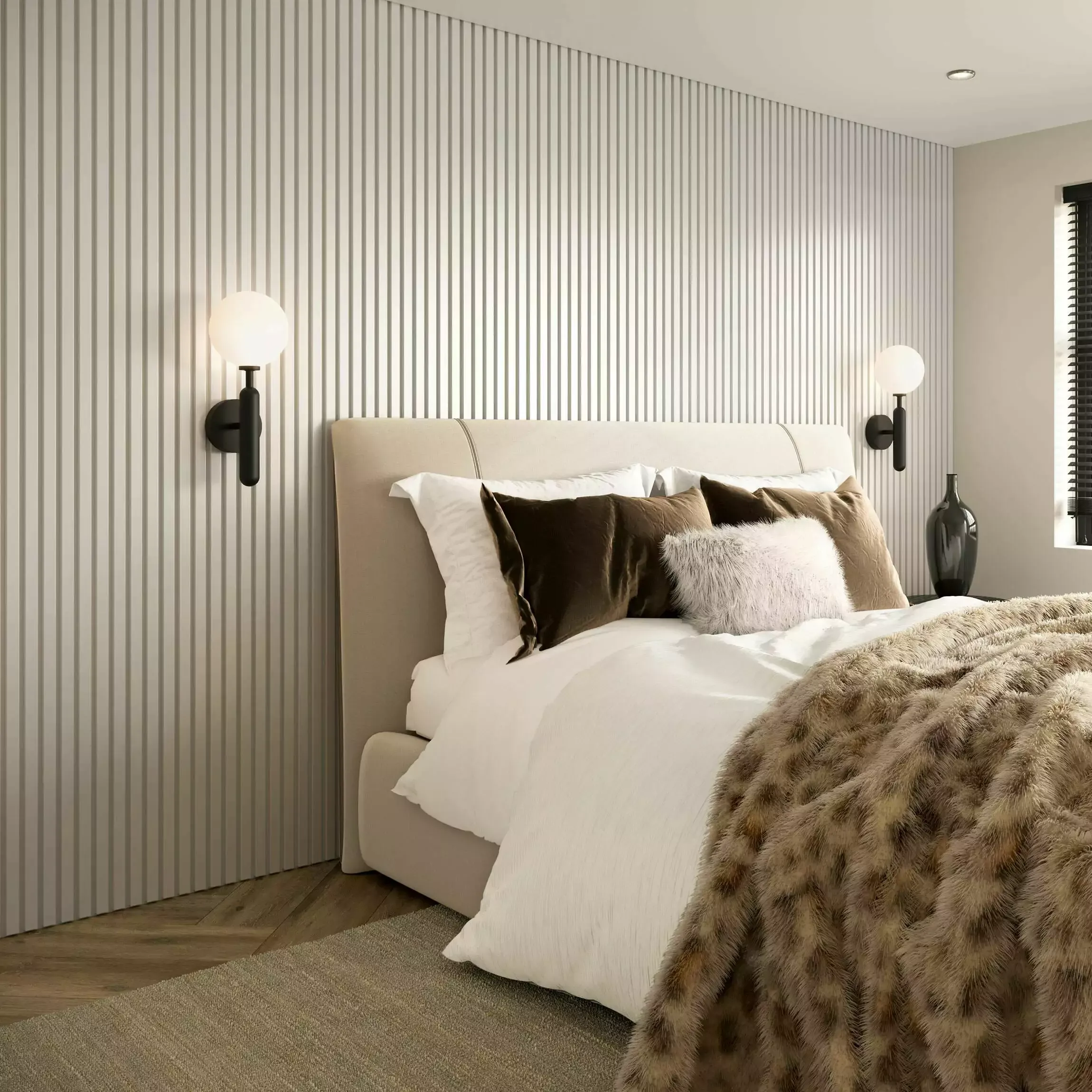
Acoustic panel placement focuses on reflection points, ceilings, corners, and large reflective surfaces, where sound waves bounce and create echo, reverberation, and reduced clarity, and correct placement improves sound quality by 30% to 60% across residential rooms.
Acoustic panels absorb reflected sound rather than block external noise, which defines acoustic panels as sound treatment within enclosed spaces. Acoustic panel placement determines performance, because untreated reflection paths maintain echo and distortion even when panels are installed.
Rooms with hard surfaces such as plaster walls, tile flooring, laminate, and glass reflect more than 70% of sound energy, which increases reverberation time and reduces speech clarity. Acoustic panels solve this problem by controlling how sound moves within a room, which improves listening comfort, conversation clarity, and overall acoustic balance.
This guide explains where to place acoustic panels, how placement changes by room type, how many panels are required, and which mistakes reduce performance, which creates a complete placement strategy for modern residential interiors. We focus on practical placement methods used in living rooms, home offices, bedrooms, and open-plan spaces, which ensures acoustic panels deliver measurable improvements in everyday environments.
UK homes commonly use plasterboard walls, laminate flooring, and open-plan layouts, which increase sound reflection and make acoustic panel placement essential for reducing echo in modern residential spaces.
Table of Contents
What Do Acoustic Panels Actually Do?
Acoustic panels absorb mid and high frequency sound waves to reduce echo, reverberation, and sound reflection within a room, improving speech clarity and sound quality by converting sound energy into low-level heat through porous materials such as fabric-wrapped mineral wool or foam.
Acoustic panels control reflected sound rather than blocking external noise, which positions acoustic panels as a sound treatment solution instead of a soundproofing system. Acoustic panels reduce reverberation time (RT60), with typical reductions ranging between 30% and 60% depending on panel density, thickness, and surface coverage. Acoustic panels improve speech intelligibility scores, with measured increases of 15% to 25% in untreated residential living rooms and home offices.
Acoustic panels function through porous absorption, where open-cell structures trap air particles and dissipate sound energy through friction. Acoustic panels target frequencies between 250 Hz and 4,000 Hz, which aligns with human speech and common household noise such as television audio, conversations, and office activity.
The main functions of acoustic panels are given below:
- REDUCE ECHO: Acoustic panels absorb reflected sound waves, lowering flutter echo in hard-surface rooms such as kitchens, hallways, and tiled spaces.
- IMPROVE CLARITY: Acoustic wall panels enhance speech definition in rooms used for meetings, video calls, and media consumption.
- BALANCE ACOUSTICS: Acoustic wall panels create a controlled sound environment by reducing excessive reflections and uneven sound distribution.
- ENHANCE COMFORT: Acoustic panels reduce listening fatigue by stabilising sound levels across the room.

What Is the Difference Between Acoustic Panels and Soundproofing?
Acoustic wood panels absorb internal sound reflections to reduce echo and reverberation, while soundproofing blocks sound transmission between rooms using dense structural materials such as concrete, mass-loaded vinyl, or insulated walls.
Acoustic panels control sound within a room, while soundproofing controls sound between spaces. Acoustic panels target frequencies between 250 Hz and 4,000 Hz, while soundproofing requires mass to block low-frequency transmission below 250 Hz
The key differences between acoustic panels and soundproofing are given below:
- ACOUSTIC PANELS ABSORB SOUND: Acoustic panels reduce reflected sound energy inside a room, which improves clarity and reduces echo
- SOUNDPROOFING BLOCKS SOUND: Soundproofing prevents sound from entering or leaving a space, which requires dense materials and structural changes
- ACOUSTIC PANELS DO NOT STOP NOISE TRANSFER: Acoustic panels improve internal acoustics but do not prevent sound leakage through walls
- SOUNDPROOFING REQUIRES CONSTRUCTION: Soundproofing involves insulation, double walls, or specialised barriers, which increases cost and complexity
What Are the Best Places to Install Acoustic Panels?
The best places to install acoustic panels include first reflection points on walls, ceilings above listening areas, corners with high sound pressure, and large reflective surfaces such as bare walls or tiled areas, where sound reflections cause echo, distortion, and reduced clarity.
Wall panel placement targets reflection paths rather than random wall coverage, which increases absorption efficiency by up to 40% based on standard room acoustic modelling. Acoustic panels installed at ear height (1.2 m to 1.8 m) align with primary sound paths in living rooms, offices, and media spaces
The key acoustic panel placement areas are given below:
- FIRST REFLECTION POINTS: Acoustic panels absorb direct sound reflections from speakers or voices on adjacent walls, improving clarity in home cinemas, lounges, and workspaces
- CEILING ABOVE LISTENING AREA: Acoustic panels reduce vertical reflections, which lowers echo build-up in rooms with hard flooring such as tile, laminate, or hardwood
- ROOM CORNERS: Acoustic panels reduce low-frequency build-up in corners where sound waves accumulate due to boundary interaction, improving overall acoustic balance
- LARGE EMPTY WALLS: These wall panels cover reflective surfaces that amplify echo, especially in open-plan living areas, hallways, and rooms with minimal furnishings
- BEHIND SOUND SOURCE: These wall reduce rear reflections from televisions, speakers, or desks, which stabilises sound projection and reduces distortion
- OPPOSITE SOUND SOURCE: These wall absorb returning sound waves, preventing echo bounce between parallel walls, a common issue in rectangular rooms
What Are First Reflection Points for Acoustic Panels?
First reflection points are the initial wall, ceiling, or floor surfaces where direct sound waves from a source reflect toward a listener, causing early reflections that reduce clarity, increase echo, and interfere with accurate sound perception.
First reflection points form within 5 to 20 milliseconds after direct sound arrival, which affects speech intelligibility and stereo imaging in residential rooms. First reflection points typically occur on side walls, ceilings, and sometimes floors, depending on speaker height, listener position, and room geometry. First reflection points follow a predictable path based on angle of incidence and reflection, where sound waves bounce symmetrically from the source to the listener. First reflection points create comb filtering effects, where overlapping direct and reflected sound waves cause frequency dips and peaks between 200 Hz and 4,000 Hz
The key first reflection point locations are given below:
- SIDE WALLS: First reflection points appear at mid-wall positions between sound source and listener, where lateral reflections reduce stereo separation and dialogue clarity
- CEILING: First reflection points form directly above the listening position, especially in rooms with hard ceilings, increasing vertical echo and reverberation
- FLOOR: First reflection points occur on hard flooring surfaces such as tile or wood, where reflections contribute to early echo build-up if rugs or carpets are absent
- FRONT WALL (BEHIND SPEAKERS): First reflection points form behind the sound source, which affects forward sound projection and tonal balance
- REAR WALL (BEHIND LISTENER): First reflection points reflect back toward the listener, which introduces delayed echo and reduces sound definition
Rugs and carpets reduce floor reflections where hard flooring surfaces increase early reflection intensity.
Where Should Acoustic Panels Be Placed in Different Rooms?
Acoustic panels should be placed at reflection points, ceilings, and large reflective surfaces in each room type, with positioning adapted to room function, furniture layout, and sound sources to reduce echo, control reverberation, and improve clarity by 30% to 60%.
Wall Panel placement changes based on room usage, because sound behaviour differs between speech-focused spaces, media rooms, and open-plan living areas. Acoustic wood panels perform most effectively when positioned along active sound paths, rather than decorative or unused wall sections.
The optimal acoustic panel placement by room type is given below:
- LIVING ROOMS: Acoustic panels cover side walls, rear walls, and ceilings near seating areas, where television audio and conversation reflections create echo in open-plan layouts with hard flooring
- HOME OFFICES: Acoustic panels sit behind desks, on side walls, and directly opposite speaking positions, where video calls and voice projection require clear speech with reduced reverberation
- BEDROOMS: Acoustic panels fit on walls behind beds and opposite walls, where soft furnishings reduce some echo but large flat surfaces still reflect mid-frequency sound
- HOME CINEMAS: Acoustic panels target first reflection points, rear walls, and ceilings, where surround sound systems require controlled reflections for accurate imaging and balanced frequency response
- DINING ROOMS: Acoustic panels install on ceilings and adjacent walls, where hard surfaces such as tile flooring and large tables amplify sound reflections and increase noise levels during group conversations
- HALLWAYS AND STAIRS: Acoustic panels position along long parallel walls, where narrow geometry creates flutter echo and repeated sound reflections
- OPEN-PLAN SPACES: Acoustic wall panels distribute across multiple zones, including ceilings and partition walls, where sound travels freely across connected areas and increases overall reverberation

Where Not to Place Acoustic Panels?
Acoustic panels should not be placed randomly on unused walls, directly behind listeners without purpose, or clustered in one area, because ineffective placement reduces absorption efficiency, leaves reflection points untreated, and limits overall echo reduction by more than 40% in typical residential rooms.
Wall panel placement requires alignment with sound paths, because random placement fails to intercept early reflections and reduces acoustic performance. Acoustic panels lose effectiveness when installed in low-impact zones, where minimal sound energy interacts with panel surfaces
The incorrect acoustic panel placement areas are given below:
- RANDOM EMPTY WALLS: Acoustic panels placed on visually convenient walls without reflection analysis fail to absorb primary sound reflections, which leaves echo and reverberation untreated
- ONLY ONE WALL: Acoustic panels clustered on a single wall create uneven absorption, which results in acoustic imbalance and inconsistent sound across the room
- TOO HIGH OR TOO LOW: Acoustic panels installed outside ear height (below 1.0 m or above 2.0 m) miss primary sound paths, reducing absorption of mid-frequency reflections
- DIRECTLY BEHIND LISTENER (WITHOUT ANALYSIS): Acoustic panels placed without identifying rear reflection points absorb limited useful sound energy, which reduces placement efficiency
- BLOCKED BY FURNITURE: Acoustic panels hidden behind wardrobes, sofas, or shelving units cannot interact with sound waves effectively, which reduces absorption performance
- SMALL DECORATIVE GROUPINGS: Acoustic panels arranged in small clusters for visual design fail to provide sufficient surface coverage, which limits measurable acoustic improvement
- LOW-REFLECTION SURFACES: Acoustic panels placed on already soft surfaces such as thick curtains or upholstered walls provide minimal additional benefit, because absorption already exists
How Many Acoustic Panels Do You Need?
Acoustic panel quantity depends on room size, surface materials, and echo level, with effective coverage typically requiring 15% to 30% of total wall and ceiling surface area, which equates to 6 to 12 panels in small rooms and 12 to 24 panels in larger spaces.
Acoustic panel quantity increases with hard surfaces such as tile, glass, and plaster, where sound reflection levels rise above 70% compared to soft furnished rooms. Acoustic panels reduce reverberation time (RT60) by 30% to 60% when coverage reaches recommended surface ratios
The acoustic panel quantity by room size is given below:
- SMALL ROOMS (UNDER 10 m²): Acoustic panels range between 4 and 8 units, where limited wall area requires targeted placement at first reflection points and ceilings
- MEDIUM ROOMS (10–20 m²): Acoustic panels range between 8 and 16 units, where additional panels cover side walls, rear walls, and ceilings for balanced absorption
- LARGE ROOMS (20 m²+): Acoustic panels range between 16 and 24+ units, where increased surface area and sound travel distance require wider distribution across multiple zones
The acoustic panel quantity by room condition is given below:
- HARD SURFACE ROOMS: Acoustic panels increase by 20% to 40%, where reflective materials such as tile and glass amplify echo and reverberation
- SOFT FURNISHED ROOMS: Acoustic panels reduce by 10% to 20%, where carpets, curtains, and upholstered furniture already absorb some sound energy
- HIGH CEILING ROOMS (2.7 m+): Acoustic panels increase by 15% to 30%, where vertical space allows sound to reflect longer before absorption
How Does Acoustic Panel Thickness Affect Placement?
Acoustic panel thickness determines frequency absorption performance, where 25 mm panels absorb high frequencies, 50 mm panels absorb mid-range frequencies, and 75 mm+ panels begin to control lower frequencies below 250 Hz.
Acoustic panel thickness directly affects placement strategy, because thicker panels perform better in corners and behind sound sources. Acoustic panels with insufficient thickness fail to absorb deeper sound waves, which reduces overall acoustic control
The impact of acoustic panel thickness on placement is given below:
- 25 MM PANELS: Acoustic panels absorb high-frequency reflections above 1,000 Hz, which suits decorative wall placement
- 50 MM PANELS: Acoustic panels absorb mid-frequency sound between 250 Hz and 1,000 Hz, which suits first reflection points
- 75 MM+ PANELS: Acoustic panels absorb lower frequencies, which suits corners and rear wall placement

How to Find the Perfect Acoustic Panel Position
The perfect acoustic panel position is identified by locating first reflection points, analysing sound paths between source and listener, and testing echo zones using the mirror method and clap test, which together improve placement accuracy and increase absorption efficiency by up to 50%.
Acoustic panel positioning follows sound reflection geometry, where sound travels in straight lines and reflects at equal angles across walls, ceilings, and floors. Acoustic panel placement accuracy improves when focusing on early reflection zones within 5 to 20 milliseconds of direct sound arrival
The methods to find the perfect acoustic panel position are given below:
- USE THE MIRROR METHOD: Move a mirror along walls and ceilings, identify positions where the sound source becomes visible from the listening position, and mark these points as primary acoustic panel locations
- PERFORM THE CLAP TEST: Clap hands sharply and listen for echo, ringing, or flutter, then place acoustic panels on surfaces where reflections return strongest
- ANALYSE LISTENER POSITION: Identify the main seating or working position, then align acoustic panels at ear height (1.2 m to 1.8 m) along surrounding reflection paths
- TRACE SOUND PATHS: Visualise direct lines between speakers and listener, then place acoustic panels where sound waves bounce toward the listening area
- CHECK CORNER BUILD-UP: Identify corners with noticeable bass accumulation or echo, then position acoustic panels or bass traps to reduce low-frequency pressure
- EVALUATE ROOM SURFACES: Prioritise hard, reflective materials such as tile, glass, and plaster, where sound reflection levels exceed 70% compared to soft surfaces
Wall vs Ceiling Acoustic Panels: Which Is Better?
Acoustic wall panels and ceiling acoustic panels perform different acoustic functions, with wall panels controlling horizontal reflections and ceiling panels reducing vertical reflections, and the most effective acoustic result occurs when both panel types combine to reduce reverberation by 40% to 70% across a room.
Wall acoustic panels target side-to-side sound reflections between parallel walls, which represent the strongest early reflections in rectangular rooms. Ceiling acoustic panels control vertical reflections, which increase in rooms with hard flooring such as tile, laminate, and hardwood.
The differences between wall acoustic panels and ceiling acoustic panels are given below:
- WALL PANELS CONTROL LATERAL REFLECTIONS: Wall acoustic panels absorb sound waves travelling horizontally between walls, which improves speech clarity and stereo imaging in living rooms, offices, and home cinemas
- CEILING PANELS CONTROL VERTICAL REFLECTIONS: Ceiling acoustic panels absorb sound waves reflecting between floor and ceiling, which reduces echo build-up in rooms with high ceilings or minimal soft furnishings
- WALL PANELS TARGET EAR-LEVEL SOUND PATHS: Wall acoustic panels align with listener height between 1.2 m and 1.8 m, which increases absorption efficiency for speech and media audio
- CEILING PANELS COVER LARGE SURFACE AREAS: Ceiling acoustic panels treat wide reflective zones, which improves overall reverberation control in open-plan and commercial-style spaces
- WALL PANELS INSTALL EASILY: Wall acoustic panels require standard mounting on vertical surfaces, which suits residential environments with minimal installation complexity
- CEILING PANELS REQUIRE SUSPENSION OR FIXING SYSTEMS: Ceiling acoustic panels often use suspended frames or direct fixings, which increases installation complexity but improves acoustic coverage
What Are the Best Decorative Acoustic Panels for Modern UK Homes?
The best decorative acoustic panels for modern UK homes combine sound absorption, interior styling, and durable materials, with slatted wood panels, fabric-wrapped panels, geometric felt panels, and ceiling baffles providing the strongest balance between acoustic control and contemporary residential design.
Decorative acoustic wall panels reduce echo while functioning as architectural wall features, which increases acoustic comfort without creating a studio-style appearance. Decorative acoustic panels improve reverberation control by 30% to 60% in open-plan living rooms, home offices, and media spaces with hard flooring and plaster walls
The best decorative acoustic panel styles for modern UK homes are given below:
- SLATTED WOOD ACOUSTIC PANELS: Slatted acoustic panels combine timber veneer finishes with acoustic felt backing, which reduces reflected sound while matching modern Scandinavian and minimalist interiors
- FABRIC-WRAPPED ACOUSTIC PANELS: Fabric acoustic panels provide soft-texture wall coverage in neutral colours such as grey, beige, charcoal, and olive, which suits contemporary lounges and home offices
- GEOMETRIC FELT PANELS: Geometric acoustic panels use hexagonal, ribbed, or sculpted designs to create decorative feature walls while absorbing mid and high-frequency reflections
- ACOUSTIC CEILING BAFFLES: Ceiling acoustic panels suspend vertically to control reverberation in open-plan spaces with high ceilings, where wall coverage alone provides limited absorption
- PRINTED ACOUSTIC PANELS: Printed acoustic panels combine sound absorption with artwork-style finishes, where photographic or abstract surfaces integrate acoustic treatment into residential décor
- DARK WOOD FINISH PANELS: Walnut and smoked oak acoustic panels complement black fixtures, concrete textures, and industrial-style interiors common in modern urban homes
- LIGHT OAK ACOUSTIC PANELS: Oak-effect acoustic panels increase visual brightness in smaller rooms, where lighter timber finishes support natural and Nordic-inspired interior styles

What Are the Best Tips for Installing Acoustic Panels?
The best acoustic panel installation tips focus on placing panels at reflection points, maintaining even surface coverage, aligning panels at ear height, and spacing panels correctly, which together improve sound absorption efficiency by 30% to 60% and reduce echo across the entire room.
Acoustic wall panel installation accuracy determines overall acoustic performance, where correct positioning increases absorption effectiveness compared to random placement. Acoustic panels interact with sound waves only when exposed to active reflection zones, which requires planned layout rather than decorative placement
The best acoustic panel installation tips are given below:
- IDENTIFY REFLECTION POINTS FIRST: Acoustic panels should target side walls, ceilings, and opposite surfaces where sound reflects directly toward the listener, which maximises absorption efficiency
- ALIGN PANELS AT EAR HEIGHT: Acoustic panels should sit between 1.2 m and 1.8 m from the floor, where primary sound paths occur in seated and standing positions
- DISTRIBUTE PANELS EVENLY: Acoustic panels should spread across multiple walls and surfaces, which prevents uneven absorption and improves overall acoustic balance
- MAINTAIN SURFACE COVERAGE RATIO: Acoustic panels should cover 15% to 30% of total wall and ceiling area, where measurable reductions in reverberation occur
- SPACE PANELS CORRECTLY: Acoustic panels should maintain consistent gaps between units, which allows broader sound wave interaction compared to clustered layouts
- USE CEILING PANELS WHERE NEEDED: Acoustic panels should extend to ceilings in rooms with hard flooring and high ceilings, where vertical reflections increase echo
- AVOID OBSTRUCTIONS: Acoustic panels should remain exposed without furniture blocking surfaces, which ensures direct interaction with sound waves
- SECURE PANELS PROPERLY: Acoustic panels should use appropriate fixings such as adhesive mounts, brackets, or screws based on wall type, which ensures stability and long-term performance
- TEST AND ADJUST PLACEMENT: Acoustic panels should be repositioned based on clap tests or listening feedback, where small adjustments improve sound clarity and reduce residual echo
What Mistakes Should You Avoid When Placing Acoustic Panels?
The main mistakes when placing acoustic panels include random placement, ignoring reflection points, insufficient coverage, incorrect height positioning, and over-clustering panels, which together reduce acoustic performance by up to 50% and leave echo, reverberation, and clarity issues unresolved.
Acoustic wall panel placement errors reduce absorption efficiency because sound reflections remain untreated along primary paths. Acoustic panels require alignment with room geometry and sound behaviour, where incorrect positioning limits measurable acoustic improvement.
The most common acoustic panel placement mistakes are given below:
- RANDOM PLACEMENT WITHOUT ANALYSIS: Acoustic panels placed without identifying reflection points fail to intercept early reflections, which leaves echo and reverberation unchanged
- IGNORING FIRST REFLECTION POINTS: Acoustic panels installed away from primary reflection zones do not absorb critical sound paths, which reduces clarity and stereo imaging
- INSUFFICIENT PANEL COVERAGE: Acoustic panels covering less than 10% of total surface area provide minimal absorption, which results in negligible acoustic improvement
- INSTALLING PANELS TOO HIGH OR TOO LOW: Acoustic panels placed outside the 1.2 m to 1.8 m range miss ear-level sound paths, which reduces effectiveness for speech and media audio
- CLUSTERING PANELS IN ONE AREA: Acoustic panels grouped on a single wall create uneven absorption, which causes acoustic imbalance across the room
- IGNORING CEILING REFLECTIONS: Acoustic panels placed only on walls leave vertical reflections untreated, which increases echo in rooms with hard flooring
- BLOCKING PANELS WITH FURNITURE: Acoustic panels positioned behind sofas, wardrobes, or shelving cannot absorb sound effectively, which reduces usable surface area
- OVER-TREATING SMALL AREAS: Acoustic panels installed excessively in one zone create dead spots, where sound becomes dull and uneven across the room
- USING PANELS AS SOUNDPROOFING: Acoustic panels do not block external noise, which leads to incorrect expectations when used instead of structural soundproofing solutions

Are Acoustic Panels Worth It?
Acoustic panels are worth installing in echo-prone rooms, because acoustic panels absorb reflected sound, reduce reverberation time, and improve speech clarity by 30% to 60%, which creates a quieter, more controlled, and comfortable indoor sound environment.
Acoustic panels improve internal acoustics rather than blocking external noise, which defines acoustic panels as sound treatment instead of soundproofing. Acoustic panels deliver measurable improvements in rooms with hard surfaces such as plaster, tile, laminate, and glass, where sound reflection levels exceed 70%.
The main reasons acoustic panels provide value are given below:
- REDUCE ECHO: Acoustic panels absorb mid and high-frequency reflections, which lowers reverberation time and removes flutter echo in living rooms, hallways, and open-plan layouts
- IMPROVE SPEECH CLARITY: Acoustic panels increase voice definition in home offices and shared spaces, where reflected sound interferes with conversation and video calls
- ENHANCE AUDIO QUALITY: Acoustic panels stabilise sound waves from televisions and speakers, which improves dialogue clarity and stereo imaging in media rooms
- LOWER PERCEIVED NOISE LEVELS: Acoustic panels reduce reflected sound energy, which decreases overall room loudness and improves comfort during extended use
- SUPPORT MODERN INTERIORS: Acoustic panels combine sound absorption with decorative finishes such as slatted wood, fabric, and felt, which integrates acoustic treatment into residential design
Acoustic panels are most beneficial in the following residential settings:
- LIVING ROOMS: Acoustic panels reduce television echo and improve conversational clarity in open-plan family areas
- HOME OFFICES: Acoustic panels improve vocal clarity and reduce sound reflection during video conferencing
- MEDIA ROOMS: Acoustic panels control first reflections and improve surround sound balance
- DINING AREAS: Acoustic panels reduce noise build-up from multiple voices and reflective surfaces
- HALLWAYS: Acoustic panels reduce repeated reflections caused by parallel wall geometry
What Results Can You Expect After Installing Acoustic Panels?
Acoustic panels reduce echo immediately after installation, with measurable improvements in clarity, reduced reverberation time, and lower perceived noise levels typically observed within minutes in untreated rooms.
Acoustic panels change sound behaviour instantly because absorption begins as soon as panels interact with sound waves. Acoustic panels reduce reverberation time by 30% to 60%, depending on placement accuracy and surface coverage
The typical acoustic improvements are given below:
- CLEARER SPEECH: Acoustic panels improve voice definition during conversations and video calls
- REDUCED ECHO: Acoustic panels eliminate flutter echo in rooms with hard surfaces
- MORE CONTROLLED SOUND: Acoustic panels stabilise sound reflections, which improves listening comfort
- LOWER NOISE FATIGUE: Acoustic panels reduce repeated reflections, which decreases listening strain over time
- IMPROVED MEDIA AUDIO: Acoustic panels enhance dialogue clarity and reduce distortion in TV and speaker output
Conclusion:
Acoustic panels deliver the best results when placed at first reflection points, ceilings, corners, and large reflective surfaces, with balanced coverage of 15% to 30% of total area, which reduces echo, improves clarity, and stabilises sound across the entire room.
Acoustic panel placement determines acoustic performance, where correct positioning increases absorption efficiency by up to 50% compared to random installation. Acoustic panels function as sound treatment systems, which means acoustic panels improve internal acoustics rather than block external noise.
The key acoustic panel placement principles are given below:
- TARGET REFLECTION POINTS: Acoustic panels absorb early reflections on walls and ceilings, which improves speech clarity and reduces echo
- DISTRIBUTE PANELS EVENLY: Acoustic panels placed across multiple surfaces prevent acoustic imbalance and ensure consistent sound control
- MATCH PLACEMENT TO ROOM TYPE: Acoustic panels adapt to living rooms, offices, bedrooms, and open-plan spaces, where sound behaviour changes based on layout and materials
- AVOID COMMON MISTAKES: Acoustic panels lose effectiveness when placed randomly, clustered, or outside active sound paths
- COMBINE WALL AND CEILING PANELS: Acoustic panels perform best when horizontal and vertical reflections are both treated
At Walls and Floors, we focus on combining acoustic performance with modern interior design, which ensures acoustic panels improve both sound quality and visual appearance across contemporary residential spaces
