

The best fence materials are composite, pressure-treated timber, concrete-supported panels, metal railings, vinyl fencing, bamboo screens, woven natural fencing, and living hedging, because each option fits a different garden boundary purpose.
Fence material choice affects privacy, weather resistance, maintenance, cost, wind performance, wildlife movement, and the way a garden surface looks beside the boundary. A modern patio often needs composite or slatted fencing. A traditional lawn garden often needs timber panels. A damp fence line often needs concrete posts and gravel boards. A front garden often needs metal railings, a low wall, picket fencing, or hedging.
This guide compares the best fence materials and fence options for UK gardens by durability, privacy, maintenance, cost, sustainability, garden type, surface pairing, and permitted height. The aim is to help homeowners choose a fence system that fits the boundary conditions before choosing a colour, panel style, or finish.
Table of Contents
What Are The Best Fence Materials?
The best fence materials are composite, pressure-treated timber, metal, concrete, vinyl, bamboo, woven willow, and living hedging because each material solves a different garden boundary requirement across privacy, durability, maintenance, cost, weather resistance, and appearance.
The best fence materials are listed below:
Composite Fencing
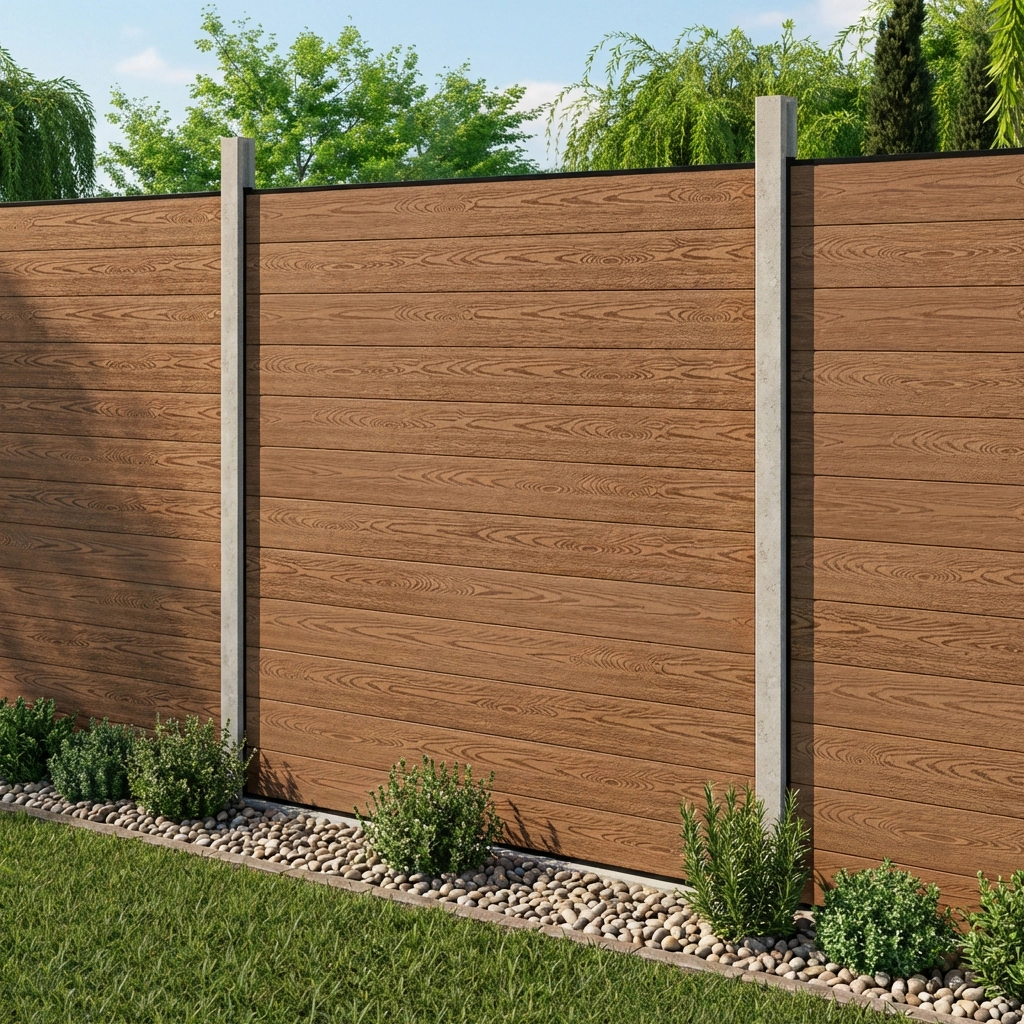
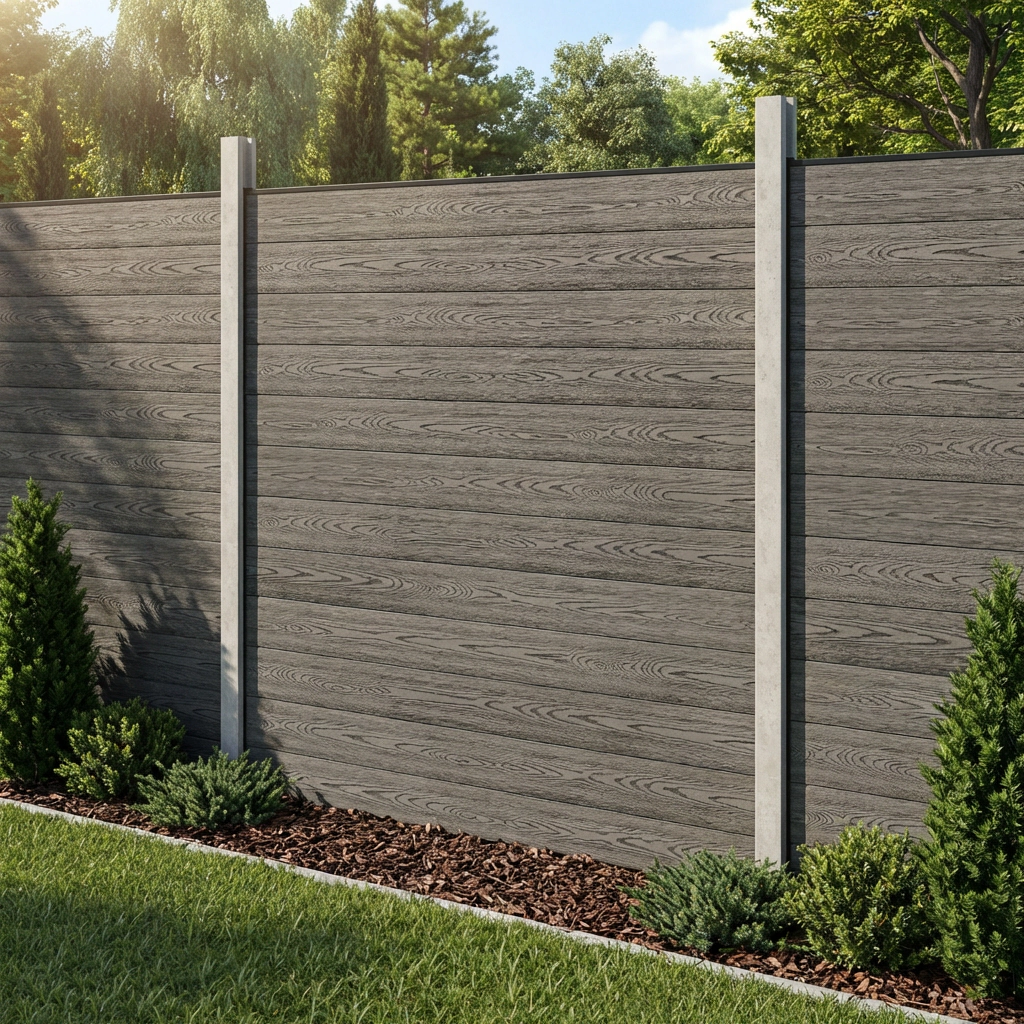
Composite fencing is best for low-maintenance garden boundaries, modern patios, and weather-resistant privacy screens because composite boards resist rot, splintering, staining, and regular repainting better than standard untreated timber.
Composite fencing combines wood fibres with recycled plastic polymers. Composite fence panels suit contemporary gardens, patio boundaries, outdoor dining areas, family gardens, and rental properties where seasonal maintenance creates extra cost. Composite fencing also works well beside porcelain paving, outdoor tiles, raised planters, and structured planting because the clean board profile creates a consistent modern boundary.
Composite fencing has 6 main benefits:
- Low Maintenance: Composite fence panels need routine cleaning rather than sanding, staining, or annual painting.
- Moisture Resistance: Composite boards resist water absorption better than untreated softwood boards.
- Modern Appearance: Composite fencing creates clean lines that suit grey patios, porcelain paving, outdoor kitchens, and contemporary garden furniture.
- Strong Privacy: Solid composite panels reduce direct sightlines across side and rear garden boundaries.
- Colour Consistency: Composite fencing keeps a more consistent colour than natural timber as the garden boundary weathers.
- Long-Term Value: Composite fencing costs more at purchase stage, but reduced maintenance lowers the ownership burden across several seasons.
Pressure-Treated Timber Fencing
Pressure-treated timber fencing is best for traditional gardens, natural boundaries, and flexible fence design because treated timber panels provide warmth, repairability, and broad style choice at a lower upfront cost.
Pressure-treated timber fencing covers closeboard fencing, featheredge fencing, lap panels, slatted panels, hit-and-miss panels, picket fencing, and trellis-topped panels. Timber fence panels suit lawns, planting borders, cottage gardens, period homes, front gardens, and family spaces where natural texture matters. Timber fencing also accepts stain, paint, oil, and cut-to-size adjustments, which makes timber one of the most adaptable fence materials.
Pressure-treated timber fencing has 7 main benefits:
- Natural Appearance: Timber fencing adds grain, texture, and warmth to garden boundaries.
- Lower Upfront Cost: Timber panels often cost less than composite, metal, or masonry-style fencing.
- Easy Repair: Damaged boards, rails, and panels can be replaced without changing the full fence line.
- Design Flexibility: Closeboard, featheredge, slatted, picket, and trellis designs support privacy, airflow, decoration, and climbing plants.
- Colour Choice: Timber accepts paint, stain, and oil for black, grey, green, brown, cedar, and natural finishes.
- Strong Privacy: Closeboard and featheredge panels create dense visual screening for rear gardens.
- Traditional Character: Timber fencing suits older houses, cottage borders, lawns, and planting-led garden layouts.
Timber fencing needs periodic treatment because rain, soil moisture, algae, and UV exposure change wood surfaces over time. Fence posts require ground-contact treatment where posts sit in soil or concrete.
Metal Fencing
Metal fencing is best for front gardens, driveway boundaries, decorative edges, and security-focused spaces because steel, aluminium, and wrought iron create strong boundaries with slimmer profiles than timber or composite panels.
Metal fencing includes wrought iron railings, galvanised steel fencing, powder-coated steel panels, aluminium fencing, mesh fencing, and decorative screen panels. Metal fencing suits front gardens, driveways, formal properties, commercial-style landscapes, and boundary lines where visibility matters. Metal railings also work well with low brick walls, stone coping, tiled steps, and structured planting.
Metal fencing has 6 main benefits:
- Strong Security: Metal railings create a robust boundary without fully blocking the view.
- High Visibility: Open metal designs protect sightlines across driveways, pavements, and front gardens.
- Long Service Life: Galvanised and powder-coated metal resists weather damage when coating remains intact.
- Formal Appearance: Metal fencing suits period homes, townhouses, driveways, and neat front boundaries.
- Gate Compatibility: Metal fence systems pair well with pedestrian gates, driveway gates, and access control.
- Low Bulk: Slim rails create boundary definition without heavy visual mass.
Metal fencing gives less privacy than solid fence panels. Decorative metal screens increase privacy, but solid privacy remains stronger with composite, timber, vinyl, or concrete-panel systems.
Concrete Fencing
Concrete fencing is best for long-term structural support because concrete posts and gravel boards resist rot, ground moisture, impact, and soil contact better than timber support components.
Concrete fencing usually refers to concrete fence posts, concrete gravel boards, slotted concrete posts, recessed concrete posts, and decorative concrete panels. Concrete works best as the structural frame behind timber, composite, or vinyl panels. Concrete gravel boards lift fence panels away from wet soil, lawn edges, gravel, and planting beds, which protects the lower panel edge from moisture damage.
Concrete fencing has 6 main benefits:
- Rot Resistance: Concrete does not rot where posts meet damp ground.
- Moisture Protection: Concrete gravel boards separate fence panels from soil and splashback.
- Structural Strength: Concrete posts support fence panels in exposed or high-use boundaries.
- Low Maintenance: Concrete posts and boards need little routine maintenance beyond cleaning.
- Panel Replacement: Slotted concrete posts allow damaged panels to be removed and replaced more easily.
- Long-Term Stability: Concrete components suit long fence runs, rear boundaries, and high-moisture gardens.
Concrete fencing has a heavier appearance than timber or composite fencing. Decorative gravel boards, painted finishes, planting, and panel selection can soften the visual weight.
Vinyl Or PVC Fencing
Vinyl or PVC fencing is best for easy-clean garden boundaries because plastic fence panels resist moisture, need no staining, and suit households that prefer low routine maintenance.
Vinyl fencing uses plastic boards or panels to create privacy fences, picket-style fences, and decorative boundary screens. Vinyl fence panels suit family gardens, rental homes, wet areas, and low-maintenance outdoor spaces. PVC fencing often appeals where cleaning speed matters more than natural texture.
Vinyl or PVC fencing has 5 main benefits:
- Easy Cleaning: Vinyl panels clean with water and mild detergent.
- Moisture Resistance: PVC does not absorb water in the same way as timber.
- No Painting: Vinyl fencing keeps its manufactured surface without routine staining or oiling.
- Family Suitability: Smooth panels reduce splinter risk compared with damaged timber boards.
- Consistent Finish: PVC fencing keeps a uniform look across the fence line.
Vinyl fencing can look less natural than timber and less premium than many composite systems. Impact damage and colour limitations are important checks before specification.
Bamboo Fencing
Bamboo fencing is best for quick natural screening because bamboo rolls and bamboo panels add texture, privacy, and height to patios, balconies, existing fences, and rental-friendly garden zones.
Bamboo fencing usually comes as split bamboo rolls, full-cane screens, bamboo panels, or cane screening. Bamboo screening works best as a decorative layer over an existing fence or frame rather than a primary structural boundary. Bamboo suits patios, balconies, seating corners, rented gardens, tropical planting schemes, and small outdoor spaces needing faster privacy.
Bamboo fencing has 5 main benefits:
- Fast Installation: Bamboo rolls fix quickly to existing fences, rails, or posts.
- Natural Texture: Bamboo adds warm colour and vertical rhythm to plain boundaries.
- Lightweight Handling: Bamboo screens are easier to move and install than heavy panels.
- Useful Privacy: Dense bamboo screening reduces direct views across patios and seating areas.
- Design Flexibility: Bamboo works with planters, climbing plants, gravel, outdoor tiles, and balcony screens.
Bamboo fencing has lower structural strength than composite, timber, metal, or concrete systems. Bamboo also weathers faster in exposed rain, wind, and frost.
Willow, Hazel, And Reed Fencing
Willow, hazel, and reed fencing is best for rustic gardens, cottage-style boundaries, wildlife-friendly screens, and soft planting-led layouts because woven natural materials create texture without a hard architectural finish.
Willow hurdles, hazel hurdles, and reed screening create natural garden boundaries with filtered privacy. Woven fencing suits cottage gardens, vegetable patches, wildlife gardens, seating zones, low boundaries, and informal partitions. Hazel and willow hurdles can stand as panels with posts, while reed screening often works best as a cover fixed to an existing fence.
Willow, hazel, and reed fencing has 6 main benefits:
- Natural Screening: Woven materials reduce views while keeping a softer garden appearance.
- Rustic Character: Willow and hazel suit cottage gardens, wildflower beds, and informal planting.
- Filtered Light: Natural gaps allow some daylight and airflow through the boundary.
- Wildlife-Friendly Texture: Organic boundaries work well beside hedging, climbers, and planting beds.
- Garden Zoning: Woven screens divide seating areas, compost zones, vegetable beds, and paths.
- Low Visual Weight: Reed and woven panels feel softer than solid concrete, vinyl, or metal boundaries.
Woven natural fencing has lower durability than composite, concrete, or metal. Exposed gardens need stronger posts and careful fixing because wind can damage lightweight screening.
Living Hedging
Living hedging is best for biodiversity, natural privacy, wind filtration, and long-term green boundaries because plants create shelter, seasonal texture, and habitat value along the fence line.
Living hedging includes beech, hornbeam, privet, yew, laurel, hawthorn, blackthorn, holly, hazel, and mixed native hedging. Hedge boundaries suit wildlife gardens, front gardens, rural edges, traditional homes, and planting-led layouts. Living hedges can also work beside fence panels where the fence provides immediate security and the hedge provides long-term softness.
Living hedging has 7 main benefits:
- Biodiversity Value: Hedges support birds, pollinators, insects, and small mammals.
- Natural Privacy: Dense hedging screens windows, seating areas, and garden boundaries.
- Wind Filtration: Hedging filters wind rather than creating a solid wind barrier.
- Seasonal Interest: Leaves, flowers, berries, and structure change across the year.
- Sound Softening: Dense planting softens garden noise more naturally than open railings.
- Boundary Softness: Hedges reduce the hard edge created by panels, walls, or metal railings.
- Long-Term Character: Established hedges create mature garden structure and strong kerb appeal.
How Do Fence Materials Compare?
Fence materials compare by durability, privacy, maintenance, cost, installation complexity, weather resistance, appearance, and sustainability, because each fence material performs differently across UK garden boundaries, patio edges, front gardens, exposed plots, and planting-led outdoor spaces.
The fence material comparison table shows the main performance differences between common garden fencing options.
| Fence Material | Best For | Main Strength | Main Limitation | Maintenance Level | Privacy Level |
| Composite fencing | Modern low-maintenance gardens | Weather resistance and clean appearance | Higher upfront cost | Low | High |
| Pressure-treated timber fencing | Traditional garden boundaries | Natural appearance and broad style choice | Periodic treatment | Medium | Medium to high |
| Metal fencing | Front gardens and driveways | Security, visibility, and slim structure | Lower privacy | Low to medium | Low |
| Concrete fencing | Structural posts and gravel boards | Rot resistance and long-term support | Heavy installation | Low | High with solid panels |
| Vinyl or PVC fencing | Easy-clean family gardens | Moisture resistance and simple cleaning | Less natural appearance | Low | Medium to high |
| Bamboo fencing | Quick natural screening | Fast privacy and lightweight handling | Lower structural strength | Medium | Medium |
| Willow, hazel, and reed fencing | Rustic and wildlife-friendly gardens | Natural texture and soft screening | Shorter lifespan | Medium | Medium |
| Living hedging | Biodiversity and green privacy | Habitat value and wind filtration | Slow establishment | Medium to high | Medium to high |
Which Fence Material Is Most Durable?
Concrete, galvanised metal, composite, and correctly treated timber are the most durable fence materials because these materials resist rot, impact, moisture, and seasonal weather movement better than lightweight natural screening.
Concrete fence posts and concrete gravel boards provide the strongest support where garden fence lines meet wet soil, lawns, gravel edges, and planting borders. Galvanised metal fencing provides strong durability where the protective coating remains intact. Composite fencing resists rot, splintering, and repeated moisture movement better than untreated timber. Correctly treated timber fencing performs well where posts, rails, and boards match the right treatment class for ground contact or above-ground exposure.
The most durable fence materials are compared below:
| Fence Material | Durability Strength | Best Durable Use | Main Durability Risk |
| Concrete fencing | Rot resistance and impact strength | Posts, gravel boards, structural boundaries | Heavy installation and visual weight |
| Galvanised metal fencing | Corrosion resistance and rigid structure | Front boundaries, driveways, exposed edges | Coating damage and rust exposure |
| Composite fencing | Moisture resistance and low surface movement | Modern privacy panels and patio boundaries | Poor installation gaps and thermal movement |
| Pressure-treated timber fencing | Repairability and traditional strength | Closeboard panels, featheredge boards, rails | Wrong treatment class and ground moisture |
| Vinyl or PVC fencing | Moisture resistance and easy cleaning | Family gardens and low-maintenance boundaries | Impact damage and plastic appearance |
| Living hedging | Regenerative growth and wind filtration | Wildlife boundaries and natural screens | Slow establishment and pruning demand |
| Bamboo, willow, reed fencing | Lightweight natural screening | Decorative privacy and garden zoning | Shorter lifespan and weak wind resistance |
Are Garden Walls Better Than Fence Panels?
Garden walls are better than fence panels for permanent structure, impact resistance, acoustic mass, and architectural boundary design, while fence panels are better for faster installation, lower upfront cost, easier replacement, and flexible garden privacy.
Garden walls and fence panels solve different boundary requirements. Garden walls suit long-term structure, retaining edges, raised beds, rendered finishes, brick boundaries, outdoor kitchens, and formal patio layouts. Fence panels suit rear garden boundaries, side returns, rented homes, quick privacy upgrades, panel replacement, slatted screening, timber boundaries, composite fencing, and mixed garden styles.
When Is A Garden Wall Better Than Fence Panels?
A garden wall is better than fence panels where the boundary needs structural mass, retaining strength, long-term durability, wind resistance, acoustic softening, or a permanent architectural finish.
Garden walls work best beside patios, outdoor kitchens, raised planters, steps, driveways, front boundaries, rendered seating areas, and level changes. Brick, blockwork, stone, and rendered walls create a solid boundary that does not move like lightweight panels in strong wind. Garden walls also create a stronger visual connection with porcelain paving, stone-effect outdoor tiles, coping stones, and built-in garden features.
Garden walls provide 7 main advantages:
- Structural Strength: Garden walls provide a solid boundary where fence panels lack retaining capacity or impact resistance.
- Long-Term Durability: Brick, block, stone, and rendered walls usually provide longer service life than many timber or woven panel systems.
- Wind Resistance: Garden walls resist wind pressure without panel rattle, loose boards, or post movement.
- Acoustic Mass: Masonry walls reduce some sound transfer better than lightweight open fencing because dense materials carry greater mass.
- Architectural Finish: Rendered, brick, and stone walls create a permanent design feature beside patios and outdoor living areas.
- Retaining Function: Garden walls manage raised beds, slopes, and changes in garden level where fence panels are unsuitable.
- Low Routine Maintenance: Garden walls need less seasonal treatment than timber panels, although mortar, render, and coping still require inspection.
When Are Fence Panels Better Than Garden Walls?
Fence panels are better than garden walls where the boundary needs faster installation, lower upfront cost, easy replacement, lighter construction, style flexibility, or simple privacy screening.
Fence panels work best along rear boundaries, side returns, neighbour boundaries, rented gardens, family gardens, small gardens, and garden zones that change over time. Timber panels, composite panels, slatted panels, closeboard panels, and hit-and-miss panels create privacy without masonry foundations. Fence panels also allow easier access for repairs because damaged sections can be replaced individually.
Fence panels provide 7 main advantages:
- Faster Installation: Fence panels install faster than brick, block, stone, or rendered garden walls.
- Lower Upfront Cost: Fence panels usually cost less at installation stage because materials and labour are lighter.
- Easy Replacement: Damaged fence panels can be removed and replaced without rebuilding the full boundary.
- Style Flexibility: Fence panels include closeboard, featheredge, slatted, hit-and-miss, picket, trellis, composite, and decorative designs.
- Privacy Control: Solid panels create strong privacy, while slatted panels balance privacy, airflow, and daylight.
- Lighter Construction: Fence panels need posts rather than full wall foundations, which suits many standard garden boundaries.
- Material Choice: Fence panels allow timber, composite, vinyl, bamboo, willow, hazel, and metal combinations.
Are Low Walls With Fence Panels A Good Option?
Low walls with fence panels are a good option where garden boundaries need masonry strength near ground level and lighter privacy screening above.
A low wall with fence panels works well around patios, front gardens, raised beds, outdoor dining areas, and boundaries where a full-height wall feels too heavy. The wall base protects against ground moisture and impact, while the fence panels above add privacy, airflow, and design flexibility. Slatted timber, composite panels, metal railings, and trellis tops work above low walls when fixing details and height limits are correct.
Which Boundary Option Is Best For Modern Patios?
A rendered garden wall or composite fence panel is best for modern patios because both options create clean lines, controlled colour, and strong visual structure beside outdoor porcelain tiles and seating areas.
Rendered walls suit architectural garden layouts with built-in benches, planters, lighting, outdoor kitchens, and steps. Composite fence panels suit low-maintenance patio boundaries where privacy and weather resistance matter. Slatted timber fence panels suit modern patios where filtered light, planting shadows, and natural texture soften the boundary.
What Is The Best Fence Material By Garden Type?
The best fence material changes by garden type because patios, front gardens, family gardens, wildlife gardens, coastal gardens, small gardens, and rental properties each create different privacy, durability, maintenance, wind, moisture, and design requirements.
Garden type controls fence material selection more accurately than material popularity alone. A modern patio needs clean lines and low maintenance. A family garden needs secure boundaries and safe surfaces. A wildlife garden needs planted edges and movement gaps. A coastal garden needs moisture-resistant and wind-tolerant materials. A front garden needs kerb appeal, visibility, and height awareness.
Modern Patio Garden
Composite fencing is the best fence material for a modern patio garden because composite panels provide clean lines, low maintenance, moisture resistance, and strong visual alignment with porcelain paving and outdoor seating areas.
Composite fencing suits contemporary patios, outdoor dining spaces, raised planters, outdoor kitchens, and low-maintenance seating zones. Anthracite, black, warm grey, cedar, and natural oak finishes work well beside porcelain paving, concrete-effect outdoor tiles, stone-effect outdoor tiles, and structured planting.
Slatted timber fencing is another strong modern patio option where filtered light, airflow, and natural texture matter. Rendered garden walls suit architectural patio designs with built-in lighting, coping stones, and raised beds.
Traditional Lawn Garden
Pressure-treated timber fencing is the best fence material for a traditional lawn garden because timber panels provide natural texture, broad style choice, and strong compatibility with planting borders, lawns, and period homes.
Closeboard fencing, featheredge fencing, lap panels, and trellis-top timber panels suit traditional lawn gardens. Timber fencing also accepts paint, stain, and oil, which supports green, brown, black, grey, cedar, and natural garden colour schemes.
Concrete posts and gravel boards strengthen a traditional timber fence where lawns, beds, or gravel edges meet the lower panel. This combination keeps the timber appearance while improving long-term moisture resistance at ground level.
Front Garden
Metal railings, picket fencing, low brick walls, and mixed hedging are the best fence options for front gardens because front boundaries need kerb appeal, visibility, access control, and height-sensitive design.
Metal railings suit driveways, townhouses, period properties, and formal front boundaries. Picket fencing suits cottage-style front gardens and low decorative edges. Low brick walls suit traditional homes, rendered houses, and front paths. Mixed hedging softens front boundaries while adding seasonal texture and habitat value.
Front garden fence material choice must consider sightlines, pedestrian access, driveway visibility, gates, planting depth, and the relationship between the boundary and the pavement or road.
Small Garden
Slatted timber fencing, composite fencing, light-coloured panels, and planted trellis are the best fence options for small gardens because boundary colour, board direction, and light movement affect perceived space.
Small gardens need fence materials that create privacy without making the space feel enclosed. Horizontal slatted fencing can stretch visual width. Vertical slats can increase perceived height. Light grey, warm beige, muted green, pale oak, and soft timber tones reduce visual weight in compact spaces.
Composite fencing suits small low-maintenance patios. Timber slats suit planting-led small gardens. Trellis with climbers suits narrow boundaries where greenery matters more than solid privacy.
Family Garden
Composite fencing, closeboard timber fencing, and vinyl fencing are the best fence materials for family gardens because solid panels improve privacy, containment, surface safety, and low-maintenance use.
Family gardens need secure fence lines around lawns, patios, play areas, outdoor dining spaces, and pet zones. Composite panels reduce splinter risk and seasonal treatment. Closeboard timber panels provide strong privacy and familiar garden character. Vinyl panels provide easy cleaning and smooth surfaces.
Fence gates, latch position, panel gaps, post stability, and lower-edge security matter as much as panel material in family gardens.
Dog-Friendly Garden
Closeboard timber fencing, composite panels, and secure mesh fencing are the best fence materials for dog-friendly gardens because continuous boundaries reduce escape gaps and protect lawns, patios, and planting beds.
Dog-friendly fencing needs secure posts, limited bottom gaps, strong gate latches, and suitable height. Closeboard timber creates a dense boundary. Composite panels create a smooth low-maintenance surface. Mesh fencing works well for secondary containment around vegetable beds, side passages, and service areas.
Hedgehog access needs careful planning in dog-friendly gardens. A protected wildlife gap can be placed away from the main dog run where small-animal movement remains possible without creating an easy escape point.
Wildlife Garden
Mixed native hedging, timber fencing with hedgehog gaps, woven willow screens, and climber-covered trellis are the best fence options for wildlife gardens because connected boundaries support movement, shelter, nesting, and feeding.
Wildlife-friendly garden boundaries benefit from hawthorn, blackthorn, hazel, holly, field maple, beech, hornbeam, ivy, honeysuckle, clematis, and climbing roses. Timber fence panels can still work in wildlife gardens where base gaps, planted borders, and climbers connect the boundary to habitat.
A sealed fence line reduces wildlife movement. A living or semi-open boundary creates stronger ecological value than a full-height solid screen where privacy requirements allow a softer option.
Coastal Garden
Composite fencing, galvanised metal fencing, concrete posts, and reinforced slatted panels are the best fence materials for coastal gardens because coastal boundaries face wind, salt air, rain, and faster surface weathering.
Coastal gardens need fence systems with strong posts, corrosion-resistant fixings, moisture-resistant panels, and airflow-aware layouts. Solid lightweight panels can suffer more stress in exposed conditions. Hit-and-miss timber, slatted composite, reinforced closeboard fencing, and galvanised metal railings offer better wind management when installed correctly.
Timber fencing near coastal exposure needs suitable treatment, regular inspection, and durable fixings. Metal fencing near salt air needs galvanised or suitable powder-coated protection.
Rental Property Garden
Composite fencing, vinyl fencing, and concrete-supported panels are the best fence materials for rental property gardens because low maintenance, easy cleaning, and reduced repair frequency protect long-term ownership costs.
Rental gardens need durable fence materials that tolerate frequent use and limited seasonal upkeep. Composite panels reduce painting and staining requirements. Vinyl panels clean quickly. Concrete posts and gravel boards reduce lower-edge decay and make panel replacement easier.
Simple colours such as anthracite, grey, black, brown, and natural timber tones suit broad tenant preferences and reduce the risk of strong design mismatch.
New-Build Garden
Composite fencing, slatted timber fencing, and closeboard panels with concrete posts are the best fence materials for new-build gardens because new plots often need privacy, fast structure, drainage awareness, and patio coordination.
New-build gardens often include flat lawns, exposed boundaries, young planting, and paved seating zones. Composite fencing adds instant modern structure. Slatted timber softens plain boundaries. Closeboard panels create immediate privacy between neighbouring plots.
Fence material selection in a new-build garden must consider drainage gradients, patio levels, soil settlement, gate access, and future planting depth.
Cottage Garden
Timber fencing, willow hurdles, hazel hurdles, picket fencing, and mixed hedging are the best fence options for cottage gardens because natural materials support informal planting, flowers, gravel paths, and traditional boundaries.
Cottage gardens need soft boundaries rather than heavy modern screens. Willow and hazel hurdles suit flower beds, vegetable areas, compost corners, and rustic zoning. Picket fencing suits front edges and path borders. Mixed hedging adds seasonal wildlife value.
Timber stain colours such as soft green, natural brown, muted cream, and weathered oak suit cottage planting better than high-contrast modern finishes.
Driveway Boundary
Metal railings, low brick walls, galvanised steel fencing, and rendered walls are the best fence options for driveway boundaries because driveways need visibility, vehicle access, security, and strong gate compatibility.
Driveway boundaries require clear sightlines, durable posts, hinge strength, and enough space for pedestrian or vehicle gates. Metal fencing works well where visibility and security matter. Low walls create structure without fully enclosing the entrance. Rendered walls suit contemporary homes where the driveway connects to porcelain steps or tiled entrances.
Solid high fence panels can reduce visibility around driveways, so boundary height and layout need careful planning near roads and pavements.
Sloped Garden
Retaining walls, stepped timber fencing, concrete posts, and closeboard panels are the best fence options for sloped gardens because level changes need structural control, stepped alignment, and secure post foundations.
Sloped gardens need more planning than flat gardens because panel heights, soil pressure, water movement, and steps affect fence performance. Retaining walls manage ground levels. Stepped fence panels follow the gradient. Concrete posts add stability where the fence line crosses uneven soil.
Slatted fencing can look clean on slopes, but fixing alignment and post spacing need precision to avoid uneven gaps.
Which Fence Material Is Most Sustainable?
Living hedges, responsibly sourced timber, recycled-content composite fencing, and repairable long-life fence systems are the most sustainable fence materials because lifespan, biodiversity value, material origin, maintenance demand, and replacement frequency shape environmental impact.
The most sustainable fence materials are listed below:
- Living Hedges: Living hedges are the strongest sustainable fence option for biodiversity because hedging creates shelter, food, nesting cover, wind filtration, and long-term green structure. Mixed native hedging suits wildlife gardens, rural edges, front boundaries, and planting-led spaces.
- Responsibly Sourced Timber: Responsibly sourced timber fencing is sustainable where certified wood, correct treatment, and replaceable boards reduce full fence replacement. Closeboard panels, featheredge boards, timber rails, and trellis sections support simple repairs.
- Recycled-Content Composite: Recycled-content composite fencing is sustainable where recycled wood fibres, recycled plastic polymers, low maintenance, and long service life reduce staining, painting, and replacement cycles. Composite suits patios, rental gardens, and modern low-maintenance boundaries.
- Repairable Metal Fencing: Metal fencing is sustainable where galvanised steel, aluminium, repairable coatings, and long service life reduce material waste. Metal railings suit front gardens, driveways, and visible boundaries where privacy is less important.
- Concrete Posts And Gravel Boards: Concrete support improves fence sustainability where long service life protects timber, composite, or vinyl panels from ground moisture. Concrete posts and gravel boards reduce post rot, lower-edge decay, and full boundary replacement.
- Willow, Hazel, Bamboo, And Reed: Natural screening is sustainable for decorative garden zoning where renewable material, lightweight handling, and natural texture matter. Shorter lifespan lowers sustainability value in exposed rain, frost, and wind.
- Vinyl Or PVC: Vinyl fencing is less sustainable than hedging, certified timber, recycled-content composite, and repairable metal because plastic origin, limited biodiversity value, and recycling limits reduce environmental performance.
How To Choose A Sustainable Fence Material
Choose a sustainable fence material by comparing material origin, expected lifespan, repairability, maintenance chemicals, wildlife value, recycled content, end-of-life route, and suitability for the garden’s wind and moisture exposure.
A sustainable fence system uses the right material in the right boundary position. Select hedging where biodiversity and space matter. Select certified timber where natural appearance and repairability matter. Select composite where recycled content and low maintenance matter. Select metal where durability and open boundary design matter. Select concrete posts and gravel boards where long-term support protects replaceable panels from ground moisture.
Which Fence Material Is Cheapest?
Pressure-treated timber panels are usually the cheapest fence material by upfront cost, while bamboo, reed, and willow screens are cheaper for short-term privacy and composite, metal, or concrete-supported systems cost more at installation stage.
Cheapest fence material depends on the full fence system rather than the panel price alone. Fence panels, posts, gravel boards, fixings, gates, delivery, labour, waste removal, ground preparation, and future treatment all affect the final cost. A cheap timber panel can become more expensive where regular staining, post replacement, storm damage, or lower-edge rot creates repeat spending.
The cheapest fence material options are listed below:
- Pressure-Treated Timber Panels: Pressure-treated timber panels are the cheapest full fence material for many garden boundaries because timber panels are widely available, easy to install, simple to cut, and cheaper upfront than composite, metal, vinyl, or masonry systems. Pressure-treated timber suits budget garden fencing, rear boundaries, side returns, rental homes, lawn edges, and traditional garden layouts.
- Bamboo And Reed Screening: Bamboo and reed screening are the cheapest fence options for quick privacy because screening rolls attach to existing fences, balcony rails, pergolas, or simple frames without a full replacement fence system. Bamboo and reed screening suits rented gardens, patio seating areas, balcony edges, temporary privacy zones, and plain fence cover-ups.
- Willow And Hazel Screens: Willow and hazel screens are low-cost natural fence options for rustic garden zoning because woven panels create softer privacy without the cost of composite, metal, or rendered boundary construction. Willow hurdles and hazel hurdles suit cottage gardens, vegetable beds, compost areas, wildlife corners, and informal screening.
- Basic Lap Panel Fencing: Basic lap panel fencing is the cheapest traditional fence style because overlapping softwood boards create a complete privacy panel at a lower material cost than closeboard, slatted, or decorative fence panels. Lap panel fencing suits short-term budget boundaries, simple garden divisions, and low-cost replacement panels.
- Closeboard Timber Fencing: Closeboard timber fencing costs more than lap panels but gives better long-term value because vertical overlapping boards provide stronger privacy, repairability, and resistance to everyday garden impact. Closeboard fencing suits family gardens, rear boundaries, windy gardens with strong posts, and privacy-focused spaces.
- Concrete Posts And Gravel Boards: Concrete posts and gravel boards are not the cheapest installation components, but concrete support improves long-term fence value by reducing post rot, lower-edge decay, and full fence replacement frequency. Concrete posts and gravel boards suit damp gardens, lawn edges, planting borders, gravel paths, and long fence runs.
- Composite Fencing: Composite fencing is not the cheapest fence material upfront, but composite panels can reduce long-term ownership cost because boards need no routine staining, sanding, or annual painting. Composite fencing suits low-maintenance gardens, modern patios, rental properties, and outdoor spaces where repeat upkeep creates extra expense.
- Metal Fencing: Metal fencing is rarely the cheapest privacy fence material, but metal railings can offer good value for front gardens because open railings use less material while providing security, visibility, and kerb appeal. Metal fencing suits driveways, front boundaries, formal homes, low walls, and access gates.
- Vinyl Or PVC Fencing: Vinyl or PVC fencing usually costs more than basic timber upfront, but vinyl panels reduce treatment costs because plastic fence boards need cleaning rather than staining, oiling, or painting. Vinyl fencing suits easy-clean family gardens, rental homes, and wet garden boundaries.
What Fence Height Is Allowed In The UK?
In England, fences, walls, and gates are generally permitted up to 2 metres high without planning permission, or up to 1 metre if adjacent to a highway used by vehicles. Local restrictions, listed buildings, and conservation areas may alter these limits.
Fence height planning starts with boundary position, not panel style. A 1.83 metre closeboard panel can sit within the common rear garden limit, but the same panel plus a 300 mm trellis can exceed the standard 2 metre threshold. Front garden fences need stricter checks where the boundary faces a road, pavement, or vehicle route.
The main fence height checks are listed below:
- Rear Garden Boundary: Rear fences usually follow the 2 metre height threshold, which makes 6ft panels a common rear garden choice without extra toppers.
- Roadside Boundary: Road-facing fences usually follow the 1 metre height threshold because taller boundaries can affect driver visibility, pedestrian sightlines, and access safety.
- Trellis Extension: Trellis adds to the total fence height, so a 1.8 metre panel with a 0.3 metre trellis creates a 2.1 metre boundary.
- Gate Height: Garden gates count as boundary structures, so a gate beside a highway usually follows the same height logic as the fence line.
- Listed Property Boundary: Listed buildings need extra planning checks because boundary changes can affect the protected setting.
- Conservation Area Boundary: Conservation areas can carry local design restrictions where visible fences affect the character of the street or property setting.
- Replacement Fence Height: Replacement work becomes safer when the new fence matches the previous lawful height rather than increasing the boundary height.
- Neighbour Boundary: Fence ownership does not decide planning height. Deeds, boundary agreements, and local planning rules answer different questions.

What Fence Style Is Best?
The best fence style depends on the garden’s main boundary job, with closeboard fencing best for privacy, slatted fencing best for modern patios, hit-and-miss fencing best for airflow, picket fencing best for front gardens, and trellis fencing best for planting support.
Fence style controls how a boundary handles views, wind, light, planting, security, and garden proportion. Fence material controls what the boundary is made from. A timber fence can become private, decorative, traditional, modern, open, or wind-tolerant depending on board layout, spacing, panel height, and post strength.
The main fence styles are listed below:
- Closeboard Fencing: Closeboard fencing is best for strong privacy because overlapping vertical boards create a dense rear garden boundary with fewer sight gaps than open or decorative fence styles. Closeboard fencing suits family gardens, side boundaries, dog-friendly gardens, and patio edges where screening matters.
- Featheredge Fencing: Featheredge fencing is best for traditional strength because tapered vertical boards overlap to form a robust timber boundary with a classic garden appearance. Featheredge panels suit period homes, lawn borders, planting beds, and long rear boundaries.
- Slatted Fencing: Slatted fencing is best for modern garden design because horizontal or vertical boards create clean lines, filtered light, and a lighter visual boundary than solid panels. Slatted fencing suits porcelain patios, small gardens, outdoor seating areas, and contemporary planting schemes.
- Hit-And-Miss Fencing: Hit-and-miss fencing is best for windy gardens because boards fixed alternately on both sides allow air movement while keeping a useful level of privacy. Hit-and-miss fencing suits exposed gardens, side passages, coastal plots, and long boundaries where solid panels receive heavy wind pressure.
- Lap Panel Fencing: Lap panel fencing is best for budget-friendly privacy because overlapping horizontal boards create a complete fence panel at a lower cost than many closeboard, slatted, or decorative styles. Lap panels suit simple rear boundaries, rental gardens, and short-term fence replacements.
- Picket Fencing: Picket fencing is best for front garden character because low vertical boards define a boundary without blocking light, views, or driveway sightlines. Picket fencing suits cottage gardens, front paths, lawn edges, and decorative entrances.
- Trellis Fencing: Trellis fencing is best for climbing plants because the open lattice frame supports clematis, jasmine, roses, honeysuckle, ivy, and other vertical planting. Trellis works well above low walls, beside patios, and inside planting borders where privacy develops through greenery.
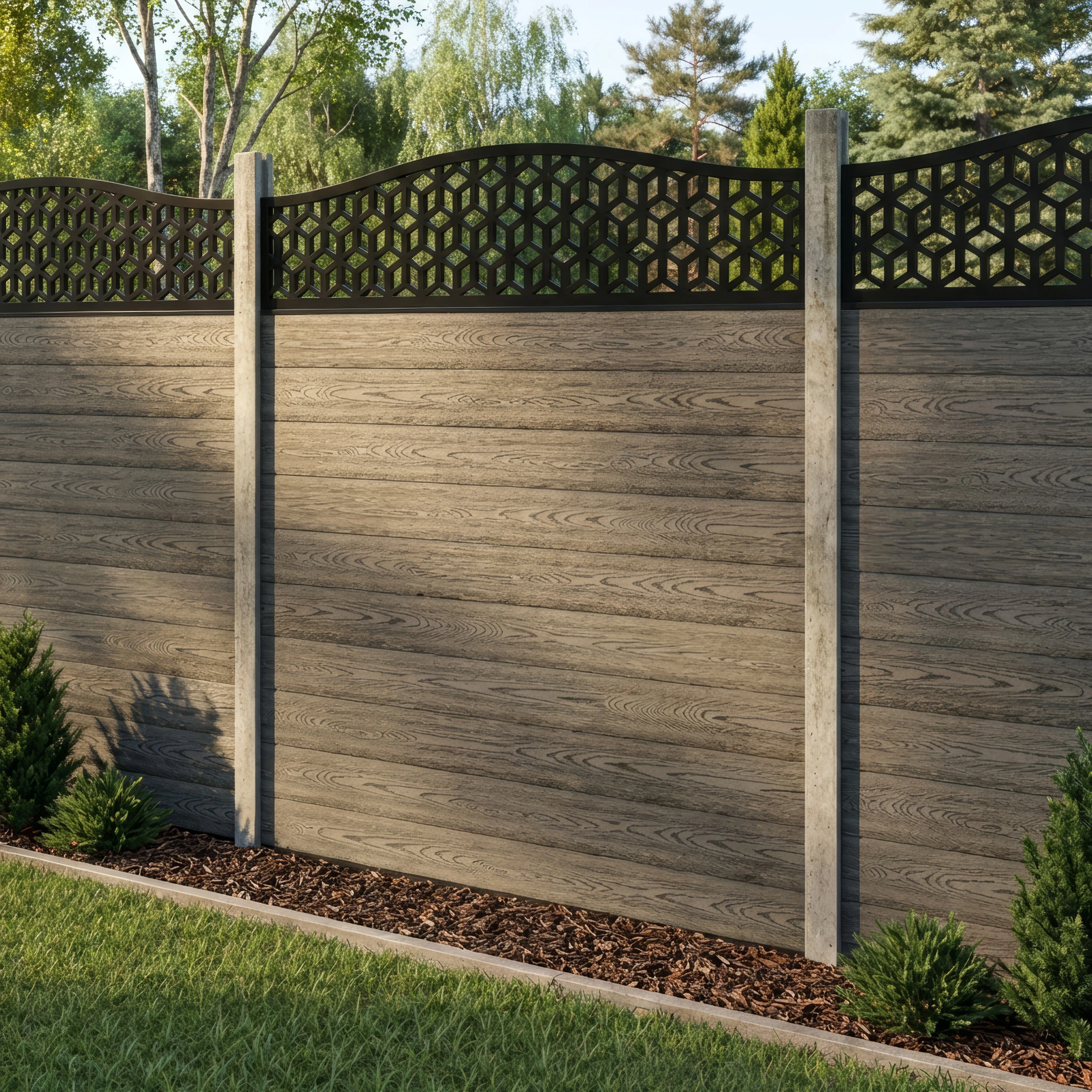
- Lattice-Top Fencing: Lattice-top fencing is best for semi-private gardens because solid lower panels block direct views while the decorative top section keeps the boundary lighter. Lattice-top panels suit neighbour boundaries, patio edges, and traditional gardens that need privacy without a fully closed fence line.
- Venetian Fencing: Venetian fencing is best for premium contemporary screening because narrow horizontal slats create a sharp architectural finish with controlled gaps. Venetian fencing suits modern patios, outdoor kitchens, rendered walls, and garden zones connected to porcelain paving.
- Decorative Screen Panels: Decorative screen panels are best for feature boundaries because patterned metal, composite, or timber panels create privacy, shadow detail, and visual interest. Decorative screens suit seating corners, hot tub areas, outdoor dining zones, and blank garden walls.
- Acoustic Fencing: Acoustic fencing is best for noise-sensitive boundaries because dense, interlocking boards reduce sound movement more effectively than open fencing. Acoustic fencing suits gardens near roads, neighbouring driveways, service areas, and busy outdoor spaces.
- Security Fencing: Security fencing is best for access control because rigid mesh, metal railings, anti-climb profiles, and strong posts make the boundary harder to cross. Security fencing suits driveways, side entrances, commercial edges, and gardens where visibility matters alongside protection.
How Do Fence Materials Match Garden Surfaces?
Fence materials match garden surfaces through colour temperature, texture depth, moisture behaviour, maintenance level, and visual weight, because patios, lawns, gravel paths, decking, and planting borders each change how a fence appears and performs.
Garden surfaces sit directly beside the fence line, so surface choice affects boundary colour, water splashback, shadow depth, cleaning demand, and perceived garden size. A porcelain patio often suits cleaner composite or slatted fencing. A lawn border often suits timber or hedging. A gravel path often suits metal, timber, or woven screening. A planted border often softens concrete posts, closeboard panels, and rendered walls.
The best fence and surface pairings are listed below:
- Composite Fencing With Porcelain Paving: Composite fencing matches porcelain paving where the garden needs a low-maintenance surface and a low-maintenance boundary. Anthracite, black, grey, taupe, and oak-effect composite panels suit concrete-effect, stone-effect, and wood-effect outdoor tiles because both surfaces create clean lines and controlled colour.
- Slatted Timber Fencing With Patio Tiles: Slatted timber fencing matches patio tiles where the garden needs privacy without a heavy boundary. Horizontal slats create shadow lines beside large-format outdoor tiles, while vertical slats add height beside compact patios, narrow courtyards, and seating areas.
- Closeboard Timber Fencing With Lawns: Closeboard timber fencing matches lawns where the garden needs traditional privacy, natural warmth, and a strong rear boundary. Brown, cedar, green, and black timber finishes sit well against grass, planting beds, raised borders, and gravel edging.
- Metal Fencing With Driveways And Front Paths: Metal fencing matches driveways and front paths where visibility, security, and formal edges matter. Black railings work well beside stone effect tiles, brick paths, resin driveways, gravel entrances, and low boundary walls because slim profiles keep the frontage open.
- Concrete Posts With Gravel And Planting Borders: Concrete posts and gravel boards match gravel paths, wet lawn edges, and planting borders where ground moisture affects fence durability. Concrete support lifts timber or composite panels away from soil contact and reduces lower-edge staining from splashback.
- Rendered Garden Walls With Modern Outdoor Tiles: Rendered garden walls match modern outdoor tiles where the garden needs architectural structure, clean colour blocks, and a permanent boundary finish. White, cream, taupe, and grey render can frame porcelain paving, outdoor kitchens, raised planters, and built-in seating.
- Woven Willow Or Hazel With Cottage Planting: Willow and hazel fencing match cottage planting where softer materials suit flowers, herbs, vegetable beds, gravel paths, and informal borders. Woven texture creates a natural surface contrast against stone, gravel, clay pavers, and planted edges.
- Bamboo Screening With Balconies And Small Patios: Bamboo screening matches balconies and small patios where quick visual warmth and lightweight installation matter. Bamboo works well with planters, deck tiles, gravel trays, compact outdoor tiles, and rented garden layouts.
- Living Hedging With Lawns And Natural Stone: Living hedging matches lawns, natural stone, gravel paths, and wildlife planting because green boundaries create seasonal texture and softer edges than hard fence panels. Beech, hornbeam, privet, yew, and mixed native hedging suit gardens where privacy develops through planting rather than panels.
- Vinyl Fencing With Family Garden Surfaces: Vinyl fencing matches family garden surfaces where easy cleaning matters beside lawns, play areas, outdoor dining zones, and paved paths. Smooth panels pair with practical surfaces that need regular washing, including porcelain tiles, concrete slabs, and artificial grass.
How Do You Choose The Best Fence Material?
Choose the best fence material by matching the fence to boundary purpose, privacy level, wind exposure, ground moisture, maintenance tolerance, garden surface, property style, budget, wildlife access, and permitted fence height.
Fence material selection works best as a sequence, not a single product choice. A rear patio boundary needs privacy and surface coordination. A front garden boundary needs visibility and kerb appeal. A windy side passage needs airflow and stronger posts. A damp lawn edge needs concrete gravel boards or moisture-resistant support. A wildlife garden needs hedging, planting, or controlled base gaps.
The fence material selection process is listed below:
- Define The Boundary Purpose: Choose a fence material after identifying whether the boundary needs privacy, security, decoration, pet containment, wind filtering, noise reduction, garden zoning, or neighbour separation.
- Check The Fence Position: Choose a lower, more visible fence style for front gardens and roadside boundaries, and choose taller privacy panels for rear gardens where height limits and local rules allow.
- Measure The Required Privacy: Choose closeboard timber, composite panels, vinyl panels, or solid decorative screens where direct sightlines need blocking, and choose slatted fencing, trellis, railings, or hedging where filtered views are acceptable.
- Assess The Wind Exposure: Choose hit-and-miss fencing, slatted fencing, reinforced closeboard panels, galvanised metal railings, or stronger post systems where wind moves across open fields, side alleys, coastal plots, or raised gardens.
- Review Ground Moisture: Choose concrete posts, concrete gravel boards, composite panels, vinyl panels, or correctly treated timber posts where the fence line touches wet soil, lawns, gravel paths, planting borders, or shaded drainage routes.
- Match The Maintenance Level: Choose composite, vinyl, powder-coated metal, or concrete-supported systems where low maintenance matters, and choose timber, willow, hazel, bamboo, or hedging where seasonal care and natural appearance are acceptable.
- Match The Garden Surface: Choose composite fencing or slatted panels beside porcelain paving and modern outdoor tiles, timber fencing beside lawns and planting borders, metal railings beside driveways, and woven screens beside cottage-style gravel paths.
- Set The Real Budget: Compare panel cost, post cost, gravel board cost, fixings, gates, labour, delivery, waste removal, treatment, repairs, and replacement frequency before choosing the cheapest fence material.
- Consider Wildlife Access: Choose mixed hedging, climber-covered trellis, woven natural screens, or controlled hedgehog gaps where biodiversity matters and pet containment remains safe.
- Check The Property Style: Choose timber or brick boundaries for traditional homes, composite or rendered walls for modern patios, metal railings for formal frontages, and hedging for rural or planting-led properties.
- Plan Posts Before Panels: Choose the post material before finalising panel style because concrete, timber, steel, aluminium, and composite posts control fence stability, panel compatibility, and long-term repair options.
- Choose Gravel Boards Where Needed: Choose concrete, composite, or timber gravel boards where soil, lawn, gravel, or planting touches the fence line, because raised panels stay cleaner and drier.
- Confirm Fence Height Rules: Check boundary height before ordering panels, trellis, gates, or privacy screens because roadside boundaries and rear boundaries follow different planning thresholds.
- Select A Repairable System: Choose fence materials with replaceable boards, removable panels, accessible fixings, and standard post spacing where long-term repair cost matters.
- Coordinate Fence Colour: Choose a fence colour that works with paving, exterior walls, planting, furniture, and garden size. Dark colours sharpen pale patios. Warm timber tones soften grey surfaces. Green tones recede behind planting.
What Mistakes Should Be Avoided When Choosing Fence Materials?
The main mistakes to avoid when choosing fence materials are choosing panels before posts, ignoring wind exposure, overlooking ground moisture, selecting the wrong height, underestimating maintenance, and matching the fence poorly with the garden surface.
Fence material mistakes usually appear after installation because boundary conditions expose weak choices over time. A fence panel can look suitable in-store but fail earlier where posts are weak, soil stays wet, wind hits a solid surface, or the fence colour clashes with patio tiles, planting, and house materials.
The most common fence material mistakes are listed below:
- Choosing Panels Before Posts: Fence posts control stability, lifespan, and repair access more than panel appearance. Concrete posts suit damp ground and long-term support. Timber posts suit natural designs where ground-contact treatment is correct. Metal posts suit slim modern systems and exposed boundaries.
- Ignoring Ground Moisture: Wet soil, lawn edges, planting beds, gravel borders, and shaded corners increase decay risk at the fence base. Concrete gravel boards, composite lower sections, and correctly treated timber posts reduce moisture damage where the fence line meets the ground.
- Using The Wrong Timber Treatment: Above-ground timber treatment is unsuitable for posts buried in soil or concrete. Fence posts need ground-contact protection because the post base faces trapped moisture, reduced airflow, and higher decay pressure than rails or upper boards.
- Forgetting Gravel Boards: Fence panels decay faster where lower board edges touch soil, wet grass, mulch, or gravel. Gravel boards lift panels above splashback zones and protect timber, composite, or vinyl panels from everyday garden moisture.
- Choosing Solid Panels In Windy Gardens: Solid fence panels catch wind across the full surface area. Exposed gardens, side passages, coastal plots, and open-field boundaries need airflow-aware styles such as hit-and-miss fencing, slatted fencing, reinforced closeboard fencing, or stronger post systems.
- Ignoring Fence Height Rules: Fence height planning must happen before buying panels, trellis, gates, or privacy screens. Rear boundaries and roadside boundaries follow different height thresholds, and trellis adds to total height when fixed above a fence.
- Choosing The Cheapest Panel Only: Lowest panel cost does not equal lowest fence cost. Posts, gravel boards, fixings, delivery, waste removal, labour, staining, repairs, and replacement frequency control the real ownership cost.
- Overlooking Maintenance Time: Timber, bamboo, willow, hazel, reed, and hedging need more seasonal care than composite, vinyl, metal, or concrete-supported systems. A natural finish suits many gardens, but treatment, pruning, cleaning, and repair time must match the owner’s maintenance tolerance.
- Mismatching Fence Style With Garden Surface: Fence materials need to sit naturally beside patios, lawns, gravel, decking, planting, and outdoor tiles. Composite works well beside porcelain paving. Timber works well beside lawns and planting borders. Metal works well beside front paths and driveways. Woven screens work well beside cottage planting and gravel.
- Using Dark Colours In Small Shaded Gardens: Dark fence colours can make narrow or shaded gardens feel heavier where light is already limited. Soft grey, muted green, pale oak, warm beige, and natural timber tones often create a lighter boundary in compact spaces.
- Blocking Wildlife Movement Completely: Fully sealed fence bases reduce hedgehog and small wildlife movement between gardens. Mixed hedging, climber-covered trellis, planted borders, and controlled base gaps support biodiversity where pet safety and boundary security remain protected.
- Ignoring Gate And Access Details: A strong fence still performs poorly where the gate sags, latch height is unsafe, hinge posts are weak, or access width is too narrow. Gate material, post strength, swing direction, and threshold clearance need planning with the fence system.
- Assuming Boundary Ownership From Fence Direction: Fence ownership does not come from the direction of posts, rails, or panel faces. Deeds, transfer documents, Land Registry plans, and written agreements provide stronger evidence than common garden assumptions.
- Forgetting Future Repairs: Bespoke panels, non-standard post spacing, hidden fixings, and discontinued colours can increase future repair costs. Standard panel widths, accessible fixings, replaceable boards, and common post systems make long-term maintenance easier.
- Selecting Privacy Without Light Planning: Full-height solid fencing improves screening but can reduce daylight in patios, narrow gardens, and planting beds. Slatted fencing, lattice tops, trellis planting, and mixed-height boundaries balance privacy with airflow and light.
Conclusion
The best fence material is the material that matches the garden’s boundary purpose, surface design, weather exposure, maintenance tolerance, and long-term cost, rather than the material with the strongest general reputation.
Composite fencing suits low-maintenance patios, modern outdoor tiles, rental gardens, and contemporary privacy screens. Pressure-treated timber fencing suits traditional lawns, planting borders, family gardens, and flexible repair-led boundaries. Concrete posts and gravel boards suit damp fence lines where ground moisture, splashback, and lower-edge decay reduce panel lifespan. Metal fencing suits front gardens, driveways, formal boundaries, and visible security edges. Living hedging, woven willow, hazel, reed, and bamboo suit softer garden boundaries where natural texture, biodiversity, and visual screening matter.
The strongest fence specification starts with posts, gravel boards, drainage, wind exposure, height rules, and repair access before panel colour or style. A low-cost fence panel becomes expensive where weak posts, wet ground, poor fixings, or the wrong height create early replacement. A higher-cost fence system becomes better value where low maintenance, moisture resistance, and longer service life reduce future work.
The final choice is simple: choose composite for low maintenance, timber for natural character, concrete for structural support, metal for visible boundaries, hedging for wildlife value, and mixed-material fencing where one garden boundary needs privacy, durability, airflow, and surface coordination together.
