
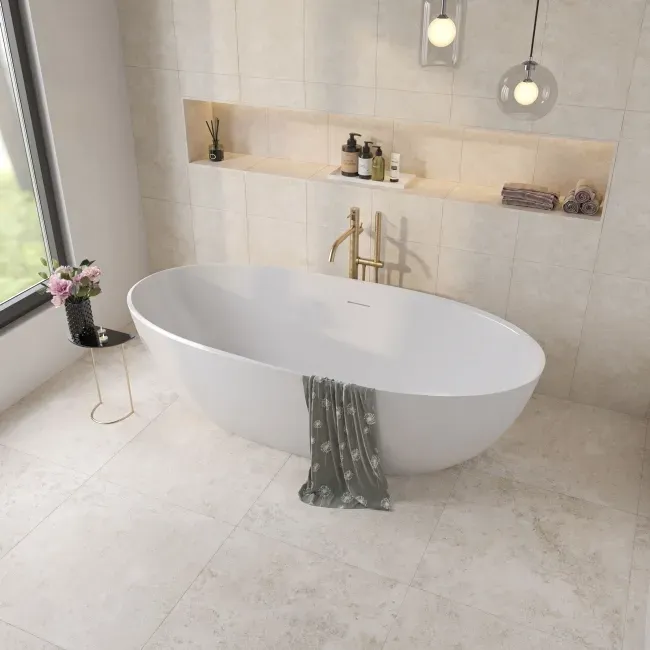
Anti-slip tiles are not significantly harder to clean than smooth tiles, but they are far less forgiving of the wrong cleaning product. A textured floor cleaned correctly takes roughly the same effort as a smooth one. A textured floor cleaned with a waxy or unsuitable product gets progressively worse, because residue builds in the texture, dirt bonds to that residue, and the surface becomes both harder to clean and less slip resistant at the same time.
This guide explains why that happens, debunks the most common maintenance myths, and sets out a routine that keeps a textured floor both clean and gripping.
Table of Contents
Are Anti-Slip Tiles Hard to Clean?
A textured anti-slip tile takes a little more attention than a polished one, but nothing like the burden the myth suggests. The difference is not the amount of scrubbing required; it is that a textured surface has more places for residue to sit, so the choice of cleaning product matters considerably more than it does on a smooth floor.
Most people who find their anti-slip floor difficult to maintain are not dealing with a difficult tile. They are dealing with a floor that has been cleaned with the wrong product for long enough that a film has built up in the texture. Fix the product and the routine, and the floor behaves normally again.
Why Textured Floors Go Wrong: The Residue Cycle
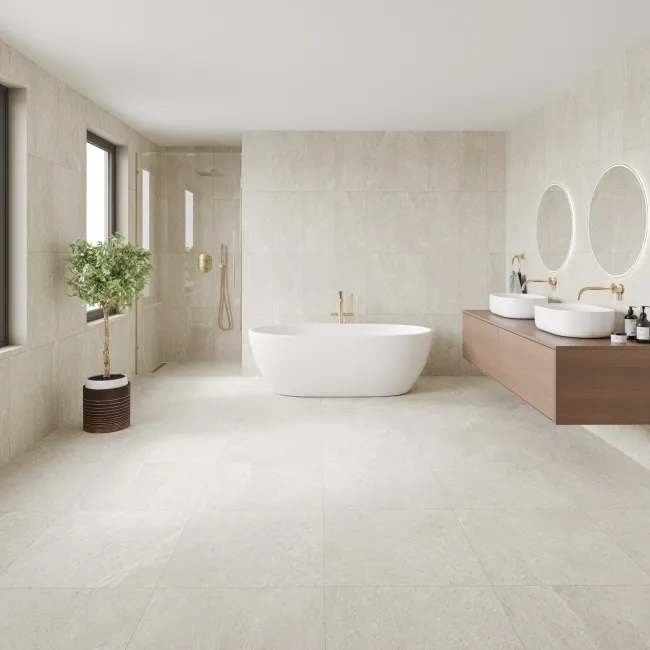
An anti-slip tile that becomes hard to clean has usually entered a self-reinforcing cycle, and understanding it explains almost everything else in this guide.
It runs like this. An unsuitable cleaner, typically one with a waxy or polish-type base, leaves a thin residue across the surface. That residue does not just sit there: it gives dirt something to bond to, so the floor picks up grime faster than it did before. The dirt accumulates in the low points of the texture, and as those low points fill, the surface relief that provided the grip is gradually lost. The floor is now simultaneously dirtier, harder to clean, and less slip resistant than the day it was laid.
The natural response makes it worse. Faced with a floor that no longer cleans up easily, most people reach for something stronger or apply more of the same product, which adds to the residue rather than removing it.
Two things follow from this. First, the fix for a floor in this state is not harder scrubbing but a product designed to strip the accumulated residue, after which normal maintenance resumes. Second, and more importantly, the whole cycle is avoidable by using an appropriate cleaner from the start.
Six Maintenance Myths
Myth 1: “Anti-slip tiles are much harder to clean”
Cleaned correctly, a textured tile requires broadly similar effort to a smooth one. The texture holds more residue if the wrong product is used, but a suitable cleaner and a regular routine keep a textured floor perfectly manageable. The myth largely comes from floors that have been neglected or cleaned with unsuitable products, rather than from the tiles themselves.
Myth 2: “Porcelain is maintenance-free”
Porcelain is highly durable and far more stain resistant than most natural surfaces, but it is not maintenance-free. This myth is the mirror image of the first one and arguably causes more problems. A porcelain floor left without a proper cleaning regime will gradually dull, and on a textured tile it will lose slip resistance as the texture congests. Low maintenance is not no maintenance.
Myth 3: “A stronger cleaner will work better”
Harsh or abrasive products can damage a tile surface and often leave more residue than they remove. Slip resistance depends on the surface texture being intact and clear; an aggressive product that etches or dulls that surface works directly against the reason the tile was chosen. A pH-neutral cleaner suitable for the specific tile, used regularly, outperforms an occasional aggressive clean.
Myth 4: “Polishing makes tiles look and perform better”
Wax and polish-type products are the single most common cause of an anti-slip floor losing its grip. They deposit exactly the kind of film that both reduces friction and gives dirt a surface to cling to. On a floor specified for slip resistance, a polish undoes the specification. If a product promises shine, it is generally not the right product for a textured safety floor.
Myth 5: “Jet washing is the best way to clean outdoor anti-slip tiles”
A jet wash removes surface dirt but does little about ingrained residue, and overuse can damage or erode grout joints. It has its place as an occasional measure, used carefully and at a sensible distance, but it is not a substitute for a proper cleaning treatment. A specialist cleaner formulated to react with ingrained dirt and organic matter does more for the surface and does not risk the grout.
Myth 6: “Sealing an anti-slip tile will protect the grip”
Whether a tile needs sealing depends entirely on the material, and the wrong sealant can reduce slip resistance rather than protect it. Porcelain generally does not need sealing. Natural stone often does, but the product must be appropriate for a floor where grip matters, since a surface-forming sealer behaves quite differently from an impregnating one. Check the tile manufacturer’s guidance before sealing anything specified for slip resistance.
How to Clean Anti-Slip Tiles Properly
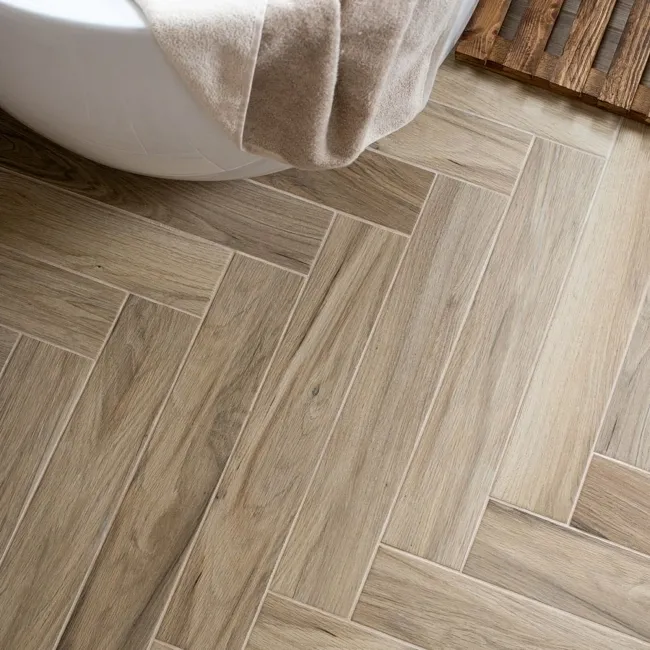
- Sweep or vacuum first. Remove loose grit and hair before introducing water, since dragging grit around a textured surface achieves little and can scratch some finishes.
- Choose a suitable cleaner. Use a product formulated for the tile material and, ideally, for textured surfaces. Check it is suitable for the specific tile before use.
- Work in sections. Apply the solution and let it sit briefly so it can lift the dirt rather than relying on abrasion alone.
- Agitate with a soft or medium brush. A brush reaches into the texture in a way a flat mop cannot. Work along the grout lines as well as across the tile face.
- Rinse thoroughly with clean water. This is the step most often skipped and the one that matters most. Any cleaning solution left on the surface dries into exactly the residue this guide warns about.
- Remove the dirty water rather than spreading it. Change the water when it becomes dirty; mopping a floor with dirty water redeposits what you just lifted.
- Let the floor dry fully. A floor left damp in a humid bathroom encourages mould growth in the grout.
A Realistic Cleaning Routine
| Frequency | Task |
| After use (wet areas) | Rinse down and squeegee or wipe the shower zone to reduce soap residue |
| Weekly | Sweep or vacuum, then wash with a suitable pH-neutral cleaner and rinse |
| Monthly | Brush the grout lines and check for limescale build-up, particularly in hard water areas |
| Periodically | Deep clean with a product formulated to lift ingrained residue, then rinse thoroughly |
| Annually | Inspect grout for cracking or wear and refill where needed |
What to Avoid
- Wax and polish-based cleaners, which leave a slippery film and attract dirt.
- Oil-based or “shine” products, for the same reason.
- Harsh abrasives and scouring pads, which can damage the surface the grip depends on.
- Leaving cleaning solution to dry on the floor rather than rinsing it off.
- Strong acidic products on natural stone, which can etch the surface; check suitability before use.
- Steam cleaning on some finishes, which can affect certain surfaces and grouts; check the manufacturer’s guidance first.
Don’t Forget the Grout
Grout lines contribute meaningfully to a floor’s overall grip, and they show dirt sooner than the tile itself. On a small-format or mosaic floor there is a lot of grout per square metre, and its condition affects both appearance and traction.
Worn or cracked grout loses texture and, in a wet area, stops resisting water penetration properly. A soft brush along the joints during a routine clean does most of the work. Choosing a darker or colour-matched grout at installation also reduces how quickly a floor starts to look dirty between cleans, without changing how often it actually needs cleaning.
Signs Your Floor Is Losing Its Grip
- The floor feels smoother underfoot than it did when new, particularly along the main walking routes.
- Water beads or sits differently on the surface than it used to.
- The texture looks flattened or filled when viewed closely, with the low points of the relief no longer clearly defined.
- A dull, slightly greasy film is visible under raking light, or the floor feels faintly tacky when dry.
Any of these usually points to residue or ingrained dirt rather than a worn-out tile, and a proper deep clean with an appropriate product will often restore a floor that seemed to have lost its character.
Cleaning Anti-Slip Tiles Outdoors
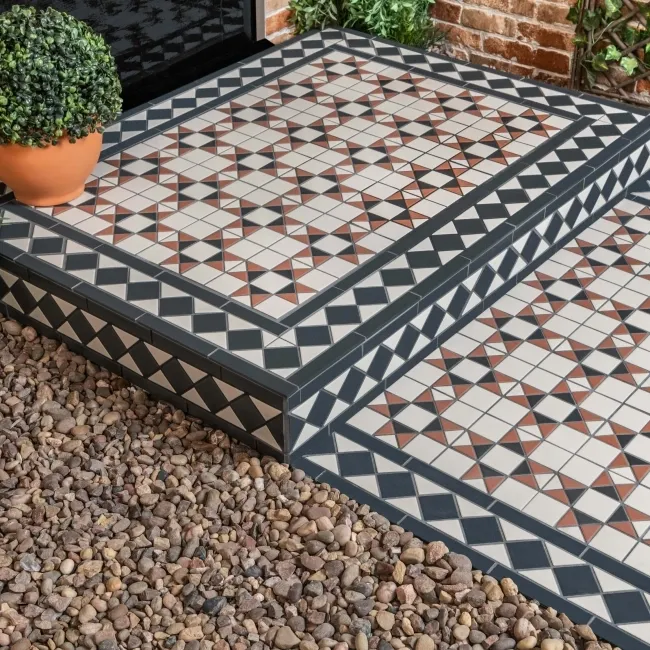
Outdoor anti-slip tiles face organic growth rather than soap residue, which changes the approach. Algae, moss, lichen and black spot all develop on outdoor surfaces, particularly in shaded or damp areas, and they reduce grip as well as looking unsightly.
Regular sweeping to remove leaves and debris prevents much of it, since decaying organic matter feeds the growth. Where treatment is needed, a product formulated for algae and organic staining on tile or stone will react with the growth rather than simply blasting the surface. Jet washing can be used with care, but keep it occasional, hold the lance at a sensible distance, and be aware that repeated use can erode grout joints over time.
The Honest Trade-Off
A textured floor does ask for more consistency than a polished one, and it is fair to say so. The texture that provides grip also provides somewhere for soap, limescale and grime to sit, and a textured floor that goes a month without attention will look worse than a smooth floor treated the same way.
What is not true is that this amounts to a significantly harder cleaning job. A weekly wash with a suitable product and a proper rinse handles it. Set against the alternative, which is a smoother floor that offers less grip in a space where people are barefoot and the floor is wet, most households find that a straightforward trade.
If cleaning effort is a genuine concern, the sensible response is to specify by zone rather than to compromise on the wet area: a higher-grip tile where water actually lands, and a smoother finish elsewhere. Our guide to bathroom floor safety and slip resistance covers how to make that decision.
Keeping Grip and Cleanliness Together
Use the right product, rinse properly, and clean often enough that build-up never starts. That is genuinely the whole answer. Anti-slip tiles are not hard to clean; they are unforgiving of wax, polish and neglect in a way that smooth tiles can disguise for longer. Get the routine right and a textured floor stays both clean and safe for years. Browse the anti-slip tile range, explore tile care and cleaning products, or see our Slip Ratings Explained guide for how the ratings themselves work.
Frequently Asked Questions
Are anti-slip tiles harder to clean than normal tiles?
Not significantly, provided a suitable cleaner is used and the floor is rinsed properly. The texture holds more residue if the wrong product is used, which is why anti-slip tiles are less forgiving of waxy or polish-based cleaners than smooth tiles are.
What cleaner should I use on anti-slip tiles?
A pH-neutral cleaner formulated for the tile material, ideally one intended for textured surfaces. Avoid wax, polish and shine products entirely, and check any cleaner is suitable for the specific tile before use, particularly on natural stone.
Can anti-slip tiles lose their slip resistance?
Yes, slip resistance reduces as dirt and residue accumulate in the surface texture and effectively fill it in. This is usually reversible with a proper deep clean using a product designed to lift ingrained residue, rather than being permanent wear.
Why does my anti-slip floor feel slippery?
A slippery textured floor almost always has a film of residue on it, most often from a wax or polish-based cleaner. Stripping that residue with an appropriate product usually restores the grip, after which switching to a suitable cleaner prevents it returning.
Can I use a steam cleaner on anti-slip tiles?
It depends on the tile and grout, so check the manufacturer’s guidance first. Steam can affect some finishes and grouts, and it is not automatically suitable simply because it uses no chemicals.
How often should I clean an anti-slip bathroom floor?
A weekly wash with a suitable cleaner is a sensible baseline for a domestic bathroom, with a quick rinse of the shower zone after use. Frequency matters more than intensity, since regular light cleaning prevents the build-up that would otherwise require an aggressive deep clean.
