
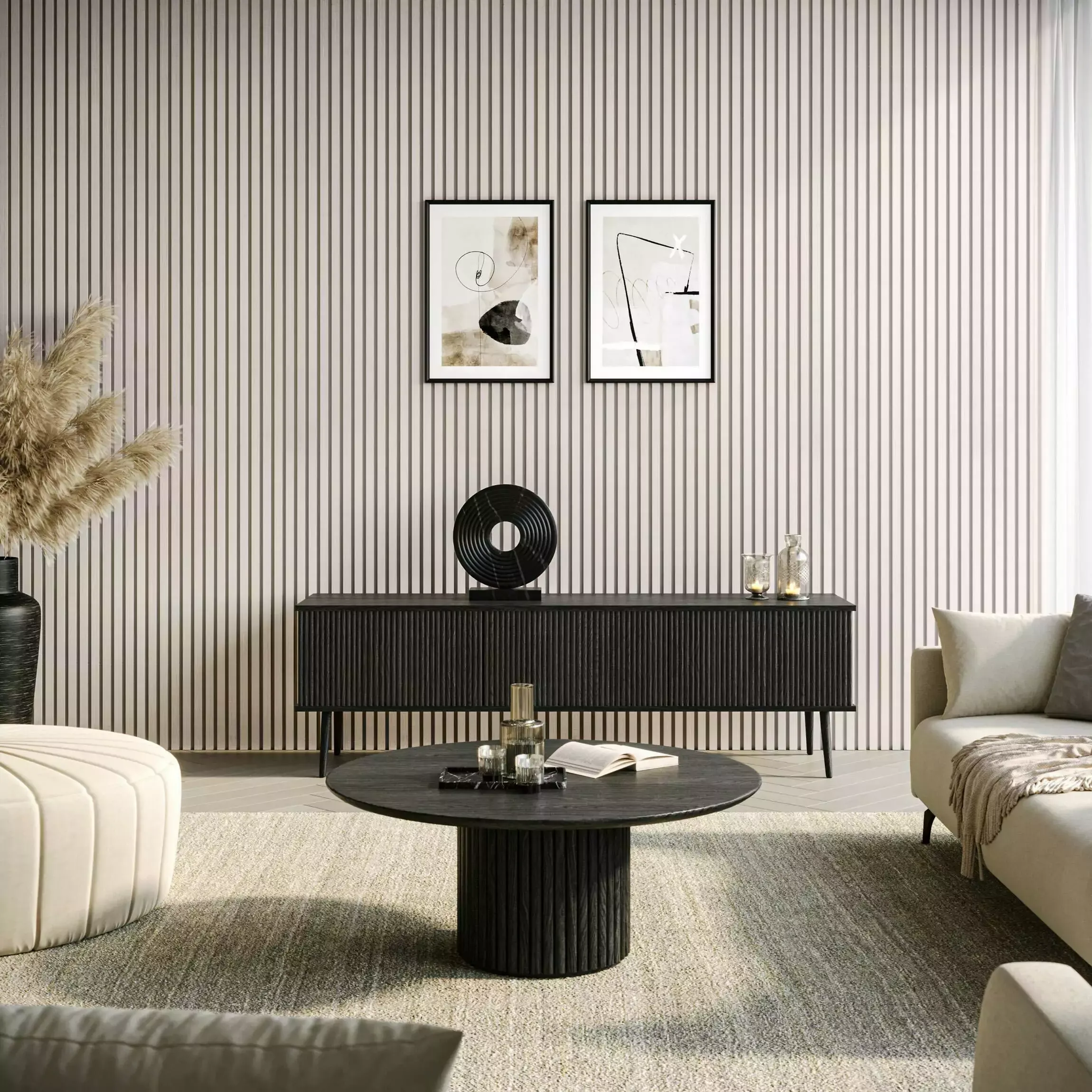
Wall panels are becoming one of the biggest interior trends because modern homes need walls with more surface detail, clearer room purpose and stronger design impact. Acoustic slat panels, waterproof bathroom panels, fluted panels, wood effect panels and stone effect panels are leading the shift.
Plain painted walls still have a place, but panelled walls now help define media walls, shower spaces, headboard walls, hallway routes and home office backdrops. Each panel type adds a different surface role, from vertical rhythm and natural grain to wet-area coverage and acoustic backing.
In this guide, we look at the wall panels we think are becoming the next big thing, the rooms driving the trend, the materials that matter most, the colours gaining momentum and the mistakes that can make wall panels look dated.
Table of Contents
Why Are Wall Panels Becoming A Bigger Interior Trend?
Wall panels are becoming a bigger interior trend because homeowners want walls with surface depth, defined zones and practical room value. Modern wall panels create media backdrops, shower surfaces, headboard features, hallway protection and home office structure.
Texture-Led Wall Design
Wall panels add depth to flat walls through slats, grooves, ribs, wood grain, stone effects and raised profiles. A panelled wall creates a more designed surface without changing the full room layout.
Wall panels work especially well behind:
- Sofas
- Beds
- TV units
- Dining tables
- Desks
- Bathroom vanities
Multi-Use Modern Rooms
Wall panels suit modern homes because rooms now serve more than one purpose. Living rooms, bedrooms, hallways, bathrooms and home offices all need walls with stronger practical and visual value.
Wall panels support modern room needs in these ways:
- Living rooms: Wall panels create media walls, fireplace walls and textured feature walls.
- Bedrooms: Wall panels create warmer headboard walls and calmer sleeping spaces.
- Home offices: Acoustic wall panels help reduce echo and improve video-call backgrounds.
- Bathrooms: Waterproof wall panels reduce grout lines and make wet areas easier to clean.
- Hallways: Half-height wall panels protect busy lower walls and add structure.
- Dining rooms: Fluted wall panels create a more finished backdrop behind dining furniture.
Practical Wall Performance
Wall panels add function as well as style. Acoustic panels support sound comfort, waterproof panels support wet areas and large-format panels cover walls quickly.
The main practical benefits are listed below:
- Texture: Wall panels add visual depth to flat rooms.
- Warmth: Wood-effect wall panels soften modern interiors.
- Sound comfort: Acoustic slat panels help reduce echo in busy rooms.
- Cleaning: Bathroom wall panels reduce visible grout lines.
- Speed: Large wall panels cover more surface area with fewer pieces.
- Zoning: Feature wall panels define TV areas, bedsides, desk spaces and dining zones.
- Wall protection: Half-height panels protect high-contact walls in hallways and dining rooms.
Popular Wall Panel Finishes
Wood, fluted and stone effect wall panels are popular because these finishes make rooms feel warmer, more textured and more complete. Each finish creates a stronger design effect than paint alone.
- Wood effect wall panels: Natural grain, oak tones and walnut finishes make living rooms, bedrooms and hallways feel warmer.
- Fluted wall panels: Ribbed profiles create soft shadow lines behind beds, sofas, vanities and dining furniture.
- Stone effect wall panels: Slate, travertine and concrete finishes add a stronger surface finish to bathrooms, cloakrooms and feature walls.
- Marble effect wall panels: Veined surfaces create a cleaner hotel-style look around showers, baths and vanity areas.
- Acoustic slat wall panels: Vertical slats and acoustic backing add texture and sound comfort in living rooms, offices and media walls.
Long-Term Interior Value
Wall panels are more than a short-term trend because modern panels solve real room problems. Wall panels improve texture, cleaning, sound comfort, wall protection and room zoning while adding a stronger surface finish.
Wall panels are becoming popular because one surface can serve more than one purpose. Acoustic slat panels add texture and support sound comfort. Waterproof panels improve bathroom practicality. Wood-effect panels bring warmth. Fluted panels add detail without heavy decoration.
Which Wall Panels Do We Think Are The Next Big Thing?
Acoustic slat panels, waterproof bathroom panels, fluted panels, wood effect panels, tile effect panels and stone-effect panels are the wall panels we think are becoming the next big thing. Each style adds stronger texture, clearer function and more design value than a plain painted wall.
Wall panels are becoming more varied and more practical. The biggest wall panel trends now focus on how a room looks, feels and performs. Some panels add warmth. Some panels help reduce echo. Some panels make bathrooms easier to clean. Some panels create a bold feature wall without a full room renovation.
The wall panels with the strongest trend potential are listed below:
Acoustic Slat Wall Panels
Acoustic slat wall panels are one of the strongest wall panel trends because the panels combine vertical texture with sound comfort. The slatted surface creates a modern feature wall, while acoustic backing helps soften echo in busy rooms.
These wall panels work especially well in living rooms, home offices and media walls. A TV wall feels more finished. A desk wall looks cleaner on video calls. A bedroom wall gains a warmer headboard-style surface.
Best suited to:
- Living rooms: Acoustic slat wall panels create a textured backdrop behind sofas, fireplaces and media walls.
- Home offices: Acoustic slat wall panels help soften echo and create a cleaner video-call background.
- Bedrooms: Acoustic slat wall panels create a warmer headboard-style wall behind beds.
- Dining rooms: Acoustic slat wall panels add depth behind sideboards, benches and dining tables.
- Hallways: Acoustic slat wall panels add vertical rhythm to long or narrow walls.
Waterproof Bathroom Wall Panels
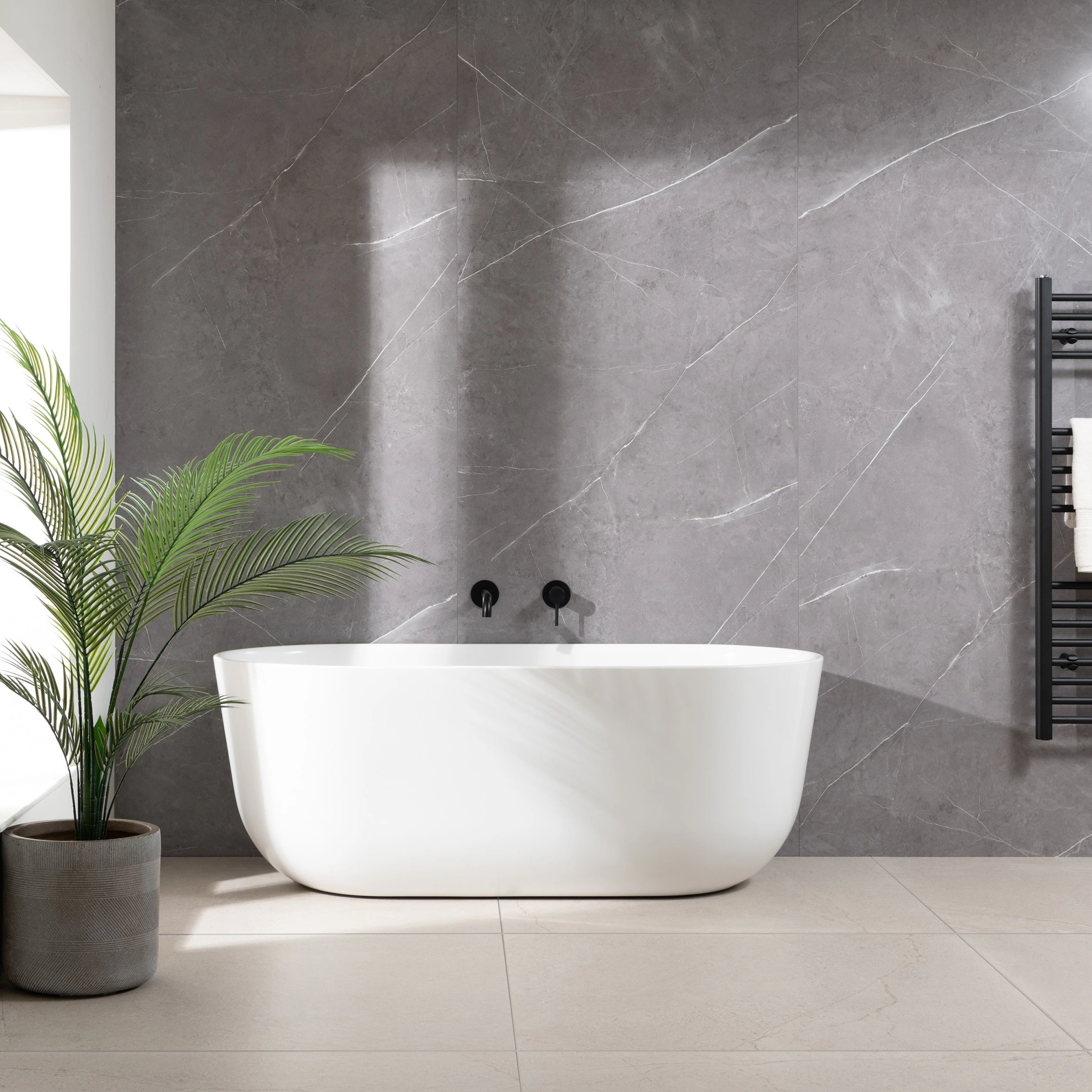
Waterproof bathroom wall panels are becoming a major trend because the panels create cleaner wet-area surfaces with fewer grout lines. Shower walls, bath surrounds and cloakrooms benefit from a surface that is easier to wipe and simpler to maintain.
These wall panels suit modern bathrooms where homeowners want a smooth, practical finish. Marble-effect, stone-effect and tile-effect bathroom panels are strong styles because these surfaces combine familiar bathroom looks with easier cleaning.
Best suited to:
- Shower enclosures: Waterproof bathroom wall panels create a sealed surface with fewer grout lines.
- Bath surrounds: Waterproof bathroom wall panels protect splash zones around built-in and freestanding baths.
- Cloakrooms: Waterproof bathroom wall panels add easy-clean surfaces in small wash spaces.
- Vanity walls: Waterproof bathroom wall panels create a cleaner backdrop behind basins and mirrors.
- Utility rooms: Waterproof bathroom wall panels support walls near sinks, washing machines and cleaning areas.
Fluted Wall Panels
Fluted wall panels are becoming popular because the ribbed surface adds depth without heavy decoration. The vertical grooves create shadow, movement and a more premium wall finish.
These wall panels suit bedrooms, bathrooms, dining rooms and living rooms. A fluted panel behind a vanity, bed or sofa creates a clear focal point without making the room feel crowded.
Best suited to:
- Bathroom vanities: Fluted wall panels create soft shadow lines behind basins, mirrors and wall lights.
- Bedroom headboards: Fluted wall panels create a taller, more finished bed wall.
- Living room alcoves: Fluted wall panels add texture inside shelves, recesses and fireplace returns.
- Dining rooms: Fluted wall panels create a refined backdrop behind sideboards and dining seating.
- Hallways: Fluted wall panels add detail without using heavy pattern.
Wood-Effect Wall Panels
Wood-effect wall panels are becoming a long-term trend because wood tones make modern rooms feel warmer and softer. Oak, walnut, smoked oak and pale wood finishes work across classic and contemporary interiors.
These wall panels suit rooms where comfort matters. Bedrooms feel calmer. Living rooms feel warmer. Hallways feel more structured. Dining rooms feel more finished.
Best suited to:
- Bedrooms: Wood-effect wall panels add warmth behind beds and bedside lighting.
- Living rooms: Wood-effect wall panels soften TV walls, fireplace walls and seating areas.
- Hallways: Wood-effect wall panels make entrance spaces feel warmer and more structured.
- Dining rooms: Wood-effect wall panels create a richer backdrop behind dining furniture.
- Home offices: Wood-effect wall panels create a calmer, more natural workspace.

Tile-Effect Wall Panels
Tile-effect wall panels are gaining attention because the panels create a tiled look with fewer visible joints. These wall panels suit bathrooms, utility rooms and splash-prone areas where cleaning and surface coverage matter.
Tile-effect wall panels work well for homeowners who like the look of tiles but prefer a simpler wall surface. Metro tile, marble tile, terrazzo tile and stone tile effects are strong options for modern bathrooms.
Best suited to:
- Bathrooms: Tile-effect wall panels create a tiled look with fewer visible joints.
- Shower areas: Tile-effect wall panels suit wet zones when the panel specification confirms waterproof use.
- Utility rooms: Tile-effect wall panels protect splash-prone walls near sinks and appliances.
- Cloakrooms: Tile-effect wall panels create a cleaner decorative finish in compact spaces.
- Kitchen splashbacks: Tile-effect wall panels suit splashback areas where the panel specification allows heat and moisture exposure.
Stone-Effect Wall Panels
Stone-effect wall panels are becoming a statement surface because marble, slate, travertine and concrete effects add strong visual impact. These wall panels create a more premium look without relying on small-format wall coverings.
Stone-effect panels work especially well in bathrooms, cloakrooms and feature walls. A single stone-effect wall can make a small room feel more designed and a larger room feel more complete.
Best suited to:
- Bathrooms: Stone-effect wall panels create a stronger spa-style surface around showers and baths.
- Cloakrooms: Stone-effect wall panels make small spaces feel more designed.
- Feature walls: Stone-effect wall panels create impact behind fireplaces, consoles and media units.
- Vanity areas: Stone-effect wall panels add depth behind mirrors, basins and wall lights.
- Dining rooms: Stone-effect wall panels create a premium backdrop behind sideboards and dining furniture.
Half-Height Wall Panels
Half-height wall panels are returning because lower-wall panelling adds structure and helps protect busy walls. Hallways, dining rooms, bedrooms and stair walls benefit from this format.
These wall panels work well in homes that need a balance between classic detail and modern simplicity. Painted upper walls, wallpaper or plain plaster above the panels can create a layered interior finish.
Best suited to:
- Hallways: Half-height wall panels protect lower walls from daily marks.
- Dining rooms: Half-height wall panels add structure below paint or wallpaper.
- Bedrooms: Half-height wall panels create a simple headboard-style feature.
- Stair walls: Half-height wall panels add definition along high-contact routes.
- Cloakrooms: Half-height wall panels add detail without overwhelming a small room.
Flexible Wall Panels
Flexible wall panels are becoming more useful because curved interiors and softer room shapes are growing in popularity. Bendable panels can wrap around columns, arches, curved corners and rounded feature areas.
These wall panels create a more tailored finish where flat panels are harder to use. Flexible slat designs are especially useful for modern homes with curved details or bespoke feature walls.
Best suited to:
- Curved corners: Flexible wall panels wrap around softer architectural edges.
- Columns: Flexible wall panels cover round or awkward upright surfaces.
- Arches: Flexible wall panels add texture around arched openings and recesses.
- Rounded media walls: Flexible wall panels create a smoother feature-wall finish.
- Open-plan zones: Flexible wall panels help define softer transitions in larger rooms.
Which Rooms Are Driving The Wall Panel Trend?
Living rooms, bathrooms, bedrooms, hallways, home offices and dining rooms are driving the wall panel trend because each room now uses walls as active design surfaces. Wall panels help define zones, frame furniture and support daily room use.
Wall panels are becoming popular because different rooms need different surface solutions. A living room often needs a feature wall. A bathroom needs a surface that handles moisture. A bedroom needs warmth and calm. A hallway needs protection from daily marks. A home office needs better sound comfort and a cleaner backdrop.
Wall panel choice works best when the room purpose comes first and the finish comes second.
Living Rooms
Living rooms are driving the wall panel trend because modern living spaces often need a stronger focal point. Acoustic slat panels, wood-effect panels and stone-effect panels help create media walls, fireplace walls and textured seating areas.
Living room wall panels work especially well for:
- Media walls: Acoustic slat panels create a textured background around TV units and floating storage.
- Fireplace walls: Stone-effect panels create a stronger surface behind electric fires and chimney breast features.
- Sofa walls: Wood-effect wall panels add warmth behind seating areas.
- Open-plan spaces: Wall panels help separate lounge areas from dining or kitchen zones.
- Alcoves: Fluted or slat panels add texture inside recessed walls and shelving areas.
Bathrooms
Bathrooms are driving the wall panel trend because waterproof wall panels create cleaner surfaces with fewer grout lines. Bathroom wall panels suit showers, bath surrounds, vanity walls and cloakrooms where moisture and cleaning matter every day.
Bathroom wall panels work especially well for:
- Shower enclosures: Waterproof panels create a smooth wet-area surface.
- Bath surrounds: Waterproof panels protect splash-prone walls.
- Vanity walls: Stone-effect and marble-effect panels create a cleaner basin backdrop.
- Cloakrooms: Wall panels add design impact in a small space.
- Utility-style bathrooms: Tile-effect panels create a practical wall finish with fewer visible joints.
Bedrooms
Bedrooms are driving the wall panel trend because wall panels create warmth, softness and a more finished bed wall. Wood-effect panels, acoustic slat panels and half-height panels work well behind beds and bedside lighting.
Bedroom wall panels work especially well for:
- Headboard walls: Wood-effect or acoustic slat panels create a full-width bed feature.
- Calm sleep spaces: Pale wood panels and soft neutral finishes reduce visual harshness.
- Small bedrooms: Vertical wall panels help the room feel taller.
- Dressing areas: Fluted panels create a refined backdrop behind mirrors or wardrobes.
- Guest rooms: Half-height panels add structure without heavy decoration.
Hallways
Hallways are driving the wall panel trend because narrow and busy entrance spaces need wall protection and stronger structure. Half-height panels, wood-effect panels and fluted panels help hallways feel more considered without taking up floor space.
Hallway wall panels work especially well for:
- Entrance walls: Half-height wall panels protect lower walls from daily marks.
- Long corridors: Vertical slat panels add rhythm and reduce the look of a plain tunnel-like wall.
- Stair walls: Wall panels add structure along high-contact routes.
- Console areas: Fluted panels create a stronger backdrop behind mirrors and slim furniture.
- Narrow spaces: Pale wood-effect panels add warmth without making the hallway feel heavy.
Home Offices
Home offices are driving the wall panel trend because workspaces need sound comfort, visual order and a professional backdrop. Acoustic wall panels and wood-effect panels help reduce echo and create a more focused working area.
Home office wall panels work especially well for:
- Desk walls: Acoustic slat panels create a smart video-call background.
- Small offices: Vertical panels add structure without using extra furniture.
- Shared rooms: Wall panels help separate work zones from living or bedroom areas.
- Echo-prone spaces: Acoustic panels help soften sound in rooms with hard floors or minimal soft furnishings.
- Reading corners: Wood-effect panels create a warmer, calmer work setting.
Dining Rooms
Dining rooms are driving the wall panel trend because wall panels create a more finished backdrop for eating, hosting and social spaces. Fluted panels, half-height panels and wood-effect panels add texture behind dining tables, benches and sideboards.
Dining room wall panels work especially well for:
- Feature walls: Fluted panels create a refined surface behind dining furniture.
- Sideboard walls: Wood-effect panels add depth behind storage and display pieces.
- Banquette seating: Half-height panels protect the wall behind fixed seating.
- Open-plan dining zones: Wall panels help define the dining area within a larger room.
- Traditional-modern schemes: Painted half-height panels add structure beneath artwork, mirrors or wallpaper.
Utility Rooms And Cloakrooms
Utility rooms and cloakrooms are also supporting the wall panel trend because small practical spaces benefit from easy-clean surfaces and stronger design impact. Tile-effect panels, waterproof panels and stone-effect panels suit compact rooms where every surface is visible.
Utility room and cloakroom wall panels work especially well for:
- Sink walls: Waterproof or tile-effect panels protect splash-prone areas.
- Compact cloakrooms: Stone-effect panels make small spaces feel more designed.
- Laundry areas: Easy-clean panels support walls near washing machines and worktops.
- Vanity corners: Marble-effect panels create a cleaner backdrop behind mirrors and basins.
- Small feature walls: Fluted or wood-effect panels add texture without using floor space.
Room-By-Room Wall Panel Suitability
The table below shows which wall panel types suit each room and why each room is helping to drive the wall panel trend.
| Room | Best Wall Panel Type | Main Purpose |
| Living room | Acoustic slat panels | Texture, sound comfort and media-wall focus |
| Bathroom | Waterproof wall panels | Moisture resistance and easier cleaning |
| Bedroom | Wood-effect panels | Warmth, softness and headboard-style focus |
| Hallway | Half-height panels | Wall protection and added structure |
| Home office | Acoustic wall panels | Echo reduction and professional backdrop |
| Dining room | Fluted wall panels | Texture and a more finished hosting space |
| Cloakroom | Stone-effect panels | Small-room design impact |
| Utility room | Tile-effect wall panels | Practical splash protection |
Wall panels are growing fastest in rooms where one wall surface solves a clear design or practical problem. Living rooms need focus. Bathrooms need easier cleaning. Bedrooms need warmth. Hallways need protection. Home offices need sound comfort. Dining rooms need a more finished backdrop.
Which Wall Panel Materials Matter Most?
MDF, PVC, laminate, wood veneer, felt-backed acoustic board, mineral-core board and composite board are the wall panel materials that matter most. Each material performs differently for moisture resistance, sound comfort, cleaning, weight, durability and installation.
Wall panel material matters because the same finish does not suit every room. A bathroom wall panel needs moisture resistance. A living room wall panel needs texture and stability. A home office wall panel may need acoustic support. A hallway wall panel needs stronger resistance against daily contact.
The best wall panel material depends on room use first and appearance second.
MDF Wall Panels
MDF wall panels are a popular choice for decorative dry-room panelling because MDF creates a smooth, paintable and structured wall finish. MDF panels suit bedrooms, hallways, dining rooms and living rooms where moisture exposure stays low.
MDF wall panels work well for:
- Half-height panelling: MDF creates a clean lower-wall structure in hallways and dining rooms.
- Shaker-style panels: MDF gives painted wall panels a neat framed appearance.
- Bedroom feature walls: MDF adds a headboard-style effect behind beds.
- Living room detailing: MDF supports fireplace walls, alcoves and decorative wall grids.
- Painted finishes: MDF takes paint well when the surface is prepared correctly.
MDF wall panels are not the best choice for direct wet areas unless the panel specification confirms moisture suitability.
PVC Wall Panels
PVC wall panels matter because PVC offers a lightweight and waterproof surface for bathrooms, cloakrooms and utility rooms. PVC panels are often used where easy cleaning, low weight and moisture resistance matter most.
PVC wall panels work well for:
- Shower areas: PVC wall panels can suit wet zones when the product specification confirms shower suitability.
- Bath surrounds: PVC panels help protect splash-prone walls.
- Cloakrooms: PVC panels create an easy-clean surface in compact wash spaces.
- Utility rooms: PVC panels support walls near sinks, appliances and cleaning areas.
- Quick updates: PVC panels can cover larger areas faster than many small-format finishes.
PVC wall panels usually feel lighter than laminate or mineral-core panels, so specification and finish quality matter when choosing a long-term bathroom surface.

Laminate Wall Panels
Laminate wall panels matter because laminate creates a durable decorative surface with stronger finish realism than many lightweight plastic panels. Laminate panels suit bathrooms, shower areas, cloakrooms and high-use walls when the product specification confirms moisture performance.
Laminate wall panels work well for:
- Bathroom feature walls: Laminate panels create stone, marble, tile and concrete effects.
- Shower walls: Laminate panels can create a cleaner wet-zone surface with fewer joins.
- Vanity areas: Laminate panels offer a practical backdrop behind basins and mirrors.
- Family bathrooms: Laminate finishes handle regular cleaning better than many delicate decorative surfaces.
- Modern renovations: Laminate panels give large-format wall coverage with a more finished look.
Laminate wall panels need accurate cutting, correct trims and proper sealing because wet-area performance depends on the full installation system.
Wood Veneer Wall Panels
Wood veneer wall panels matter because real wood surface layers add natural grain, warmth and richer texture to dry interiors. Wood veneer panels suit living rooms, bedrooms, dining rooms and home offices where the wall surface becomes a design feature.
Wood veneer wall panels work well for:
- Living rooms: Wood veneer panels create a warmer TV wall or seating backdrop.
- Bedrooms: Wood veneer panels create a softer headboard-style wall.
- Dining rooms: Wood veneer panels add richness behind sideboards and dining tables.
- Home offices: Wood veneer panels create a calmer, more natural work setting.
- Feature walls: Wood veneer panels show stronger grain variation than many printed wood-effect surfaces.
Wood veneer wall panels need the correct indoor setting because natural wood surfaces can react to moisture, heat and direct sunlight.
Felt-Backed Acoustic Wall Panels
Felt-backed acoustic wall panels matter because the felt backing helps soften echo while the slatted face adds modern texture. These panels suit living rooms, home offices, bedrooms, dining rooms and media walls.
Felt-backed acoustic wall panels work well for:
- Media walls: Acoustic panels add texture around TV units and entertainment areas.
- Home offices: Acoustic panels help reduce echo during calls and focused work.
- Bedrooms: Acoustic slat panels create a warmer and softer bed wall.
- Living rooms: Acoustic panels improve sound comfort in rooms with hard floors.
- Dining rooms: Acoustic panels help soften noise in sociable spaces.
Felt-backed acoustic wall panels are best for dry rooms and should not be used in direct wet areas unless the product specification clearly states moisture suitability.
Mineral-Core Wall Panels
Mineral-core wall panels matter because mineral-based boards offer a strong, stable and moisture-suitable surface for bathrooms and wet zones. These panels suit shower walls, bathroom feature walls and high-use moisture areas.
Mineral-core wall panels work well for:
- Shower enclosures: Mineral-core panels create a stable wet-wall surface when fitted with the correct system.
- Bath surrounds: Mineral-core panels protect larger splash zones.
- Bathroom feature walls: Mineral-core panels support stone, marble and concrete-style finishes.
- Family bathrooms: Mineral-core boards give a more substantial feel than many lightweight panels.
- High-use wash spaces: Mineral-core panels suit areas where durability and cleaning matter together.
Mineral-core wall panels are usually heavier than PVC panels, so wall condition, handling and fixing method matter during installation.
Composite Wall Panels
Composite wall panels matter because composite construction combines different layers for strength, stability, finish quality and practical performance. Composite panels suit feature walls, bathroom walls, media walls and commercial-style home spaces, depending on the panel structure.
Composite wall panels work well for:
- Feature walls: Composite panels create a stable decorative wall surface.
- Bathrooms: Waterproof composite panels suit wet areas when the specification confirms use.
- Media walls: Composite slat or decorative panels create structured TV wall surfaces.
- Hallways: Composite panels add durability in busy areas.
- Modern interiors: Composite panels support wood-effect, stone-effect and textured finishes.
Composite wall panels vary by construction, so buyers should check moisture rating, fire rating where relevant, thickness, weight and fixing method before choosing a panel.
Wall Panel Material Comparison
The table below compares common wall panel materials by strength, best room use and main limitation.
| Material | Best Strength | Best Room Use | Main Limitation |
| MDF | Smooth and paintable decorative detail | Bedrooms, hallways, dining rooms and living rooms | Not suitable for direct wet areas unless specified |
| PVC | Lightweight waterproof performance | Bathrooms, cloakrooms and utility rooms | Can feel less substantial than heavier boards |
| Laminate | Durable decorative surface | Bathrooms, shower walls and high-use walls | Requires accurate cutting, trims and sealing |
| Wood veneer | Natural grain and warmer texture | Living rooms, bedrooms, dining rooms and home offices | Moisture and sunlight sensitivity varies by specification |
| Felt-backed acoustic board | Sound comfort and slatted texture | Living rooms, offices, bedrooms and media walls | Not designed for direct wet areas unless specified |
| Mineral-core board | Stable and moisture-suitable structure | Bathrooms, showers and high-use wet zones | Heavier than many lightweight panels |
| Composite board | Layered strength and finish versatility | Feature walls, bathrooms, hallways and media walls | Performance varies by construction and specification |
Which Wall Panel Colours And Finishes Are Gaining Momentum?
Warm neutrals, oak, walnut, smoked wood, black slats, soft grey, travertine, marble-effect, stone-effect and muted green wall panels are gaining momentum because modern interiors now favour warmth, texture and calmer contrast over plain flat walls.
Wall panel colours are moving towards finishes that make rooms feel warmer, softer and more layered. Bright white walls still work in many homes, but textured surfaces in natural shades now create a more finished look.
The strongest wall panel colours and finishes are those that support the room purpose. A bathroom often suits marble-effect or stone-effect panels. A living room often suits oak, walnut or black slat panels. A bedroom often suits pale wood or soft neutral panels. A hallway often suits painted half-height panels or warm wood-effect panels.
Warm Neutral Wall Panels
Warm neutral wall panels are gaining popularity because beige, taupe, sand and soft cream finishes create calm rooms without looking cold. These colours work especially well in bathrooms, bedrooms, hallways and living rooms.
Warm neutral wall panels suit homes where the room needs texture without heavy contrast. Beige stone-effect panels, cream fluted panels and taupe waterproof panels create a softer background for natural flooring, brushed brass, warm lighting and simple furniture.
Best suited to:
- Bathrooms: Warm neutral panels create a calmer spa-style shower or bath area.
- Bedrooms: Soft beige wall panels create a warmer headboard wall.
- Hallways: Taupe or cream panels add structure without darkening narrow spaces.
- Living rooms: Sand-toned panels create a softer backdrop behind sofas or media units.
- Cloakrooms: Warm neutral panels make compact rooms feel cleaner and more considered.
Oak Wall Panels
Oak wall panels are gaining momentum because oak tones add natural warmth without making a room feel too dark. Oak-effect panels suit living rooms, bedrooms, hallways, dining rooms and home offices.
Oak wall panels work well with neutral paint, cream furniture, black metal details, warm white lighting and natural flooring. Pale oak creates a lighter look, while smoked oak creates stronger contrast for media walls and feature areas.
Best suited to:
- Living rooms: Oak panels soften TV walls, fireplace walls and seating areas.
- Bedrooms: Oak panels create a calmer headboard-style feature wall.
- Hallways: Oak panels add warmth to entrance spaces and long corridors.
- Home offices: Oak panels create a more natural working backdrop.
- Dining rooms: Oak panels add depth behind sideboards and dining furniture.
Walnut Wall Panels
Walnut wall panels are becoming more popular because walnut adds a richer and more refined finish than pale wood tones. Walnut-effect panels suit rooms where the wall needs warmth, depth and stronger character.
Walnut wall panels work especially well with cream walls, darker furniture, bronze lighting, black accents and stone-effect flooring. The deeper tone suits larger rooms, media walls and dining spaces where a stronger feature surface feels balanced.
Best suited to:
- Media walls: Walnut panels create a rich TV wall backdrop.
- Dining rooms: Walnut panels add depth behind dining tables and sideboards.
- Bedrooms: Walnut panels create a warm and hotel-style bed wall.
- Home offices: Walnut panels create a focused and more mature workspace.
- Living rooms: Walnut panels add stronger contrast behind sofas, shelves and fireplaces.
Black Slat Wall Panels
Black slat wall panels are gaining attention because black vertical lines create strong contrast and a more architectural wall finish. Black panels suit modern living rooms, media walls, offices and feature walls.
Black slat panels work best when the room has enough light, soft furnishings and warmer materials nearby. The contrast feels sharper beside oak flooring, cream paint, stone furniture, neutral sofas and warm lighting.
Best suited to:
- Media walls: Black slats frame TV areas and floating storage.
- Living rooms: Black panels create a strong focal wall behind sofas or fireplaces.
- Home offices: Black slats create a clean and professional backdrop.
- Dining rooms: Black panels add drama behind sideboards and lighting.
- Open-plan spaces: Black slats help define a zone without adding a full partition.
Soft Grey Wall Panels
Soft grey wall panels are still gaining interest because grey creates a calm neutral base with less warmth than beige and less contrast than black. Grey panels suit bathrooms, home offices, utility rooms and modern flats.
Soft grey wall panels work best when paired with warmer accents, wood finishes or layered lighting. Cool grey can feel flat in low-light rooms, so textured grey panels work better than plain grey surfaces.
Best suited to:
- Bathrooms: Grey panels create a clean and simple shower or vanity wall.
- Home offices: Soft grey panels support a calm working backdrop.
- Utility rooms: Grey tile-effect panels create a practical and neutral finish.
- Modern flats: Grey panels suit compact contemporary spaces.
- Hallways: Pale grey panels add structure without strong contrast.
Travertine And Stone-Effect Panels
Travertine and stone-effect wall panels are gaining momentum because natural stone colours add texture, warmth and a spa-style finish. These panels suit bathrooms, cloakrooms, shower walls and statement feature areas.
Travertine-effect, limestone-effect, slate-effect and concrete-effect panels create a more grounded interior style. These finishes work well with brushed brass, matt black brassware, wood vanities, large mirrors and warm lighting.
Best suited to:
- Bathrooms: Travertine and stone-effect panels create spa-style shower walls.
- Cloakrooms: Stone-effect panels add strong design impact in a compact room.
- Vanity areas: Stone-effect panels create depth behind mirrors and basins.
- Feature walls: Slate and concrete effects create a stronger wall surface.
- Utility rooms: Stone-effect or concrete-effect panels create a practical modern finish.
Marble-Effect Wall Panels
Marble-effect wall panels are gaining momentum because veined surfaces create a cleaner and more premium wall finish. Marble-effect panels suit bathrooms, shower enclosures, vanity walls, cloakrooms and feature walls.
White marble-effect panels create a brighter hotel-style look. Grey marble-effect panels create a softer neutral finish. Black marble-effect panels create stronger drama in larger bathrooms or controlled feature areas.
Best suited to:
- Shower walls: Marble-effect panels create a cleaner wet-area backdrop.
- Bath surrounds: Marble-effect panels add a more finished surface around baths.
- Vanity walls: Marble-effect panels create a stronger background behind mirrors and basins.
- Cloakrooms: Marble-effect panels make small spaces feel more designed.
- Feature walls: Marble-effect panels create a clear statement surface.
Muted Green Wall Panels
Muted green wall panels are gaining interest because green adds colour while still feeling calm and natural. Sage, olive and eucalyptus tones work well in bathrooms, bedrooms, cloakrooms and hallway panelling.
Muted green wall panels pair well with warm wood, cream paint, stone-effect tiles, brushed brass and matt black details. The colour adds character without the harshness of brighter green shades.
Best suited to:
- Bathrooms: Sage or olive panels create a calm spa-style look.
- Bedrooms: Muted green panels create a softer headboard wall.
- Hallways: Green half-height panels add character below neutral upper walls.
- Cloakrooms: Green panels create a small-room feature without overpowering the space.
- Dining rooms: Muted green panels add warmth behind dining furniture.
How Do Wall Panels Compare With Paint, Wallpaper And Tiles?
Wall panels add more texture than paint, more structure than wallpaper and fewer grout lines than tiles. Paint remains the simplest colour update, wallpaper remains the strongest pattern choice, and tiles remain the most established surface for wet areas.
Wall panels sit between decorative wall finishes and practical surface coverings. A panelled wall can change the shape, depth and function of a room, while paint and wallpaper mostly change colour or pattern. Tiles still work best where a hard, traditional waterproof surface is the main priority.
Wall panels compare best when the room purpose comes first. Living rooms often need warmth and texture. Bathrooms often need moisture resistance. Hallways often need wall protection. Home offices often need sound comfort. Each wall finish answers those needs in a different way.
Wall Panels
Wall panels are best for rooms that need texture, structure, sound comfort, easier cleaning or stronger visual focus. Acoustic slat panels, waterproof panels, fluted panels, wood-effect panels and stone-effect panels all add more surface detail than flat finishes.
Wall panels work especially well for:
- Feature walls: Wall panels create a stronger focal point behind sofas, beds, fireplaces and TV units.
- Bathrooms: Waterproof wall panels create easier-clean surfaces with fewer grout lines.
- Home offices: Acoustic wall panels help soften echo and create a cleaner working backdrop.
- Hallways: Half-height wall panels add lower-wall protection in busy spaces.
- Bedrooms: Wood-effect and acoustic panels create a warmer headboard-style wall.
- Dining rooms: Fluted wall panels add texture behind sideboards and dining furniture.
Wall panels usually cost more than paint, but wall panels also offer more visual depth and practical value.
Paint
Paint is best for simple colour changes, low-cost room updates and full-room coverage. Paint works well when the wall surface is already smooth and the room only needs a fresh colour.
Paint works especially well for:
- Quick refreshes: Paint changes a room colour without adding surface depth.
- Large areas: Paint covers full rooms more easily than most panel systems.
- Low-budget updates: Paint usually costs less than wall panels, wallpaper and tiles.
- Colour testing: Paint allows simple changes when a trend colour feels too strong.
- Ceilings and trims: Paint works across surfaces where panels or tiles are less suitable.
Paint does not add texture, sound comfort, waterproof panel performance or lower-wall protection. A painted wall also shows dents, scuffs and uneven plaster more clearly than many textured panel finishes.
Wallpaper
Wallpaper is best for pattern, illustration, colour detail and softer decorative schemes. Wallpaper works well in bedrooms, dining rooms, cloakrooms and feature walls where design impact matters more than surface durability.
Wallpaper works especially well for:
- Pattern-led rooms: Wallpaper adds florals, stripes, murals, geometrics and heritage prints.
- Bedrooms: Wallpaper creates softer decoration behind beds and dressing areas.
- Dining rooms: Wallpaper adds colour and character behind sideboards or seating.
- Cloakrooms: Wallpaper creates impact in compact rooms with limited wall space.
- Period-style interiors: Wallpaper supports traditional and decorative room schemes.
Wallpaper does not provide the same physical depth as wall panels. Wallpaper also needs careful surface preparation because uneven walls, moisture and high-contact areas can reduce long-term performance.
Tiles
Tiles are best for bathrooms, kitchens, wet rooms and splash-prone surfaces where a hard waterproof finish matters most. Ceramic, porcelain, natural stone and mosaic tiles remain strong choices for long-term wall durability.
Tiles work especially well for:
- Showers: Tiles create a traditional waterproof wall surface when installed correctly.
- Kitchen splashbacks: Tiles protect walls behind sinks, hobs and worktops.
- Wet rooms: Tiles support full wet-room layouts with correct tanking and installation.
- Bathrooms: Tiles offer strong design variety through shape, colour, glaze and layout.
- High-use areas: Porcelain and ceramic tiles handle regular cleaning well.
Tiles usually involve more individual pieces, more grout lines and longer installation time than large-format wall panels. Grout also needs ongoing cleaning, especially in showers and splash zones.
Wall Finish Comparison
The table below compares wall panels with paint, wallpaper and tiles by main strength, best use and main trade-off.
| Wall Finish | Main Strength | Best Use | Main Trade-Off |
| Wall panels | Texture, structure and practical function | Feature walls, bathrooms, acoustic zones and hallways | Higher material cost than paint |
| Paint | Low-cost colour change | Full-room refreshes, ceilings and trims | No surface depth or protection |
| Wallpaper | Pattern and decorative detail | Bedrooms, dining rooms, cloakrooms and feature walls | Less durable in wet or high-contact areas |
| Tiles | Hard waterproof durability | Bathrooms, kitchens, showers and wet rooms | More grout lines and longer fitting time |
| Textured plaster | Seamless artisan surface | Luxury interiors and feature walls | Specialist application and higher labour demand |
How Much Do Wall Panels Cost?
Wall panels usually cost more than paint and less than many full tiling projects, but the final cost depends on panel material, wall size, finish, thickness, trims, adhesive, preparation and installation method. Acoustic, waterproof and stone-effect panels sit at different price levels.
Wall panel cost changes from one room to another. A small bedroom feature wall costs less than a full bathroom wall panel installation. A simple MDF half-wall costs less than a waterproof shower panel system. A DIY installation costs less than professional fitting, but wet areas need more careful preparation and sealing.
Current UK price guidance shows acoustic wall panels can sit around £19–£56 per m², while joiner or carpenter labour for wall panelling can average around £210 per day. Bathroom cladding guidance often places bathroom wall panels around £100–£300 per 2420mm tall panel, depending on specification and finish. These figures vary by brand, material, location and installation complexity.
Main Cost Factors
Wall panel cost is controlled by 7 main factors: material, wall size, panel format, finish quality, room moisture level, wall preparation and fitting complexity. Larger walls, heavier panels, wet areas and detailed cutting increase the total project cost.
The main wall panel cost factors are listed below:
- Panel material: MDF, PVC, laminate, acoustic felt-backed board, wood veneer, mineral-core board and composite board all sit at different price levels.
- Wall size: A single feature wall needs fewer panels than a full room or full bathroom.
- Panel format: Large sheets, full-height slat panels and thick acoustic panels usually cost more than smaller decorative panels.
- Finish quality: Marble-effect, stone-effect, wood veneer and textured finishes usually cost more than plain surfaces.
- Room type: Bathroom panels need moisture suitability, trims and sealant, so wet-area projects often cost more than dry-room projects.
- Wall condition: Uneven plaster, loose tiles, damp patches or damaged walls increase preparation work.
- Fitting detail: Sockets, pipework, corners, alcoves, niches and trims increase cutting time and labour.
Cost By Wall Panel Type
Different wall panel types cost different amounts because each panel type uses a different material structure and installation method. Decorative dry-room panels usually cost less than specialist waterproof or acoustic wall panels.
The table below compares common wall panel types by typical cost level and main cost reason.
| Wall Panel Type | Typical Cost Level | Main Cost Reason | Best Use |
| MDF wall panels | Lower to mid | Paintable board and simple dry-room fitting | Bedrooms, hallways and dining rooms |
| PVC bathroom wall panels | Lower to mid | Lightweight waterproof sheet construction | Bathrooms, cloakrooms and utility rooms |
| Laminate wall panels | Mid | Durable decorative face and wet-area suitability | Bathrooms and high-use walls |
| Acoustic slat panels | Mid to high | Slatted face, acoustic backing and full-height formats | Living rooms, home offices and media walls |
| Wood veneer panels | Mid to high | Real wood surface layer and richer grain variation | Bedrooms, living rooms and dining rooms |
| Mineral-core panels | Higher | Stable moisture-suitable board and heavier structure | Showers and bathroom feature walls |
| Stone-effect panels | Mid to high | Decorative realism, larger format and wet-area use | Bathrooms, cloakrooms and feature walls |
DIY And Professional Installation
DIY wall panel installation costs less upfront, while professional installation usually gives cleaner cutting, straighter alignment and better edge finishing. Professional fitting matters most for bathrooms, awkward walls and large-format panels.
DIY installation works best for simple dry-room panels on flat walls. Professional installation works better for wet areas, stair walls, alcoves, heavy panels and rooms with several sockets or pipework details.
Installation choice affects cost in these ways:
- DIY fitting: Lower labour cost, but more responsibility for measuring, cutting and finishing.
- Joiner fitting: Better suited to MDF, half-height panels, slat panels and detailed dry-room designs.
- Bathroom fitter installation: Better suited to waterproof wall panels, shower enclosures and bath surrounds.
- Decorator finishing: Useful for MDF panels that need filling, sanding, priming and painting.
- Specialist fitting: Useful for heavy mineral-core panels, large sheets or complex wet-room details.
Are Wall Panels Easy To Install?
Wall panels are usually easier to install than tiles because large panels cover more wall space with fewer separate pieces. Wall panel installation works best when the wall is clean, dry, flat and measured correctly before fitting begins. Simple dry-room panels are easier to fit than bathroom panels because wet areas need extra sealing.
Follow these basic steps:
- Measure the wall: Check the height, width, corners, sockets and pipe positions.
- Prepare the surface: Clean the wall and remove dust, grease, loose paint or wallpaper.
- Check wall flatness: Repair uneven plaster, loose tiles or damaged areas before fitting.
- Plan the panel layout: Mark where each panel, trim and join sits before cutting.
- Cut the panels: Use the recommended tool and cut around sockets, pipes or corners carefully.
- Dry-fit first: Place each panel against the wall before adding adhesive or fixings.
- Fix the panels: Apply the recommended adhesive, screws or fixing system.
- Seal wet areas: Seal joins, trims and edges in bathrooms, showers and splash zones.
- Finish the edges: Add trims, end caps, filler, caulk or paint where needed.
- Let the panels set: Allow adhesive, sealant or paint to dry before using the room normally.
Which Wall Panel Mistakes Make A Room Look Dated?
Wall panels look dated when the design feels too heavy, too busy or poorly fitted. The most common mistakes include using too many panel styles, choosing the wrong material, ignoring room size, leaving poor edges and selecting colours that clash with the floor.
Wall panels can make a room feel more modern, warmer and more finished. The wrong wall panel choice can make the same room feel smaller, darker or less considered. A good wall panel design starts with room size, light level, material suitability and finish quality.
Too Many Panel Styles
Too many wall panel styles in one room can make the space feel confused. Slat panels, fluted panels, stone-effect panels and half-height panels all create strong visual detail, so one main panel style usually works best in a single room.
Avoid mixing:
- Slat panels with fluted panels on nearby walls.
- Marble-effect panels with busy wallpaper.
- Dark wood panels with several other wood tones.
- Half-height panels with heavy feature panels in a small room.
- Stone-effect panels with patterned floor tiles.
Poor Room Proportion
Wall panels look dated when the panel size does not match the room proportion. Wide slats can look too heavy in a narrow hallway, while very small panel grids can look busy on a large living room wall.
Choose panel scale carefully:
- Use slim vertical panels in narrow spaces.
- Use full-height panels for taller feature walls.
- Use half-height panels in hallways and dining rooms.
- Use one feature wall in compact bedrooms.
- Use larger stone-effect panels in bigger bathrooms.
Wrong Material Choice
Wall panels look dated quickly when the material does not suit the room. Dry-room panels do not belong in direct wet areas unless the product specification confirms moisture suitability.
Common material mistakes include:
- Using MDF panels inside showers.
- Using non-waterproof panels behind baths.
- Using delicate wood veneer in damp rooms.
- Using lightweight panels where a more solid finish is needed.
- Using acoustic panels in direct splash zones.
Poor Colour Matching
Wall panels look dated when the panel colour clashes with flooring, furniture or lighting. A panel finish needs to work with the existing room palette, not compete against every other surface.
Avoid these colour issues:
- Cool grey panels beside warm beige floors.
- Orange-toned wood panels beside pale oak flooring.
- Black panels in rooms with weak natural light.
- Strong marble-effect panels beside patterned floor tiles.
- Too many dark finishes in a compact room.
Overdone Feature Walls
Wall panels look dated when every wall becomes a feature wall. A strong panel surface works best when the room has enough plain space around the design.
Use wall panels with restraint:
- Panel the TV wall rather than every living room wall.
- Panel the bed wall rather than all bedroom walls.
- Panel the shower wall rather than every bathroom surface.
- Panel the hallway lower wall rather than every full-height wall.
- Panel one alcove when the room already has strong furniture or flooring.
Weak Edge Finishing
Wall panels look dated when joins, trims, corners and exposed edges look unfinished. Edge details affect the final result as much as the panel surface.
Check these finishing details:
- Use matching trims where exposed edges are visible.
- Seal bathroom joins and corners neatly.
- Align slat and fluted panels carefully.
- Fill and sand MDF joins before painting.
- Cut cleanly around sockets, switches and pipework.
- Finish skirting, architraves and ceiling edges cleanly.
Ignoring Lighting
Wall panels look dated when lighting does not support the texture. Fluted, slat and stone-effect panels need light to show shadow, grain and surface detail properly.
Lighting mistakes include:
- Using dark panels in a room with little daylight.
- Placing fluted panels where no side light reaches the grooves.
- Using cold lighting with warm wood panels.
- Using strong downlights that highlight uneven fitting.
- Ignoring shadows around TV walls and alcoves.
Choosing Trend Over Room Need
Wall panels look dated when the trend matters more than the room purpose. The best wall panel choice solves a clear room problem, such as adding warmth, reducing echo, protecting walls or improving bathroom cleaning.
A good wall panel choice connects the panel type with the room need:
- Choose acoustic panels for echo-prone rooms.
- Choose waterproof panels for wet areas.
- Choose half-height panels for busy hallways.
- Choose wood-effect panels for warmth.
- Choose fluted panels for subtle texture.
- Choose stone-effect panels for controlled statement walls.
How Can Wall Panels Support Small Homes?
Wall panels support small homes by adding texture, warmth, storage-zone definition and visual height without taking up floor space. Slim vertical panels, pale wood finishes, half-height panels and waterproof bathroom panels work especially well in compact rooms.
Small homes need surfaces that feel useful, not crowded. Wall panels help small rooms feel more planned because a single wall can create focus, protect busy areas or make a compact space feel more finished.
The best wall panels for small homes are simple, well-scaled and matched to the room purpose.
Vertical Wall Panels
Vertical wall panels support small homes because vertical lines draw the eye upward and help rooms feel taller. Slat panels, fluted panels and narrow ribbed panels work well in small bedrooms, hallways, cloakrooms and living rooms.
Vertical wall panels work especially well behind beds, TV units, mirrors and hallway consoles. A single vertical panelled wall adds structure without adding bulky furniture.
Pale Wood Finishes
Pale wood wall panels support small homes because light oak, pale ash and soft wood-effect finishes add warmth without making rooms feel dark. These finishes suit compact bedrooms, narrow hallways and smaller living rooms.
Pale wood panels work best with soft neutral paint, warm lighting and simple furniture. The wall surface feels warmer than plain paint but still keeps the room open.
Half-Height Wall Panels
Half height wall panels support small homes because lower-wall panelling adds structure and protection without covering the full wall. This format works well in hallways, dining corners, bedrooms and cloakrooms.
Half-height panels help small spaces feel more considered. The upper wall can stay painted, papered or plain, which keeps the room lighter and less enclosed.

Waterproof Bathroom Panels
Waterproof bathroom wall panels support small homes because compact bathrooms need surfaces that are easy to clean and visually simple. Large panels reduce visible grout lines and make small shower areas feel calmer.
Waterproof panels work well in small bathrooms, cloakrooms and ensuite spaces. Stone-effect, marble-effect and soft neutral panels create a cleaner surface without too much pattern.
Feature Wall Control
Controlled feature walls support small homes because one panelled wall adds focus without overwhelming the room. Small rooms usually look better with one main panel feature rather than several competing panelled surfaces.
Good small-room panel placements include:
- Behind the bed: Wall panels create a headboard-style feature without extra furniture.
- Behind the TV: Slat panels create a neat media wall in compact living rooms.
- Behind a mirror: Fluted panels add depth in hallways and cloakrooms.
- Inside an alcove: Wall panels add texture to a small recessed area.
- Behind a desk: Acoustic panels create a cleaner work zone in a spare room.
Simple Colour Choices
Simple wall panel colours support small homes because fewer colour changes make compact rooms feel calmer. Pale oak, warm beige, soft grey, muted green and white marble-effect finishes suit smaller spaces better than heavy high-contrast designs.
Darker wall panels can still work in small homes when the room has good light and simple surrounding finishes. Black slat panels, walnut panels and strong stone-effect panels work best as one controlled feature, not full-room coverage.
Which Interior Trends Connect Most Closely With Wall Panels?
Textured walls, warm minimalism, quiet luxury, spa-style bathrooms, media walls, home offices and nature-led interiors connect most closely with wall panels. Each trend uses wall panels to add depth, warmth, comfort or a more finished surface.
Wall panels work well with current interior trends because modern rooms need more than colour. A panelled wall can add texture behind a sofa, warmth behind a bed, sound comfort in a workspace or an easier-clean finish in a bathroom.
The interior trends most closely connected with wall panels are listed below:
- Textured walls: Fluted, reeded and slat wall panels add depth without using busy pattern.
- Warm minimalism: Oak, walnut and warm neutral wall panels make simple rooms feel softer.
- Quiet luxury: Stone-effect, marble-effect and fluted wall panels create a more refined surface.
- Spa-style bathrooms: Waterproof wall panels in marble, travertine and soft stone finishes create a calmer bathroom look.
- Media walls: Acoustic slat wall panels frame TV units, fireplaces and floating storage.
- Home offices: Acoustic wall panels help reduce echo and create a cleaner video-call background.
- Nature-led interiors: Wood-effect wall panels add natural warmth through grain, tone and texture.
- Colour-drenched rooms: Painted wall panels add shape and shadow when walls, trims and panels share one colour.
- Small-space design: Vertical wall panels help compact rooms feel taller and more structured.
- Traditional-modern interiors: Half-height wall panels add classic structure with a cleaner modern finish.
Which Wall Panels Offer The Best Long-Term Value?
Wall panels offer the best long-term value when the material matches the room condition, cleaning need and design lifespan. Waterproof panels suit bathrooms, acoustic panels suit sound-sensitive rooms, and neutral wood-effect panels suit living areas with long-term style needs.
Long-term value does not only mean the lowest price. A cheaper wall panel gives poor value when the panel does not suit moisture, heat, daily contact or cleaning. A better wall panel choice lasts longer because the surface matches the room use.
The wall panels with the best long-term value are listed below:
- Waterproof wall panels: Waterproof bathroom panels add long-term value in showers, bath surrounds, cloakrooms and utility rooms because moisture resistance and easier cleaning matter every day.
- Acoustic slat wall panels: Acoustic slat panels add long-term value in living rooms, home offices, bedrooms and media walls because the panels combine modern texture with better sound comfort.
- Wood effect wall panels: Oak, walnut, smoked oak and pale wood wall panels add long-term value because natural wood tones stay easier to reuse across changing furniture, flooring and paint choices.
- Half height wall panels: Half-height wall panels add long-term value in hallways, stair walls, dining rooms and bedrooms because lower-wall panelling protects busy walls and adds lasting structure.
- Neutral stone effect wall panels: Travertine, limestone, soft marble and concrete-effect wall panels add long-term value because balanced stone finishes create a timeless feature without relying on loud pattern.
- Fluted wall panels: Fluted wall panels add long-term value in bedrooms, bathrooms, dining rooms and living rooms because ribbed profiles create subtle texture without making the wall feel too busy.
- Tile effect wall panels: Tile-effect wall panels add long-term value in bathrooms, cloakrooms and utility rooms because the panels create a familiar tiled look with fewer visible grout lines.
- Composite wall panels: Composite wall panels add long-term value in high-use spaces because layered construction can support better stability, durability and finish consistency when the specification matches the room.
How To Choose The Best Wall Panels For Your Room?
Choose the best wall panels by matching the panel type with the room’s moisture level, wall condition, cleaning needs, sound needs, light level and installation method. The right wall panel solves the room’s main problem first.
Wall panels work best when the room purpose comes before style. Bathrooms need waterproof panels. Living rooms need texture. Bedrooms need warmth. Hallways need protection. Home offices need sound comfort.
The main buying points are listed below:
- Room use: Choose waterproof panels for bathrooms, acoustic panels for home offices, wood effect panels for bedrooms and half-height panels for hallways.
- Moisture level: Choose waterproof wall panels for showers, bath surrounds, cloakrooms and utility rooms where water or steam is common.
- Cleaning needs: Choose smooth, sealed panels for bathrooms, vanity walls and splash-prone areas because these surfaces are easier to wipe.
- Sound comfort: Choose acoustic slat panels for living rooms, media walls and home offices where echo reduction matters.
- Room size: Choose pale wood, warm neutral or slim vertical panels for small rooms because lighter finishes keep compact spaces balanced.
- Wall condition: Choose panels only after checking that the wall is clean, dry, flat and stable.
- Installation method: Choose DIY fitting for simple dry-room panels and professional fitting for bathrooms, heavy panels, large sheets or awkward walls.
Conclusion
Wall panels are becoming a long-term surface choice because the best designs combine material suitability, room purpose and a clear visual role. Acoustic slat panels, waterproof panels, fluted panels, wood-effect panels and stone-effect panels each answer a different wall design need.
The strongest results come from matching the panel to the room before choosing the finish. Waterproof panels belong in wet zones. Acoustic panels belong in echo-prone spaces. Wood-effect panels belong where natural grain supports the scheme. Fluted and stone-effect panels belong where one wall needs controlled impact.
A wall panel trend feels current when the layout stays simple, the material suits the space and the fitting looks clean. One well-chosen panelled wall often creates a stronger result than several competing feature surfaces.
