
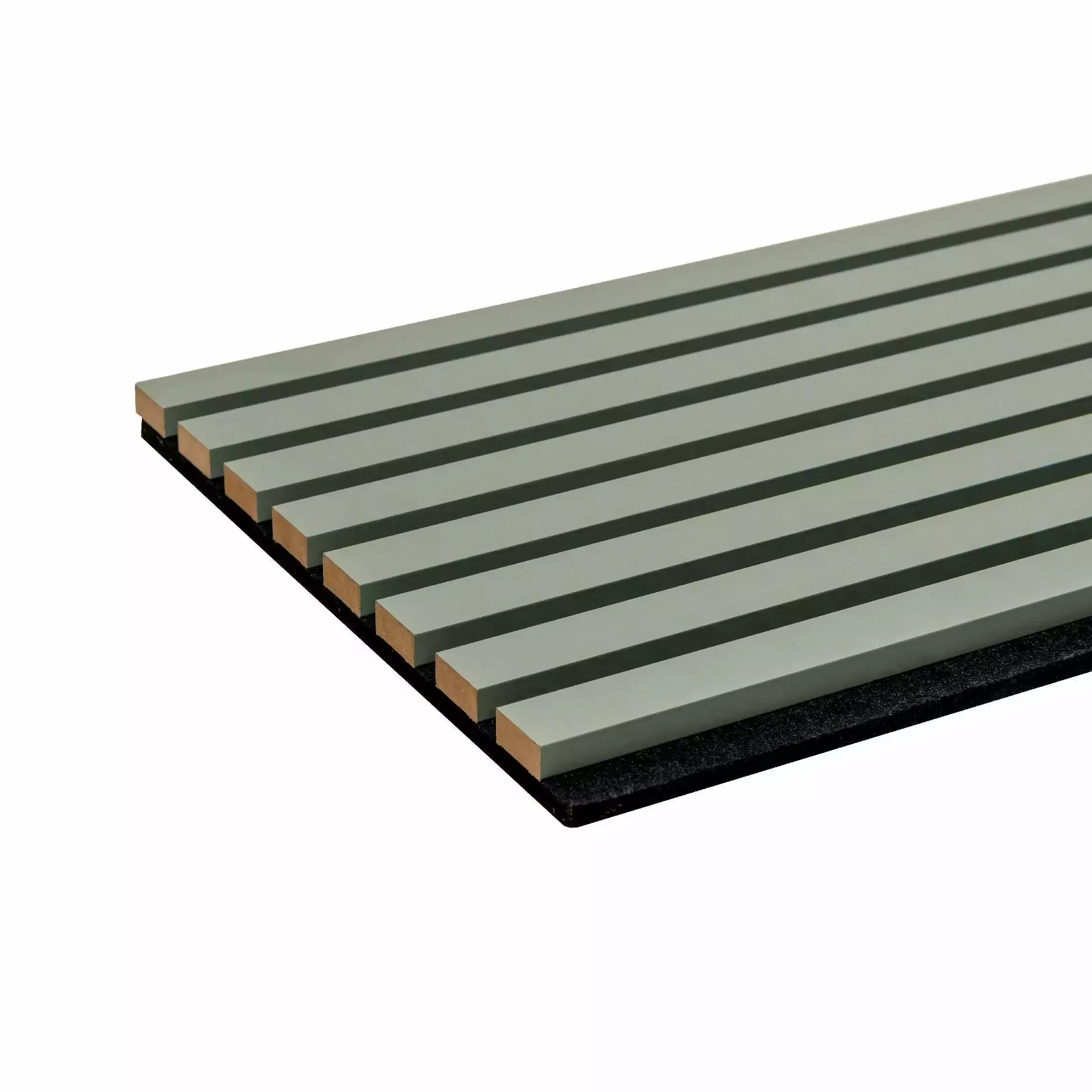
Acoustic wall panels are made from layered materials including porous cores such as mineral wool, fibreglass, acoustic foam, or PET felt, combined with breathable fabric coverings and rigid backing boards, which absorb sound, reduce echo, and improve acoustic clarity within interior spaces.
Material composition defines acoustic performance, because density, thickness, and porosity control how effectively sound energy dissipates across different frequency ranges. Fibrous and open-cell structures dominate acoustic panel construction, because interconnected air gaps allow sound waves to enter and lose energy through internal friction.
Hard surfaces such as plasterboard walls, laminate flooring, glass, and painted ceilings reflect more than 70% of sound energy in typical UK homes, which increases reverberation time and reduces speech clarity. Layered acoustic wall panels reduce this effect by controlling reflected sound within enclosed spaces, which improves listening comfort and overall acoustic balance.
This guide explains what acoustic panels are made of, how each material performs, which materials suit different rooms, and how material choice influences both sound control and interior design outcomes.
Table of Contents
What Materials Are Used in Acoustic Wall Panels?
Acoustic panels use porous core materials such as mineral wool, fibreglass, acoustic foam, and PET felt, combined with breathable fabric coverings and rigid backing boards, which absorb sound waves, reduce echo, and improve acoustic clarity across residential interior spaces.
Material selection depends on density, porosity, and airflow resistance, where higher-density fibrous structures absorb broader frequency ranges. Acoustic panels differ from thermal insulation materials, because acoustic wall panels absorb reflected sound within a room while insulation materials primarily reduce heat transfer and do not control echo or reverberation.
Panel construction includes three main layers: core material, surface covering, and structural backing, where each layer contributes to overall acoustic performance.
The main materials used in acoustic panels are given below:
- MINERAL WOOL (STONE WOOL): Mineral wool consists of compressed basalt fibres, which absorb mid and low-frequency sound between 125 Hz and 4,000 Hz and provide high fire resistance rated Euroclass A1.
- FIBREGLASS (GLASS WOOL): Fibreglass contains fine glass fibres with high porosity, which deliver strong sound absorption up to NRC 1.0 and perform effectively across speech-frequency ranges.
- ACOUSTIC FOAM: Acoustic foam uses open-cell polyurethane or melamine structures, which absorb high-frequency sound above 500 Hz and reduce flutter echo in compact rooms.
- PET FELT (RECYCLED POLYESTER): PET felt uses compressed recycled plastic fibres, often exceeding 60% recycled content, which provides mid-frequency absorption and supports sustainable interior applications.
- FABRIC COVERINGS: Breathable textile layers such as polyester or wool blends allow sound waves to pass through to the core, which maintains acoustic performance while adding decorative finishes.
- WOOD VENEER AND MDF SLATS: Slatted wall panel systems combine MDF cores with real wood veneer finishes such as oak or walnut, backed by acoustic felt, which balances sound absorption with interior design.
- BACKING MATERIALS (MDF OR PLYWOOD): Rigid backing boards provide structural support and mounting stability, which ensures secure installation on walls and ceilings.
Layered construction improves overall performance, where porous cores absorb sound energy, fabric surfaces allow penetration, and backing materials maintain durability. Material choice influences absorption range, durability, and visual appearance, which determines suitability for living rooms, home offices, bedrooms, and open-plan residential layouts.

What Fabric or Surface Materials Cover Acoustic Panels?
Acoustic panels use breathable, acoustically transparent fabrics such as polyester, wool blends, and microsuede, along with decorative surfaces like felt or wood veneer, which allow sound waves to pass through to the core while maintaining visual design and durability.
Surface materials influence both acoustic performance and appearance, where permeability determines how effectively sound reaches the absorptive core. Dense or sealed surfaces reduce effectiveness, because blocked airflow prevents sound energy from entering the panel structure.
The main fabric and surface materials used in acoustic panels are given below:
- POLYESTER FABRIC: Polyester coverings provide durable, breathable surfaces with consistent airflow, which allows sound waves to pass through efficiently while offering a wide range of colours for residential interiors.
- WOOL BLEND FABRIC: Wool-based textiles offer natural breathability and texture, which supports sound transparency while adding a softer, premium finish suitable for living rooms and bedrooms.
- MICROSUEDE FABRIC: Microsuede surfaces deliver smooth, tightly woven finishes with sufficient permeability, which maintains acoustic function while improving tactile and visual appeal.
- ACOUSTIC FELT SURFACE: Felt layers, often made from PET fibres, provide both decorative texture and additional sound absorption, which enhances mid-frequency performance in modern wall panel designs.
- WOOD VENEER FINISHES: Wood veneer surfaces such as oak, walnut, or ash are applied to slatted panel systems, where gaps between slats allow sound to reach the felt backing while adding architectural design value.
- PRINTED FABRIC SURFACES: Printed acoustic fabrics combine sound transparency with custom graphics or artwork, which integrates acoustic treatment into interior décor without reducing performance.
What Is the Backing Material of Acoustic Wall Panels?
The backing material of acoustic wall panels consists of rigid support layers such as MDF, plywood, or metal frames, which provide structural stability, maintain panel shape, and enable secure wall or ceiling installation without affecting sound absorption performance.
Backing materials support the acoustic core, where structural integrity ensures consistent positioning and long-term durability. Rigid backing layers do not absorb sound, because absorption occurs within the porous core positioned in front of the backing surface.
The main backing materials used in acoustic wall panels are given below:
- MDF (MEDIUM-DENSITY FIBREBOARD): MDF backing provides a smooth, dense, and stable surface, which supports fabric-wrapped panels and slatted designs while allowing secure fixing to plasterboard or solid walls.
- PLYWOOD BACKING: Plywood offers stronger structural resistance and improved durability, which suits larger panels and installations requiring higher load-bearing performance.
- ALUMINIUM FRAMES: Aluminium backing structures provide lightweight and corrosion-resistant support, which is commonly used in modular or ceiling-mounted acoustic systems.
- FRAMELESS BACKING SYSTEMS: Frameless acoustic panels use reinforced internal structures instead of external boards, which creates a minimal visual profile while maintaining stability.
Are Acoustic Wall Panels Made from Wood?
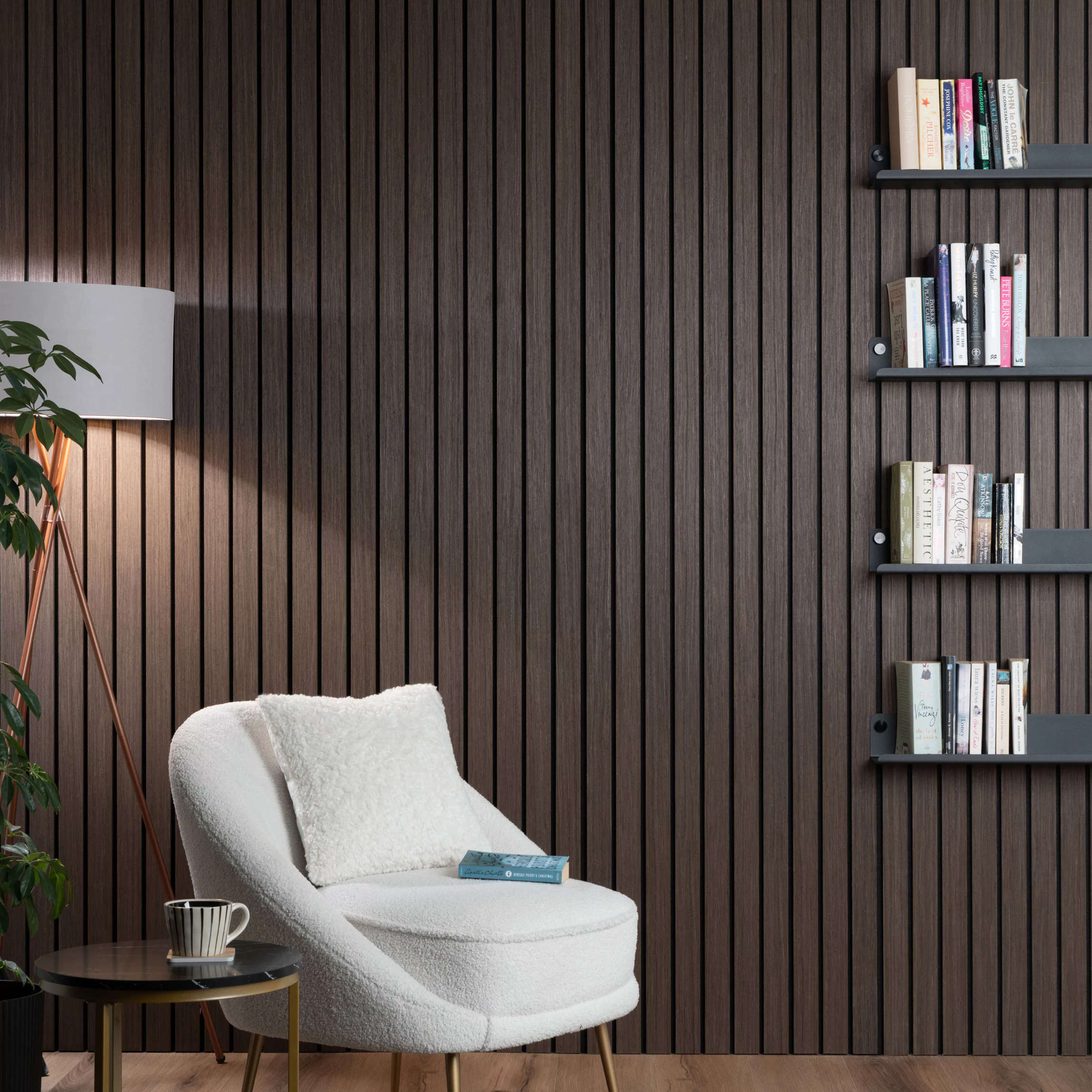
Acoustic panels are not fully made from wood, but wood is used as a decorative and structural surface layer in slatted acoustic panels, where timber finishes combine with acoustic felt backing to provide both sound absorption and interior design integration.
Wood functions as a surface element rather than a core absorber, because solid timber reflects sound instead of absorbing it. Acoustic performance in wood-based panels depends on the material behind the wood surface, where porous backing layers absorb reflected sound energy.
The role of wood in acoustic panel construction is given below:
- WOOD VENEER FINISHES: Real wood veneers such as oak, walnut, and ash are applied to MDF slats, which provide natural aesthetics while maintaining consistent panel structure.
- MDF SLAT STRUCTURE: MDF cores form evenly spaced slats, which create gaps that allow sound waves to pass through to the absorptive backing material.
- ACOUSTIC FELT BACKING: Felt layers positioned behind wooden slats absorb mid-frequency sound, which improves echo control in residential environments.
- DECORATIVE WALL FUNCTION: Wood-based acoustic panels act as architectural features, which combine acoustic treatment with modern interior design in living rooms, bedrooms, and offices.
Are Acoustic Panels Environmentally Friendly?
Acoustic panels are environmentally friendly when manufactured using recycled materials such as PET felt, low-emission adhesives, and sustainably sourced wood, which reduce environmental impact while maintaining effective sound absorption in residential and commercial interiors.
Environmental performance depends on material composition, where recycled and low-impact resources reduce carbon footprint compared to synthetic or non-recyclable alternatives. Sustainable acoustic panels support indoor air quality, where low volatile organic compound (VOC) emissions improve health conditions in enclosed living spaces.
The environmentally friendly acoustic panel materials and features are given below:
- PET FELT (RECYCLED POLYESTER): PET felt panels are produced from recycled plastic bottles, often exceeding 60% recycled content, which reduces landfill waste and supports circular material use.
- LOW-VOC ADHESIVES AND FABRICS: Low-emission binders and coverings reduce chemical release, which improves indoor air quality in homes and workplaces.
- FSC-CERTIFIED WOOD VENEER: Wood finishes sourced from responsibly managed forests support sustainable forestry practices and reduce environmental impact.
- LONG PRODUCT LIFESPAN: Acoustic panels typically last between 10 and 20 years, which reduces replacement frequency and material waste over time.
- RECYCLABLE COMPONENTS: Many panel systems include recyclable fibres and fabrics, which allow material recovery at end of life.
What Materials Provide the Best Sound Absorption?
The materials that provide the best sound absorption are mineral wool and fibreglass, which achieve noise reduction coefficients (NRC) between 0.9 and 1.0, followed by PET felt and acoustic foam, which absorb mid to high-frequency sound with lower overall efficiency.
Sound absorption performance depends on density, thickness, and porosity, where fibrous materials with interconnected air gaps absorb more sound energy across wider frequency ranges. Higher-density materials improve low-frequency absorption, where thicker panels increase effectiveness below 250 Hz.
The sound absorption performance of acoustic panel materials is given below:
- MINERAL WOOL (STONE WOOL): Mineral wool provides high-density fibre structure, which absorbs low, mid, and high-frequency sound between 125 Hz and 4,000 Hz with NRC values up to 1.0.
- FIBREGLASS (GLASS WOOL): Fibreglass delivers maximum absorption efficiency across speech frequencies, where fine fibres create high airflow resistance and achieve NRC ratings close to 1.0.
- PET FELT (RECYCLED POLYESTER): PET felt offers moderate to high absorption in mid-frequency ranges between 500 Hz and 2,000 Hz, which suits residential spaces with balanced acoustic needs.
- ACOUSTIC FOAM: Acoustic foam absorbs high-frequency sound above 500 Hz, which reduces echo and flutter but provides limited low-frequency control.
- WOOD SLATTED PANELS (WITH FELT BACKING): Slatted systems combine partial sound diffusion with absorption from felt backing, which improves acoustic balance rather than maximum absorption.
Material Comparison
The comparison of acoustic panel materials based on absorption performance, density, and application is given below:
| Material | NRC Range | Frequency Range | Best Use Case |
| Mineral Wool | 0.9–1.0 | Low–High | Full-room |
| Fibreglass | 0.9–1.0 | Mid–High | Offices |
| PET Felt | 0.6–0.8 | Mid | Residential |
| Acoustic Foam | 0.4–0.7 | High | Small rooms |
How Does Material Affect Acoustic Panel Performance?
Material affects acoustic panel performance by controlling sound absorption range, efficiency, and frequency response, where density, thickness, and porosity determine how much sound energy is absorbed, which directly influences echo reduction, clarity, and overall room acoustics.
Performance varies based on physical structure, where fibrous and porous materials absorb sound while dense solid surfaces reflect sound. Frequency control depends on material composition, where different materials absorb specific sound ranges rather than full-spectrum sound.
The key factors that determine acoustic panel performance are given below:
- DENSITY: Higher-density materials such as mineral wool and fibreglass absorb more sound energy, which improves low and mid-frequency control between 125 Hz and 2,000 Hz.
- THICKNESS: Thicker panels increase absorption depth, where 25 mm panels absorb high frequencies and 50 mm to 75 mm panels extend absorption into lower frequencies below 250 Hz.
- POROSITY: Open and fibrous structures allow sound waves to enter the material, which enables energy dissipation through internal friction.
- AIRFLOW RESISTANCE: Materials with balanced airflow resistance slow down sound waves, which increases absorption efficiency without reflecting sound back into the room.
- SURFACE PERMEABILITY: Breathable fabric coverings allow sound to reach the core, where sealed or dense surfaces reduce absorption performance.
- MATERIAL TYPE: Fibrous materials such as mineral wool and fibreglass provide higher absorption, while foam and PET felt offer moderate performance depending on density and thickness.

Does Installation Affect Acoustic Panel Material Performance?
Acoustic panel material performance changes based on installation method, placement, and air gap spacing, because positioning relative to walls and reflection points influences how effectively sound waves interact with the material surface.
Direct wall mounting reduces low-frequency absorption, because sound waves reflect before fully entering the material.
Air gaps between panel and wall increase absorption depth, which improves performance in lower frequency ranges below 250 Hz.
The key installation factors are given below:
- AIR GAP SPACING: Leaving a 25 mm to 50 mm gap behind panels increases low-frequency absorption.
- REFLECTION POINT PLACEMENT: Positioning panels at reflection zones improves efficiency regardless of material type.
- CEILING INSTALLATION: Overhead panels improve vertical sound control in rooms with hard flooring.
- CORNER PLACEMENT: Thick materials perform better in corners where sound pressure accumulates.
Which Acoustic Wall Panel Material Is Best for Each Room?
The best acoustic panel material for each room depends on room size, surface reflectivity, and sound use, where mineral wool and fibreglass suit high-performance spaces, PET felt suits residential areas, and slatted wood panels balance sound absorption with interior design.
Material selection changes based on acoustic demand, where rooms with higher echo require denser absorbers and rooms with softer furnishings require moderate absorption. Surface type influences performance needs, where hard materials such as tile, glass, and plaster increase reflection and require stronger absorption materials.
The best acoustic panel materials by room type are given below:
- LIVING ROOMS: PET felt and slatted wood panels provide balanced mid-frequency absorption, which reduces television echo while maintaining a decorative finish suited to modern interiors.
- HOME OFFICES: Fibreglass or mineral wool panels provide high absorption across speech frequencies, which improves voice clarity during calls and reduces reflection from walls and ceilings.
- BEDROOMS: PET felt panels provide moderate absorption, which controls echo without over-dampening sound in smaller and softer furnished spaces.
- HOME CINEMAS: Mineral wool panels provide high-density absorption across low and mid frequencies, which improves dialogue clarity and controls sound reflections from speakers.
- DINING ROOMS: PET felt or fabric-wrapped panels reduce conversational noise build-up, which improves acoustic comfort in rooms with hard tables and flooring.
- HALLWAYS AND STAIRS: Mineral wool or fibreglass panels reduce flutter echo, which occurs due to narrow spaces and parallel wall reflections.
- OPEN-PLAN SPACES: Combination systems using PET felt panels and ceiling baffles provide distributed absorption, which controls sound spread across large connected areas.
Are Acoustic Wall Panels Safe for Homes?
Acoustic panels are safe for homes when manufactured with enclosed core materials, fire-rated components, and low-emission fabrics, which ensure safe indoor use by reducing exposure to fibres, limiting fire risk, and maintaining healthy indoor air quality.
Safety depends on the construction method, where sealed fabric-wrapped panels prevent fibre release from internal materials such as mineral wool or fibreglass. Material compliance follows building standards, where certified panels meet fire safety and emission regulations used in residential interiors. UK building regulations reference fire performance standards such as Euroclass A1 and Euroclass B, where mineral wool cores and certified fabric coverings meet residential fire safety requirements for interior wall applications.
The key safety features of acoustic panels are given below:
- ENCLOSED CORE MATERIALS: Fabric-wrapped construction seals mineral wool or fibreglass cores, which prevents airborne fibre exposure during normal use.
- FIRE-RATED MATERIALS: High-quality acoustic panels use fire-resistant cores such as mineral wool rated Euroclass A1, which reduces fire risk in residential environments.
- LOW-VOC FABRICS AND ADHESIVES: Low-emission materials reduce volatile organic compound release, which supports healthier indoor air quality in enclosed living spaces.
- STABLE STRUCTURAL BACKING: MDF or plywood backing ensures panels remain securely fixed, which prevents movement or detachment from walls and ceilings.
- NON-TOXIC SURFACE FINISHES: Modern acoustic fabrics and finishes are manufactured without harmful coatings, which improves safety for long-term indoor use.
Do Acoustic Wall Panel Materials Affect Appearance?
Acoustic panel materials directly affect appearance through texture, colour, finish, and structure, where fabric coverings, felt surfaces, and wood veneers determine visual style while maintaining sound absorption performance in modern residential interiors.
Visual outcome depends on surface material selection, where different finishes create distinct interior design effects without changing core acoustic function. Material choice influences integration with décor, where colour, pattern, and texture define how panels blend or stand out within a room.
The main ways acoustic panel materials affect appearance are given below:
- FABRIC TEXTURE AND COLOUR: Polyester and wool fabrics provide soft surfaces in neutral or bold colours, which allows panels to match or contrast with existing interior schemes.
- FELT SURFACE DESIGN: PET felt panels offer smooth or sculpted textures, which create geometric patterns and feature walls while maintaining acoustic absorption.
- WOOD VENEER FINISHES: Real wood veneers such as oak, walnut, and ash introduce natural grain patterns, which enhance warmth and suit modern and Scandinavian-style interiors.
- SLATTED PANEL STRUCTURE: Vertical or horizontal slats create linear visual depth, which adds architectural detail while allowing sound to pass through to the absorptive backing.
- PRINTED OR CUSTOM SURFACES: Printed acoustic panels incorporate artwork or graphics, which combine decorative function with sound control in personalised spaces.
- EDGE AND FRAME STYLE: Frameless or slim-edge panels provide minimal visual interruption, while framed panels create defined design boundaries on walls.
What Results Do Different Acoustic Panel Materials Deliver?
Different acoustic panel materials deliver varying levels of sound absorption, echo reduction, and clarity improvement, where high-density materials such as mineral wool and fibreglass provide maximum absorption, and lighter materials such as PET felt and foam deliver moderate acoustic control.
Acoustic outcome depends on material structure, where fibrous materials absorb broader frequency ranges and lower-density materials focus on mid to high frequencies. Performance differences appear in reverberation reduction, speech clarity, and overall sound balance within a room.
The results delivered by different acoustic panel materials are given below:
- MINERAL WOOL (STONE WOOL): Mineral wool delivers high absorption across low, mid, and high frequencies, which reduces reverberation time by up to 60% and improves overall sound balance in larger or reflective rooms.
- FIBREGLASS (GLASS WOOL): Fibreglass provides maximum absorption in speech-frequency ranges, which improves voice clarity and reduces echo in offices, meeting rooms, and media spaces.
- PET FELT (RECYCLED POLYESTER): PET felt delivers moderate absorption in mid-frequency ranges, which reduces echo and improves comfort in living rooms and bedrooms without over-dampening sound.
- ACOUSTIC FOAM: Acoustic foam reduces high-frequency reflections, which removes flutter echo and sharp sound reflections in smaller spaces but provides limited low-frequency control.
- WOOD SLATTED PANELS (WITH FELT BACKING): Slatted panels combine sound diffusion and absorption, which improves acoustic balance and reduces harsh reflections while maintaining a decorative finish.

Are Acoustic Panels Worth It Based on Material Choice?
Acoustic panels are worth installing when material choice aligns with room acoustics, because high-density materials such as mineral wool and fibreglass deliver maximum sound absorption, while PET felt and slatted wood panels provide balanced acoustic control with strong decorative integration.
Material selection determines value, where density, thickness, and fibre structure directly influence reverberation reduction and speech clarity. Performance varies across materials, where fibrous cores absorb wider frequency ranges and lighter materials target mid to high-frequency reflections.
The value delivered by different acoustic panel materials is given below:
- MINERAL WOOL PROVIDES MAXIMUM ABSORPTION: Mineral wool panels absorb low, mid, and high-frequency sound between 125 Hz and 4,000 Hz, which reduces reverberation by up to 60% in highly reflective rooms.
- FIBREGLASS IMPROVES SPEECH CLARITY: Fibreglass panels deliver high absorption across speech frequencies, which improves voice definition and reduces echo in home offices and media spaces.
- PET FELT BALANCES PERFORMANCE AND DESIGN: PET felt panels provide moderate absorption in mid-frequency ranges, which suits living rooms and bedrooms where acoustic comfort and appearance are equally important.
- ACOUSTIC FOAM CONTROLS HIGH-FREQUENCY ECHO: Acoustic foam panels absorb sharp reflections above 500 Hz, which reduces flutter echo in smaller rooms with limited acoustic demand.
- WOOD SLATTED PANELS COMBINE ABSORPTION AND DIFFUSION: Slatted wood panels use felt backing to absorb sound while wooden slats diffuse reflections, which improves acoustic balance and supports modern interior design.
Material thickness increases effectiveness, where 25 mm panels absorb high frequencies and 50 mm to 75 mm panels extend absorption into lower frequency ranges below 250 Hz. Cost efficiency improves when material choice matches room conditions, where high-density absorbers suit large reflective spaces and lighter materials suit smaller residential rooms.
At Walls and Floors, we focus on acoustic panel materials that combine measurable sound control with refined interior finishes, which ensures acoustic performance supports both comfort and contemporary design in modern homes.
Conclusion:
Acoustic panels are made from layered materials including porous cores such as mineral wool, fibreglass, acoustic foam, or PET felt, combined with breathable fabric surfaces and rigid backing, which together absorb sound, reduce echo, and improve acoustic clarity across residential interiors.
Material composition defines acoustic performance, where density, thickness, and porosity determine how effectively sound energy is absorbed across different frequency ranges. Fibrous materials such as mineral wool and fibreglass provide maximum absorption, while PET felt and slatted wood panels balance acoustic control with interior design.
The key material selection principles are given below:
- MATCH MATERIAL TO ROOM TYPE: High-density materials suit large or reflective spaces, while moderate-density materials suit smaller residential rooms with existing soft furnishings.
- SELECT THICKNESS BASED ON FREQUENCY CONTROL: Thicker panels improve low-frequency absorption, while thinner panels target high-frequency reflections.
- PRIORITISE BREATHABLE SURFACES: Fabric coverings must allow sound to pass through to the core, which maintains absorption efficiency.
- BALANCE PERFORMANCE AND DESIGN: Decorative finishes such as wood veneer and felt surfaces support interior styling while maintaining acoustic function.
- CONSIDER SUSTAINABILITY AND SAFETY: Recycled materials, low-emission fabrics, and fire-rated cores improve environmental performance and indoor safety.
Material choice directly influences acoustic results, where correct selection reduces reverberation, improves speech clarity, and enhances overall sound comfort within the space.
At Walls and Floors, we focus on acoustic panel materials that combine reliable sound absorption with modern interior finishes, which ensures acoustic performance aligns with both functional and aesthetic requirements in contemporary homes.
