
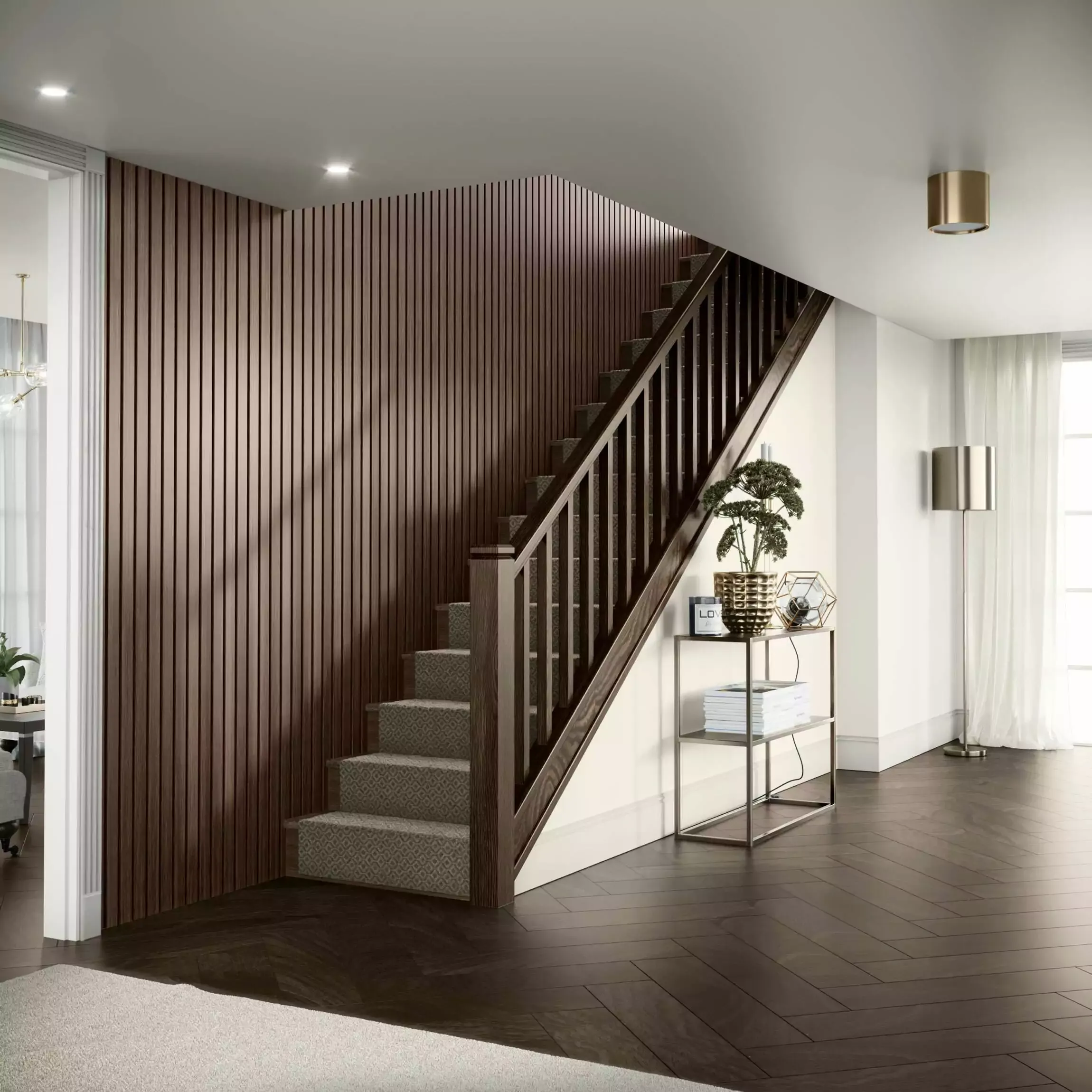
Hidden doors with wall panels create concealed access points within seamless wall surfaces, helping modern interiors look cleaner, larger, and more refined while hiding rooms, storage areas, or utility spaces behind matching panels, tiles, or decorative finishes.
Hidden doors with wall panels have progressed from bespoke architectural features into a widely adopted solution within modern homes, renovations, and premium interior schemes. These systems integrate directly into wall panelling or cladding, removing visible frames, handles, and hinges to create uninterrupted wall surfaces that enhance spatial flow and visual consistency.
Rising demand for clean-lined interiors, concealed storage, and multi-functional living spaces has driven the popularity of hidden doors. Homeowners increasingly prioritise designs that maximise usable space while maintaining a cohesive, uncluttered appearance. Concealed door systems achieve this by allowing walls to serve both as a design feature and a functional access point without visual disruption.
Ongoing developments in concealed hinge technology, flush frame systems, and precision manufacturing have significantly improved reliability and performance. Modern hidden doors now deliver smooth operation, accurate alignment, and long-term durability while maintaining the illusion of a continuous wall surface.
At Walls and Floors, wall tiles, decorative panels, and surface finishes provide the ideal foundation for integrating hidden doors into contemporary interiors. Consistent materials, precise finishes, and design flexibility help concealed doors blend seamlessly into surrounding wall designs across a wide range of styles.
This guide explores hidden doors with wall panels in detail, covering types, materials, installation methods, costs, common mistakes, maintenance requirements, and practical considerations for achieving professional, long-lasting results.
Table of Contents
What Are Hidden Doors With Wall Panels?
Hidden doors with wall panels are concealed door systems integrated into wall cladding or panelling, designed to blend seamlessly with surrounding surfaces, making the door visually indistinguishable from the wall while maintaining full functionality.
Hidden doors eliminate visible frames, handles, and hinges. These doors sit flush with wall panels and often use push-to-open mechanisms or concealed handles to maintain a continuous surface.
Key characteristics include:
- Flush Alignment With Wall Surfaces: The concealed door panel sits on the same plane as adjacent wall panels, achieving a perfectly level surface across the entire elevation. This alignment removes depth variations and eliminates shadow lines that typically expose conventional door frames and architraves.
- Integrated Panel Matching: Wall panelling extends continuously across the door leaf, maintaining identical grain direction, spacing, texture, and finish. This uninterrupted visual pattern ensures the concealed door remains indistinguishable from surrounding panels under both natural and artificial lighting conditions.
- Invisible Hardware Systems: Concealed hinge mechanisms, recessed frames, and hidden latching systems operate entirely within the door structure. No external components remain visible, allowing uninterrupted surface continuity and preserving the integrity of the wall design.
- Architectural Continuity: The concealed door functions as an integrated section of the wall assembly rather than a separate opening element. This approach supports cohesive interior architecture by removing visual interruptions and maintaining a unified spatial composition.
Why Are Hidden Doors With Wall Panels So Popular?
Hidden doors with wall panels are popular due to minimalist aesthetics, space optimisation, enhanced privacy, and the ability to create visually seamless interiors without interruptions from traditional door frames or hardware.
Several driving factors contribute to rising demand:
- Minimalist Interior Trends: Modern interior design prioritises clean lines, flat planes, and uninterrupted surfaces. Hidden doors remove visual breaks caused by frames, architraves, and handles, allowing wall panelling systems to maintain a consistent and cohesive architectural appearance across the entire space.
- Space Efficiency: Concealed door systems eliminate protruding frames and reduce visual clutter, enabling more effective use of wall areas. Designers can extend storage, shelving, or decorative panelling across full elevations without interruption from traditional door openings.
- Privacy Enhancement: Hidden doors obscure access points to rooms such as home offices, utility areas, or private suites. Concealment reduces visibility of entry points, creating discreet transitions between spaces and enhancing functional privacy within residential layouts.
- Luxury Appeal: High-end interiors frequently incorporate concealed architectural elements to demonstrate precision craftsmanship and bespoke detailing. Hidden doors contribute to a refined aesthetic, often associated with premium residential and commercial design standards.
- Multi-Functional Design: Hidden doors enable flexible spatial planning by allowing rooms to remain concealed when not in use. This approach supports adaptable environments where walls serve both as design features and access points without clearly defining separate zones.
How Do Hidden Doors With Wall Panels Work?
Hidden doors with wall panels operate using concealed hinge systems, flush frames, and integrated panel finishes that allow the door to open and close while remaining visually aligned with the surrounding wall.
The functionality relies on several engineered components:
Core Mechanisms
- Concealed Hinges (Pivot Or Soss Hinges): Concealed hinge systems are fully recessed into both the door edge and structural frame, ensuring zero external visibility during operation. Pivot hinges distribute load vertically through the floor and ceiling, making them suitable for large-format or heavy panel doors exceeding 40–60 kg. SOSS hinges, installed within routed cavities, provide a clean side profile and controlled swing movement, commonly used in standard-height concealed doors. Correct hinge specification depends on door weight, thickness, and frequency of use, with load ratings typically ranging from 20 kg to over 150 kg per system.
- Magnetic Or Push-To-Open Latches: Push-to-open mechanisms eliminate the need for visible handles by using spring-loaded or magnetic release systems. A light, controlled pressure applied to the door surface activates the internal latch, causing the door to release and slightly project outward for manual opening. High-quality magnetic latches provide consistent closing force, prevent rattling, and ensure precise door positioning against the frame. Soft-close variants incorporate dampening to reduce noise and mechanical stress during closure.
- Flush Mounting Frames: Flush frames are installed within the wall structure so that the door panel aligns perfectly with adjacent wall surfaces. These frames are typically manufactured from aluminium or steel to maintain rigidity and resist deformation over time. Integration requires accurate wall preparation, including plasterboard recessing or stud wall adjustment, to ensure the frame remains square and level. Improper frame installation leads to visible gaps, misalignment, and long-term operational issues.
- Precision Alignment Systems: Adjustable hinge systems and frame fixings allow installers to fine-tune door positioning after installation. Multi-axis adjustment enables correction in vertical, horizontal, and depth alignment, ensuring consistent shadow gaps (typically 2–3 mm) around the perimeter. This level of precision is essential to maintain the illusion of a continuous wall surface, particularly in environments where temperature and humidity fluctuations may cause minor material movement.
Operational Flow
- Pressure Applied To The Panel Activates The Latch: A controlled push on a designated area of the door surface compresses the internal latch mechanism, disengaging the magnetic or spring-loaded catch without the need for handles or visible hardware.
- The Concealed Hinge Rotates The Door Outward Or Inward: Once released, the hinge system initiates smooth rotational movement. Pivot systems distribute weight evenly, while concealed butt-style hinges guide the swing along a fixed axis, ensuring controlled and stable motion.
- The Door Swings Without Disrupting The Wall’s Visual Continuity: The door opens while maintaining the appearance of an uninterrupted wall when closed. Carefully calibrated clearances and hinge geometry ensure no visible disruption to adjacent panels during both opening and closing cycles.

What Types Of Hidden Doors Can Be Integrated Into Wall Panels?
Hidden doors can include hinged, pivot, sliding, bi-fold, and secret compartment doors, each designed to integrate seamlessly with wall panel systems depending on space and functionality requirements.
Common Hidden Door Types
- Hinged Concealed Doors: Hinged concealed doors operate using fully recessed hinges embedded within the door edge and frame, allowing a standard swing motion while maintaining a flush, frameless appearance. This system suits most residential layouts where conventional door movement remains practical.
- Pivot Doors: Pivot concealed doors rotate on a vertical axis positioned at the top and bottom of the door rather than the side. This configuration supports larger and heavier wall panels, distributes structural load more efficiently, and enables wider openings with smooth, controlled movement.
- Sliding Concealed Doors: Sliding hidden doors move horizontally either within a wall cavity (pocket system) or across the wall surface behind panels. This solution eliminates swing clearance requirements, making it highly effective in compact layouts or areas with restricted floor space.
- Bi-Fold Hidden Doors: Bi-fold concealed doors consist of multiple connected panels that fold inward or outward along a track system. This configuration is commonly used for wardrobes, storage walls, or wider openings where a full swing or pivot system would be impractical.
- Disguised Feature Doors: Disguised hidden doors are designed to replicate architectural or decorative elements such as bookcases, slatted panels, or feature walls. These doors prioritise visual concealment while maintaining functional access to private rooms, storage areas, or concealed spaces.
What Materials Are Best For Hidden Doors With Wall Panels?
The best materials include MDF, plywood, engineered wood, solid timber, and composite panels, selected based on durability, finish compatibility, weight, and environmental conditions.
Material options explained
- MDF Panels: Medium Density Fibreboard provides a smooth, uniform surface that supports high-quality paint, lacquer, and veneer finishes. MDF resists surface imperfections, making MDF suitable for concealed doors where consistent visual continuity across wall panels remains essential.
- Plywood Construction: Multi-layered plywood delivers high structural strength and improved resistance to warping compared to solid timber. Cross-grain construction stabilises the panel, making plywood suitable for larger concealed doors where dimensional stability and load-bearing performance remain critical.
- Solid Timber: Solid wood offers premium aesthetics through natural grain variation and depth. Timber requires controlled environmental conditions due to expansion and contraction caused by humidity changes, making correct sealing and acclimatisation essential for long-term performance.
- Engineered Wood Systems: Engineered boards combine multiple wood layers or fibres to improve stability, reduce movement, and enhance durability. These systems provide consistent performance across varying temperatures and humidity levels while supporting a wide range of surface finishes.
- Laminate And Veneer Finishes: Laminates and veneers replicate natural materials or decorative textures while maintaining consistency across panels. These finishes allow concealed doors to match surrounding wall cladding precisely, ensuring seamless visual integration across the entire surface.
What Are The Best Wall Panels For Hidden Doors?
The best wall panels for hidden doors include slatted acoustic panels, MDF decorative panels, laminate wall boards, and large-format wall tiles, selected based on finish consistency, structural stability, and ability to maintain seamless visual alignment across concealed door systems.
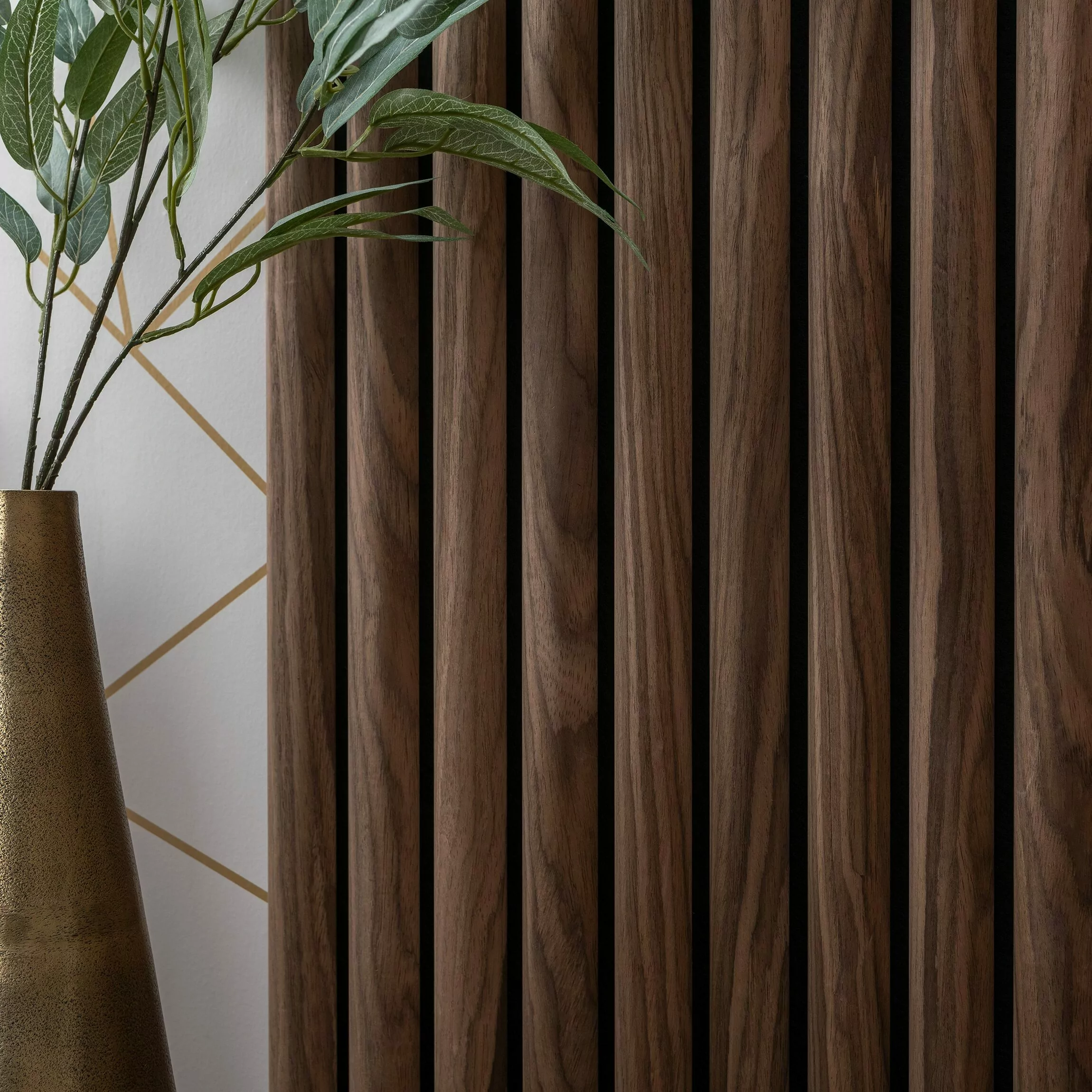
- Slatted Acoustic Wall Panels: Slatted panels provide strong linear patterns that can be aligned across both the wall and concealed door surface. Consistent spacing and vertical orientation make hidden integration highly effective while also improving acoustic performance.
- MDF Decorative Panels: MDF panels offer a smooth and uniform surface ideal for painted finishes. These panels are widely used in concealed door systems due to their stability, ease of machining, and ability to achieve a completely flush, minimalist appearance.
- Laminate Wall Boards: Laminate panels provide durable, scratch-resistant finishes in a wide range of textures, including wood, stone, and matt colours. Consistency in finish allows seamless continuation across door surfaces without visible variation.
- Veneered Panels: Natural wood veneer panels deliver premium aesthetics with real wood grain. When carefully matched, veneer allows hidden doors to blend seamlessly into high-end wall designs.
- Large-Format Wall Tiles: Large tiles reduce grout lines and create expansive, uninterrupted surfaces, making them highly effective for concealed door integration. Precision cutting and alignment are required to maintain pattern continuity across the door.
- Moisture-Resistant Panels: In bathrooms or kitchens, moisture-resistant MDF or composite panels ensure long-term durability while maintaining consistent surface appearance across concealed doors.

How Do You Achieve A Seamless Hidden Door Finish?
A seamless finish requires precise alignment, consistent panel patterns, flush installation, concealed hardware, and expert finishing techniques to eliminate visible joints or transitions.
Key Techniques
- Panel Continuity Alignment: Grain direction, joint spacing, and panel pattern must remain perfectly consistent across both the concealed door and adjacent wall surfaces. Precise alignment ensures uninterrupted visual flow, preventing detection of the door through misaligned lines or irregular spacing.
- Gap Consistency: Shadow gaps surrounding the concealed door must remain uniform, typically within a 2–3 mm tolerance. Consistent spacing creates a subtle perimeter definition while avoiding uneven lines that would expose the door outline within the wall system.
- Flush Installation: The concealed door panel must sit exactly level with neighbouring wall panels, with no protrusion or recess. Accurate installation ensures a continuous flat plane across the wall surface, eliminating depth variation and visible transitions.
- Finish Matching: Surface finishes across the door and wall panels must share identical colour tone, texture, reflectivity, and grain appearance. Matching finishes under varying lighting conditions prevents visual contrast and maintains complete concealment of the door.
Where Can Hidden Doors With Wall Panels Be Installed?
Hidden doors can be installed in living rooms, bedrooms, offices, bathrooms, kitchens, and corridors, provided structural support and wall depth allow for concealed hardware systems.
Common Applications
- Living Spaces: Concealed doors allow integration of home offices, media rooms, or storage areas behind continuous feature walls. This approach maintains a clean visual environment while enabling functional access without disrupting the overall design composition.
- Bedrooms: Hidden doors enable seamless access to walk-in wardrobes, en-suites, or dressing areas without introducing visible door frames. Continuous wall panelling preserves a calm and uncluttered bedroom aesthetic.
- Bathrooms: Concealed doors provide discreet entry into bathrooms when constructed using moisture-resistant substrates such as treated MDF or marine-grade plywood. Proper sealing and ventilation ensure long-term durability in high-humidity environments.
- Hallways: Hidden doors allow multiple rooms to be concealed within uninterrupted wall panelling along corridors. This configuration reduces visual fragmentation and supports a streamlined architectural layout across transitional spaces.
Are Hidden Doors With Wall Panels Secure?
Hidden doors provide moderate to high security depending on hardware quality, locking systems, and installation precision, though concealment itself adds an additional layer of passive security.
Security considerations
- Concealment Advantage: Concealed positioning reduces the likelihood of identifying entry points, particularly in environments where wall panelling appears continuous. Absence of visible frames, handles, or hinges limits visual cues, adding a passive layer of security through discretion.
- Locking Systems: Hidden doors support a range of locking mechanisms including magnetic catches, mechanical deadlocks, and integrated electronic systems such as keypad or smart locks. Selection depends on security requirements, frequency of use, and level of access control required.
- Structural Strength: Door core construction and frame reinforcement determine resistance to forced entry. High-density cores, reinforced timber frames, or metal substructures improve rigidity, reduce flex, and enhance overall durability under repeated use or applied force.
What Are The Disadvantages Of Hidden Doors With Wall Panels?
Hidden doors can involve higher costs, complex installation, maintenance challenges, and limited retrofitting options compared to traditional door systems.
Key Drawbacks
- Installation Complexity: Hidden door systems require precise measurements, accurate frame integration, and expert alignment to achieve a seamless finish. Incorrect installation leads to visible gaps, poor operation, and long-term structural issues, making skilled workmanship essential for reliable performance.
- Higher Costs: Concealed doors involve specialised hardware, reinforced frames, and high-quality panel materials, increasing overall project costs compared to standard door systems. Additional labour for precision installation and finishing further contributes to the higher investment required.
- Maintenance Requirements: Hidden doors rely on exact alignment and calibrated hardware, which may require periodic adjustment over time. Environmental factors such as humidity and temperature fluctuations can affect materials, requiring ongoing inspection to maintain smooth operation and visual consistency.
Are Hidden Doors With Wall Panels Worth It?
Hidden doors with wall panels are worth the investment for homeowners seeking seamless aesthetics, improved space efficiency, and premium interior design, provided installation quality, materials, and budget align with long-term performance expectations.
- Aesthetic Value: Hidden doors create uninterrupted wall surfaces, enhancing interior cohesion and delivering a high-end, architectural finish that traditional doors cannot achieve.
- Space Efficiency Benefits: Concealed systems reduce visual clutter and allow walls to serve multiple functions, improving usability in both small and large spaces.
- Long-Term Durability: High-quality concealed doors, when correctly installed, offer reliable operation and structural stability over extended periods with minimal visible wear.
- Impact On Property Value: Premium design features such as hidden doors can increase perceived property value, particularly in modern or high-spec residential environments.
- Cost Vs Benefit Consideration: Initial costs are higher than standard doors due to specialised materials and installation. Value is justified when design, functionality, and longevity are prioritised.
- Suitability Limitations: Hidden doors may not be ideal for all users, particularly where accessibility, visibility, or budget constraints are primary concerns.
Hidden Doors Vs Traditional Doors: Which Is Better?
Hidden doors with wall panels offer superior aesthetic integration and space efficiency, while traditional doors provide simpler installation, lower cost, and greater accessibility, making the better option dependent on design priorities, budget, and functional requirements.
- Visual appearance: Hidden doors create a seamless wall surface with no visible frames or hardware, supporting modern minimalist interiors. Traditional doors introduce visible breaks, frames, and handles that define room boundaries more clearly.
- Installation complexity: Hidden doors require precise alignment, flush frame installation, and specialist hardware. Traditional doors use standard frames and hinges, making installation faster and less technically demanding.
- Cost Comparison: Hidden doors typically cost significantly more due to bespoke construction and labour. Traditional doors remain more budget-friendly and widely available.
- Space Efficiency: Concealed doors reduce visual clutter and can integrate with storage or wall systems. Traditional doors require clear swing space and interrupt wall continuity.
- Maintenance Requirements: Hidden doors may require periodic adjustment to maintain alignment. Traditional doors generally require less maintenance and are easier to repair or replace.
- Accessibility And Usability: Traditional doors are easier to locate and operate, particularly for children, elderly users, or guests. Hidden doors may reduce visibility and require familiarity with operation.
- Design Flexibility: Hidden doors allow integration into feature walls, slatted panels, or decorative finishes. Traditional doors offer fewer opportunities for full surface integration.
How Long Do Hidden Doors With Wall Panels Last?
Hidden doors with wall panels typically last 15 to 30 years or more when constructed with high-quality materials and installed correctly, with lifespan depending on usage frequency, environmental conditions, and maintenance practices.
- Material Durability: Engineered wood, plywood, and reinforced cores provide long-term structural stability, resisting warping, bending, and surface degradation over time. Lower-quality materials reduce lifespan significantly.
- Hardware Lifespan: Concealed hinges, pivot systems, and latch mechanisms are critical components that influence durability. High-quality hardware can withstand tens of thousands of opening cycles without performance loss.
- Installation Quality: Precise alignment and correct frame installation prevent long-term stress on hinges and panels. Poor installation accelerates wear, leading to sagging, misalignment, and reduced lifespan.
- Environmental Impact: Humidity, temperature changes, and exposure to moisture can affect material performance. Proper sealing and ventilation extend lifespan, particularly in bathrooms or kitchens.
- Usage Frequency: Doors used multiple times daily experience more wear compared to occasional-use concealed doors such as storage or utility access points.
- Maintenance Practices: Regular hinge adjustment, lubrication, and inspection of components help maintain smooth operation and prevent premature failure.

How Much Do Hidden Doors With Wall Panels Cost?
Hidden door systems typically cost between £400 and £2,500+ per door depending on materials, hardware, size, and installation complexity.
Cost Breakdown
- Basic Mdf Concealed Door: £400–£800
- Mid-Range Engineered System: £800–£1,500
- Premium Bespoke Designs: £1,500–£2,500+
Additional costs include:
- Installation Labour: Professional installation involves frame setting, hinge calibration, and precision alignment to achieve a flush finish. Labour costs increase with door size, system complexity, and required accuracy, particularly for pivot systems or full wall panel integration.
- Wall Preparation: Structural preparation may include adjusting stud walls, recessing frames, reinforcing openings, or modifying plasterboard surfaces. Additional work ensures the wall can support concealed hardware while maintaining perfectly level and square conditions.
- Finishing Materials: Finishing includes paints, veneers, laminates, edge banding, and sealants used to match surrounding wall panels. High-quality finishes ensure visual consistency, durability, and resistance to wear, particularly in high-traffic or moisture-prone areas.
Are Hidden Doors Suitable For Small Spaces?
Hidden doors are highly suitable for small spaces as they eliminate visual clutter, improve spatial perception, and allow more efficient use of wall surfaces.
Benefits in Compact Areas
- Visual Expansion: Continuous wall panelling without visible door breaks creates an uninterrupted surface, which enhances perceived room size. This effect reduces visual fragmentation, making compact spaces appear more open and spatially cohesive.
- Space-saving Mechanisms: Sliding and pivot concealed door systems minimise or eliminate swing clearance requirements. This configuration allows furniture placement closer to walls and improves usable floor area in restricted layouts.
- Multi-functional Walls: Wall surfaces can integrate concealed doors alongside storage, shelving, or utility access points. This dual-purpose design maximises functionality while maintaining a clean and uncluttered visual appearance.
What Should Be Considered Before Installing Hidden Doors?
Key considerations include wall structure, door weight, material selection, hardware compatibility, budget, and professional installation requirements.
Critical Planning Factors
- Wall thickness And Structural Support: Wall construction must provide sufficient depth to accommodate concealed frames, hinge systems, and door leaf thickness. Stud walls often require reinforcement, while solid walls may need recessing to achieve a true flush installation.
- Door Weight And Load Distribution: Door mass must align with hinge or pivot load ratings to ensure safe and stable operation. Heavier panels require high-capacity pivot systems or multiple concealed hinges to prevent sagging, misalignment, or long-term structural strain.
- Alignment Precision: Installation requires millimetre-level accuracy to maintain consistent shadow gaps and flush surfaces. Minor deviations in frame positioning or hinge calibration can expose the door outline and compromise both performance and visual continuity.
- Environmental Conditions: Temperature variation and humidity levels influence material expansion and contraction. Material selection, sealing, and acclimatisation must account for these conditions to prevent warping, swelling, or joint movement over time.
- Access and usability: Door operation must remain practical for daily use while maintaining concealment. Consider opening direction, clearance space, handle alternatives, and accessibility to ensure functionality aligns with user requirements.
Can You DIY Hidden Doors With Wall Panels?
DIY hidden doors with wall panels are possible for basic installations using lightweight materials and standard concealed hinges, but complex systems require professional installation due to precision alignment, structural requirements, and specialist hardware.
- Skill Level Requirements: DIY installation requires advanced carpentry skills, accurate measuring, and familiarity with routing, hinge recessing, and frame alignment. Minor errors in measurement or installation can result in visible gaps or poor door operation.
- Suitable DIY Scenarios: Lightweight MDF doors with simple hinged systems and painted finishes are more suitable for DIY projects. These installations involve fewer structural modifications and lower load requirements.
- Limitations of DIY Installations: Achieving a fully seamless finish with consistent shadow gaps and perfect panel alignment is extremely difficult without professional tools and experience. Complex systems such as pivot doors or full wall panel integration exceed typical DIY capability.
- Tool And Equipment Requirements: DIY installation requires precision tools including routers, laser levels, and alignment systems. Standard household tools are often insufficient to achieve the required level of accuracy.
- Common DIY Risks: Misalignment, incorrect hinge positioning, weak frame installation, and inconsistent panel matching frequently occur in DIY attempts. These issues compromise both aesthetics and functionality.
- When to Avoid DIY: Large doors, heavy materials, structural wall modifications, and integrated panel systems require professional installation to ensure safety, durability, and long-term performance.
What Tools And Materials Are Required For Installation?
Installation requires specialised tools including precision levels, concealed hinge systems, routing tools, and high-quality panel materials to ensure accurate alignment and performance.
Essential Tools
- Spirit level and laser level
- Router for hinge recessing
- Drill and fixings
- Measuring tools
Materials
- Door Core Panel: The door leaf forms the structural foundation of the concealed system, typically constructed from MDF, plywood, or engineered wood. The panel must provide sufficient rigidity to prevent flexing while maintaining a smooth, stable surface for seamless integration with surrounding wall finishes.
- Concealed Hinges: Hidden hinge systems, including SOSS or pivot hinges, are recessed within the door edge and frame to allow movement without visible hardware. Proper hinge selection depends on door weight, size, and usage frequency to ensure long-term durability and precise operation.
- Flush Frame System: Flush frames are installed within the wall structure to support the concealed door while maintaining alignment with adjacent panels. These frames are usually manufactured from aluminium or steel to resist deformation and ensure consistent positioning over time.
- Wall Panels And Finishes: Surrounding wall panels must match the door surface in material, texture, and finish to achieve full concealment. Finishes may include paint, laminate, veneer, or decorative cladding, all applied consistently to maintain uninterrupted visual continuity.
How To Install Hidden Doors With Wall Panels Step By Step?
Installing hidden doors with wall panels requires precise measurement, structural preparation, flush frame installation, hinge alignment, and final panel finishing to achieve seamless integration and reliable long-term performance.
Step-by-step installation process
- Step 1: Prepare The Wall Opening: The wall must be measured accurately and adjusted to accommodate the concealed frame system. Stud walls require reinforcement, while solid walls may need recessing to ensure the frame sits flush.
- Step 2: Install The Flush Frame: The concealed frame must be fixed securely within the wall opening, ensuring it is perfectly level, square, and aligned. Incorrect positioning at this stage leads to long-term alignment issues.
- Step 3: Route Hinge Recesses: Precise routing is required to house concealed hinges within the door edge and frame. Accuracy is critical to ensure smooth operation and correct door positioning.
- Step 4: Fit The Door Panel: The door panel is mounted onto the hinge system and adjusted to achieve consistent shadow gaps around all edges, typically within a 2–3 mm tolerance.
- Step 5: Install Latch Mechanisms: Magnetic or push-to-open systems are fitted and calibrated to ensure reliable engagement and smooth opening without visible handles.
- Step 6: Align Wall Panels: Surrounding wall panels are installed and aligned across the door surface to maintain continuous patterns, textures, or finishes.
- Step 7: Apply finishing materials: Paint, veneer, laminate, or cladding is applied uniformly across both the door and wall panels to ensure complete visual integration.
- Step 8: Final Adjustments And Testing: Hinges, latches, and alignment systems are fine-tuned to ensure smooth operation, consistent gaps, and flawless surface continuity.
What Common Mistakes Occur During Installation?
Common mistakes include poor alignment, incorrect hinge selection, inconsistent panel matching, and insufficient structural support.
Frequent Errors
- Incorrect Measurements And Tolerances: Inaccurate measuring during early stages leads to misaligned frames, uneven shadow gaps, and poor door operation. Hidden doors require millimetre-level precision, and even minor dimensional errors can expose the door outline or cause binding during opening and closing cycles.
- Poor Frame Installation: Flush frames must be perfectly square, level, and securely fixed within the wall structure. Improper anchoring or uneven positioning results in long-term movement, visible gaps, and compromised structural integrity, particularly in stud wall constructions.
- Incorrect Hinge Selection: Using hinges that do not match the door’s weight, size, or opening frequency leads to sagging, misalignment, and premature wear. Heavy concealed doors require high-load pivot systems or multiple concealed hinges to maintain consistent performance.
- Inconsistent Panel Alignment: Failure to match grain direction, panel spacing, or pattern continuity across the door and surrounding wall disrupts the seamless effect. Visual inconsistencies become more noticeable under directional lighting, making the door immediately detectable.
- Uneven Shadow Gaps: Irregular spacing around the door perimeter creates visible inconsistencies that break the illusion of a continuous wall. Maintaining a uniform 2–3 mm gap requires precise hinge adjustment and accurate frame positioning.
- Insufficient Structural Reinforcement: Walls that lack adequate support may not withstand the load of concealed doors, particularly large or heavy panels. Reinforcement through additional studs or backing structures is essential to prevent long-term deformation or failure.
- Improper Latch And Mechanism Installation: Misaligned push-to-open systems or magnetic latches can cause doors to either not close fully or open unintentionally. Correct positioning and calibration ensure reliable engagement and smooth operation.
- Neglecting Material Movement Allowances: Wood-based materials expand and contract with changes in temperature and humidity. Failure to allow for movement can result in swelling, warping, or tight clearances that affect door functionality over time.
- Inadequate Finishing And Edge Treatment: Poor finishing around edges, joints, or panel seams creates visible transitions that reveal the door location. High-quality edge banding, sealing, and consistent finishing techniques are required for full concealment.
- Ignoring Long-Term Adjustment Requirements: Hidden doors often require periodic hinge or alignment adjustments. Failure to plan for accessible adjustment points or to carry out maintenance can lead to progressive misalignment and operational issues.
- Improper Integration With Flooring And Ceilings: Lack of coordination between door installation and surrounding floor or ceiling finishes can result in clearance issues, rubbing, or uneven gaps. Proper sequencing ensures smooth operation and consistent visual alignment across all surfaces.
How Do You Maintain Hidden Doors With Wall Panels?
Maintenance involves regular alignment checks, hinge lubrication, surface cleaning, and ensuring latch mechanisms function smoothly.
Maintenance Tasks
- Inspect Hinges Periodically: Concealed hinges and pivot systems must be checked at regular intervals for signs of wear, loosening, or misalignment. Early inspection helps prevent operational issues such as sagging, uneven gaps, or resistance during opening and closing.
- Clean Panel Surfaces: Wall panels and door surfaces should be cleaned using non-abrasive materials to maintain finish quality. Dust, grease, and residue can affect appearance and, in some finishes, lead to long-term surface degradation if not removed consistently.
- Adjust Alignment If Required: Minor shifts can occur due to structural movement or environmental changes. Adjustable hinge systems allow fine-tuning of vertical, horizontal, and depth positioning to maintain consistent shadow gaps and flush alignment.
- Check Locking Systems: Magnetic latches, push-to-open mechanisms, and any integrated locks must be tested regularly to ensure reliable engagement. Misalignment or wear can reduce effectiveness and compromise functionality.
- Lubricate Moving Components: Hinges, pivot bearings, and latch mechanisms require periodic lubrication using appropriate products to reduce friction, prevent noise, and extend component lifespan. Over-lubrication must be avoided to prevent residue buildup.
- Monitor Door Weight Distribution: Over time, heavy concealed doors may place stress on hinge systems. Regular checks ensure weight remains evenly supported and that no structural strain is developing within the frame or fixings.
- Inspect Frame Integrity: Flush frames embedded within walls should be examined for any signs of movement, cracking, or loosening. Structural stability is essential to maintain alignment and prevent progressive failure.
- Check Edge Finishes And Seals: Door edges and panel joints must remain intact and properly sealed. Damage or wear in these areas can expose material layers, affect moisture resistance, and reduce visual consistency.
- Assess Environmental Impact: Changes in humidity and temperature can influence material expansion or contraction. Monitoring conditions helps identify potential risks such as warping, swelling, or tightening of clearances.
- Test Opening And Closing Performance: Doors should operate smoothly without resistance, noise, or misalignment. Any irregular movement indicates the need for adjustment or component inspection.
- Inspect Surrounding Wall Panels: Adjacent panels must remain stable and aligned with the concealed door. Movement or damage in surrounding surfaces can compromise the seamless effect and reveal the door outline.
- Tighten Fixings And Hardware: Screws, brackets, and concealed fixings may loosen over time due to repeated use. Periodic tightening ensures structural stability and consistent door performance.
- Review Finish Consistency Under Lighting: Changes in lighting conditions can reveal inconsistencies in colour or texture. Regular visual checks help maintain the concealed effect across different times of day.
- Plan Periodic Professional Servicing: Complex systems, particularly large pivot doors or bespoke installations, benefit from professional inspection to ensure long-term precision and performance.
Can Hidden Doors Be Retrofitted Into Existing Walls?
Retrofitting hidden doors is possible but requires structural modification, wall reinforcement, and careful integration with existing finishes.
Challenges include:
- Limited Wall Depth: Existing walls may not provide sufficient cavity space to accommodate concealed frames, hinges, or sliding mechanisms. Shallow walls restrict hardware options and often require structural modification or alternative door systems such as surface-mounted solutions.
- Matching Existing Panel Designs: Achieving perfect visual continuity with existing wall panels requires precise replication of material, grain direction, spacing, colour tone, and finish. Variations in ageing, lighting exposure, or discontinued materials can make exact matching difficult.
- Structural Constraints: Load-bearing walls, service routes, or existing structural elements may limit the ability to cut openings or install concealed frames. Structural reinforcement or redesign may be required to maintain integrity and safety.
- Integration With Existing Finishes: Retrofitting concealed doors into completed interiors requires careful removal and reinstatement of finishes such as plaster, paint, or cladding. Poor integration can result in visible transitions or inconsistencies across surfaces.
- Hinge And Hardware Limitations: Existing wall conditions may restrict the use of certain concealed hinge systems, particularly pivot mechanisms that require floor and ceiling anchoring. This limitation can reduce design flexibility and performance options.
- Alignment Challenges In Older Structures: Older properties often feature uneven walls, floors, or ceilings. Achieving millimetre-level alignment in such conditions requires additional preparation, levelling work, or bespoke adjustments.
- Service And Utility Interference: Electrical wiring, plumbing, or HVAC systems within walls can obstruct installation. Relocation or rerouting of services may be necessary, increasing complexity and cost.
- Increased Installation Time: Retrofitting concealed doors involves careful demolition, structural preparation, and precision installation, significantly extending project timelines compared to new-build integration.
- Cost Escalation: Additional labour, structural modifications, and custom fabrication increase overall costs. Retrofitting is typically more expensive than installing concealed doors during initial construction.
- Limited Adjustment Tolerance: Existing walls may not allow sufficient adjustment range for hinges and frames. Reduced tolerance increases the risk of visible gaps or imperfect alignment.
- Finish Durability Concerns: Newly installed concealed doors within older walls may experience different wear rates compared to surrounding materials, potentially affecting long-term visual consistency.
- Access And Usability Constraints: Retrofitted hidden doors must align with existing room layouts and circulation paths. Poor positioning can affect usability, clearance, and overall functionality.
Are Hidden Doors Environmentally Sustainable?
Sustainability depends on material selection, manufacturing processes, and lifespan, with engineered wood and responsibly sourced timber offering better environmental performance.
Sustainable Options
- FSC-certified Timber: Timber sourced from responsibly managed forests ensures controlled harvesting, biodiversity protection, and long-term resource sustainability. Certification guarantees traceability and reduces environmental impact associated with deforestation and unsustainable supply chains.
- Low-VOc Finishes: Paints, lacquers, and adhesives with low volatile organic compound (VOC) content reduce indoor air pollution and improve air quality. These finishes minimise harmful emissions during application and over time, making concealed door systems safer for residential environments.
- Durable Materials Reducing Replacement Frequency: High-quality engineered wood, laminates, and reinforced cores extend product lifespan and reduce the need for frequent replacement. Longer durability lowers material consumption, waste generation, and overall environmental impact across the product lifecycle.
When Should A Professional Be Hired?
Professional installation is necessary for complex systems, heavy doors, precision alignment, and high-end finishes to ensure long-term performance and safety.
Situations Requiring Experts
- Large Pivot Doors: Installation of large-format pivot doors requires precise load calculations, reinforced floor and ceiling anchoring, and specialist hinge systems capable of supporting substantial weight. Professional expertise ensures correct balance, smooth operation, and long-term structural stability.
- Structural Wall Modifications: Altering walls to accommodate concealed doors involves cutting openings, reinforcing frameworks, and ensuring load-bearing elements remain uncompromised. Professional assessment and execution prevent structural failure and ensure compliance with building standards.
- Bespoke Panel Systems: Custom-designed wall panelling with integrated hidden doors demands exact material matching, precision fabrication, and seamless installation. Skilled craftsmanship ensures consistent alignment, flawless finishes, and complete visual integration across complex interior designs.
Conclusion
Hidden doors with wall panels represent a highly effective solution for achieving seamless interiors that combine visual simplicity with practical functionality. By removing traditional door elements, these systems allow walls to remain continuous, improving both spatial perception and overall design cohesion.
Successful implementation relies on precise planning, correct material selection, and expert installation. Structural support, hinge specification, alignment accuracy, and environmental considerations all play a critical role in ensuring long-term performance and maintaining a flawless finish.
Although concealed door systems require a higher level of investment and technical execution compared to standard doors, the benefits in aesthetics, space efficiency, and property value provide clear long-term advantages. Hidden doors also support flexible interior layouts, enabling discreet access to rooms, storage areas, and private spaces.
Walls and Floors offers a wide range of wall tiles and surface finishes that work seamlessly with hidden door systems, helping homeowners and designers achieve consistent, high-quality results across entire wall elevations.
For interiors focused on modern design, clean lines, and integrated functionality, hidden doors with wall panels provide a forward-thinking solution that delivers both architectural impact and everyday practicality.
