
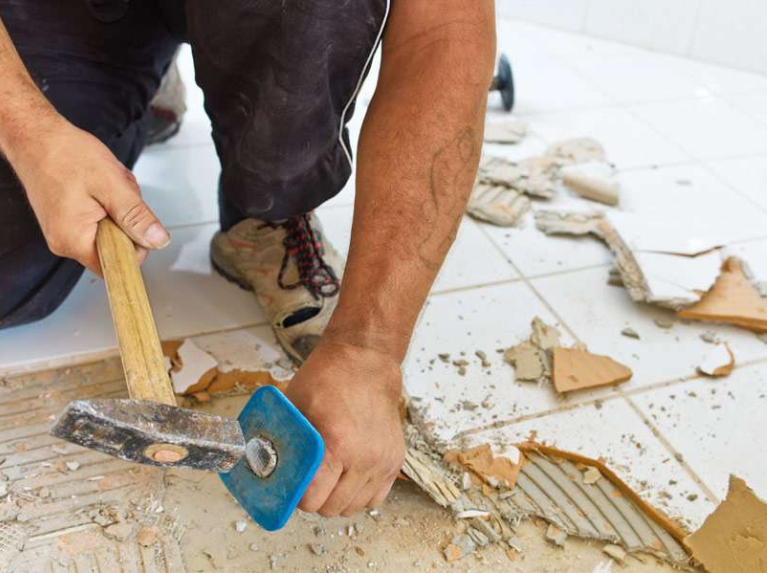
Tile removal is the structured process of detaching wall or floor tiles, clearing adhesives, and preparing the substrate for reinstallation or surface finishing. It requires precision, safety compliance, and proper tool use to ensure surfaces remain structurally sound and ready for renovation. Across the United Kingdom, tile removal is a key phase in both domestic and commercial refurbishment projects, governed by strict health, safety, and environmental standards. The tile removal process begins with assessing tile type, adhesive composition, and substrate condition. Different materials, ceramic, porcelain, natural stone, mosaic, or vinyl, require specific removal techniques. Ceramic and mosaic tiles fracture easily and are removed using chisels or scrapers, while dense porcelain or stone tiles demand mechanical chiselling or grinding. Vinyl and PVC tiles respond to heat-assisted removal that softens adhesives for clean lifting. Subfloor and wall materials such as concrete, screed, plasterboard, and plywood also determine tool selection and method.
Preparation, protection, and dust control are essential before removal begins. Workspaces must be cleared, ventilated, and sealed to contain debris. The Health and Safety Executive (HSE) requires effective dust suppression through HEPA vacuums, wet cutting, and ventilation to reduce silica exposure by more than 80%. Personal protective equipment (PPE), including respirators, gloves, goggles, and ear defenders certified under BS EN 166 and BS EN 149, is mandatory to prevent injury and inhalation hazards.
Tile removal tools range from manual chisels and scrapers to electric demolition hammers, rotary floor scrapers, and oscillating multi-tools. Power tools enhance speed and efficiency, while manual tools allow precise control in fragile areas such as plasterboard walls. Adhesive residues are removed using grinders, chemical solvents, or heat to achieve a clean, level substrate. Chemical softeners dissolve epoxy or bitumen-based adhesives, while mechanical methods suit concrete and stone surfaces. Wet-area tile removal requires special care to protect waterproof membranes and prevent moisture damage. Bathrooms, showers, and kitchens rely on tanking systems beneath tiles to prevent leaks. When these layers are damaged, they must be replaced or retanked before retiling to meet Building Regulations Part C – Resistance to Moisture. Controlled chiselling, heat-assisted removal, and low-impact tools maintain waterproofing integrity.
Professional tile removal is recommended for large areas, heavy adhesives, or regulated environments. Contractors operate under the Health and Safety at Work Act 1974, CDM Regulations 2015, and COSHH 2002, ensuring safe dust, vibration, and waste management. Hazardous materials such as asbestos or bitumen adhesives must only be handled by licensed professionals under the Control of Asbestos Regulations 2012. Professionals also manage waste legally through the Environment Agency (UK)–registered carriers, complying with the Waste (England and Wales) Regulations 2011. Costs for tile removal in the UK typically range between £20 and £60 per square metre, depending on tile type, adhesive strength, and site accessibility. Additional expenses include substrate repair (£5–£15 per m²), waterproofing (£10–£20 per m²), and waste disposal (£100–£250 per project). DIY removal is feasible for small areas but increases tool hire and waste-handling costs.
Post-removal preparation is critical for successful reinstallation. Substrates must be cleaned, levelled, and inspected for cracks or moisture. Damaged screeds or plasterboards are repaired or replaced. Moisture levels should remain below 75% relative humidity, as required by BS 8203:2017, before priming or waterproofing begins. Once repaired, self-levelling compounds, primers, and bonding agents are applied to stabilise the surface for retiling or alternative finishes such as vinyl, laminate, or natural stone. Alternatives to full tile removal, such as resurfacing, painting, overlaying, or wall panelling, are viable when tiles remain structurally sound. These options save cost, reduce dust, and align with sustainable design practices by minimising waste generation. However, complete removal remains necessary when adhesives have failed, substrates are unstable, or waterproof membranes are compromised.
Tile removal in the UK is regulated, technical, and environmentally controlled. Safe execution depends on correct preparation, tool selection, dust management, and compliance with British Standards such as BS 5385 for tiling and BS EN 12004 for adhesives. Following these principles ensures an efficient, compliant, and high-quality outcome, creating a stable foundation for new flooring or wall installations in residential, commercial, and industrial environments across the United Kingdom.
Table of Contents
What Is Tile Removal?
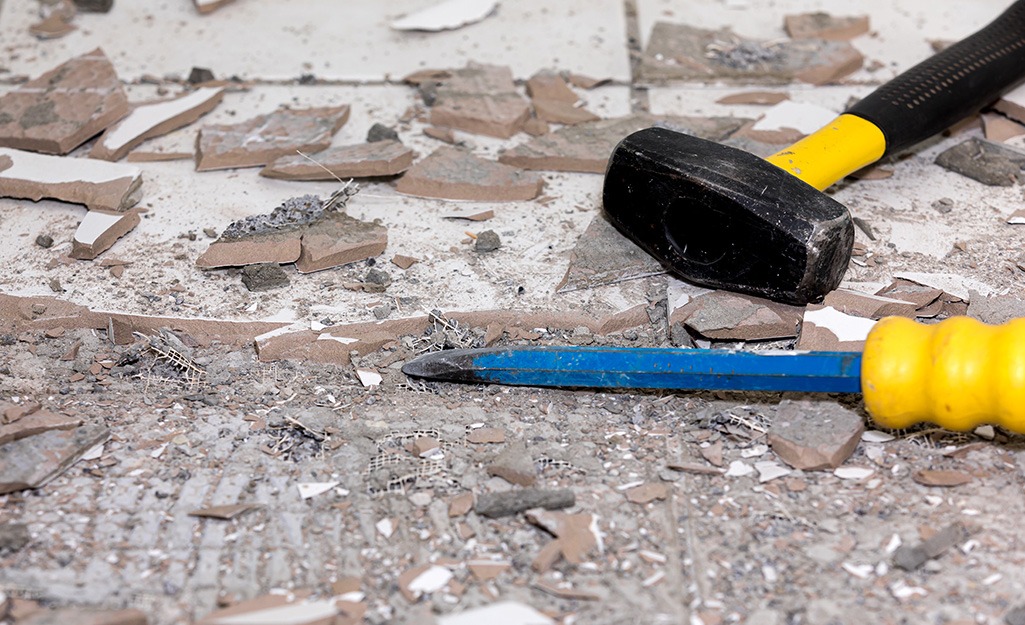
Tile removal is the controlled process of detaching existing wall or floor tiles, clearing adhesive residues, and preparing the substrate for new installation. The process restores the integrity of the surface by eliminating old materials, defects, and contaminants that interfere with proper bonding. Tile removal forms the first stage of renovation in bathrooms, kitchens, and commercial floors across the United Kingdom, ensuring stability and compatibility for modern flooring systems.
Purpose and Importance of Tile Removal
The primary purpose of tile removal is to create a sound, clean, and level substrate for retiling or surface finishing. Old tiles are removed when they are cracked, loose, outdated, or stained, or when underlying adhesive or waterproofing layers have failed. Proper removal prevents uneven bonding, moisture penetration, and subfloor deterioration. In UK residential and commercial renovations, tile removal supports design upgrades, insulation improvements, and compliance with new waterproofing or flooring standards.
How the Tile Removal Process Works
Tile removal is completed through mechanical or manual methods, depending on tile type, substrate material, and surface area. Mechanical removal uses electric chisel hammers, rotary scrapers, or floor grinders to break adhesive bonds efficiently on concrete or cement screeds. Manual removal, performed using hand chisels and hammers, suits smaller or delicate surfaces such as wall niches and mosaic installations.
After the tiles are lifted, adhesive remnants are ground or scraped from the substrate. Surface preparation follows, involving vacuum cleaning, dust removal, and levelling. A priming or sealing layer may be applied to improve adhesion for new tiles or alternative floor coverings.
Tools and Equipment Used in Tile Removal
Tile removal efficiency depends on using appropriate tools suited to the substrate and adhesive strength. Demolition hammers and chisel attachments for ceramic and porcelain tiles on concrete floors. Rotary floor scrapers for large commercial areas with bonded adhesives. Oscillating multi-tools for precision removal around edges and corners. Dust extraction systems and industrial vacuums to control debris and improve air quality. Protective covers and barriers to prevent damage to adjacent walls and furnishings. The correct tool selection reduces removal time by up to 40% and prevents substrate cracking.
Safety and Environmental Considerations
Safety procedures during tile removal prevent injury and control airborne dust particles. Workers use safety goggles, gloves, ear protection, and respirators. Dust containment barriers and negative air pressure systems minimise silica exposure, ensuring compliance with UK Health and Safety Executive (HSE) regulations. Removed tiles and adhesives are collected and disposed of in accordance with local environmental management guidelines. Where possible, debris is separated for recycling into aggregate or sub-base materials.
Factors Affecting Tile Removal Complexity
Tile removal difficulty depends on adhesive type, tile composition, and substrate condition. Epoxy and cement-based adhesives are more resistant and require mechanical chipping or grinding. Larger, high-density tiles such as porcelain and quarry tiles are more time-intensive to remove than lightweight ceramic or vinyl tiles. On average, professional tile removal services cover 15–25 m² per day under standard site conditions. Substrates damaged during removal are repaired through patching or resurfacing to ensure proper levelling before reinstallation.
Benefits of Professional Tile Removal
Professional tile removal ensures precision, speed, and minimal surface damage. Trained technicians assess substrate condition, select appropriate tools, and manage dust control effectively. Professional removal minimises reinstallation defects and reduces preparation costs by eliminating the need for additional levelling or resurfacing. In large-scale UK projects, certified contractors guarantee compliance with building safety and environmental disposal regulations.
What Do You Need to Know Before Removing Tiles?
Before removing tiles, the key factors to understand are surface composition, adhesive type, substrate condition, tool selection, and safety management. Proper preparation ensures structural stability, efficient removal, and compliance with UK safety and environmental regulations governing dust, debris, and noise control.
Analyse the Existing Surface and Tile Composition
Tile material and substrate type determine the removal method, tool selection, and time requirement. Ceramic, porcelain, quarry, and mosaic tiles differ in hardness and bonding strength. Tiles installed on concrete or screed require electric chisels or grinders, while tiles fixed on plasterboard or timber subfloors demand manual removal to prevent surface cracking. Identifying loose or hollow tiles helps plan removal sequencing and minimise substrate damage.
Identify Adhesive Type and Substrate Condition
Adhesive density and substrate stability influence removal complexity. Cement-based adhesives form rigid bonds that need mechanical chiselling, while acrylic or mastic adhesives soften under controlled heat application. The underlying substrate, whether concrete, screed, or plasterboard, must be inspected for structural integrity, moisture levels, and delamination. Substrates showing weakness or unevenness must be repaired or reinforced to maintain stability for reinstallation.
Select the Correct Tools and Equipment
The correct tools improve removal speed and surface accuracy.
- Electric demolition hammers and rotary scrapers for large ceramic or porcelain floor areas.
- Manual chisels and hammers for detailed wall tile work.
- Grinders for adhesive residue removal.
- Dust extractors and industrial vacuums for air quality management.
- Protective barriers and drop sheets for containment.
High-efficiency tools reduce labour time by up to 40%, ensuring precise removal and preventing substrate scarring.
Follow Safety Protocols and Dust Control Measures
Dust management and protective equipment are essential for health and safety compliance. Workers must use goggles, respirators, gloves, and ear protection. Work areas should be isolated with plastic barriers or negative air pressure systems to contain airborne silica dust. According to the UK Health and Safety Executive (HSE), using vacuum-assisted tools and wet cutting techniques significantly lowers silica exposure and ensures compliance with workplace safety standards.
Check for Hidden Utilities and Underfloor Systems
Identifying concealed electrical, plumbing, or heating systems prevents structural and safety hazards. Cable and pipe detectors locate utilities within walls and floors before removal begins. Bathrooms and wet zones require particular attention to waterproofing membranes, which must be replaced if damaged during removal to maintain moisture integrity.
Prepare for Substrate Restoration
Surface preparation after tile removal determines the quality of new installation. Remaining adhesive must be ground off, and uneven sections levelled with repair compounds. Substrates are then cleaned, vacuumed, and primed to improve adhesive bonding. Moisture barriers or sealants are applied before installing new tiles, vinyl, or alternative finishes to ensure long-term adhesion and durability.
Estimate Time, Cost, and Project Scope
Accurate planning reduces disruption and ensures cost efficiency. Standard removal output ranges between 15 m² and 25 m² per day, depending on tile size, adhesive density, and surface hardness. Professional removal services provide faster and cleaner results, while DIY removal requires budgeting for equipment hire, protective materials, and waste disposal.
How Do Different Tile Types Affect Your Removal Project?
Different tile types affect the removal process through variations in density, adhesive strength, thickness, and installation method. Understanding material composition determines removal speed, tool selection, and surface treatment required for efficient preparation. In the United Kingdom, ceramic, porcelain, natural stone, mosaic, vinyl, quarry, and glass tiles are the most frequently removed materials in domestic and commercial renovations.
Ceramic Tiles

Ceramic tiles are moderately dense and generally easier to remove compared to porcelain or stone materials. Their clay composition and cement-based adhesive allow controlled detachment using chisels or light mechanical hammers. Cracking often begins at grout lines, aiding removal but producing higher debris volume. Remaining adhesive is scraped or ground to expose a clean subfloor. Standard removal productivity reaches 20–25 m² per day under typical UK site conditions.
Porcelain Tiles

Porcelain tiles are denser, harder, and more resistant to mechanical impact than ceramic tiles. The strong adhesive bond requires heavy-duty chisels or electric grinders for effective separation. Porcelain’s low porosity increases friction, extending removal time and raising dust generation. Accurate tool control prevents substrate fractures common in reinforced concrete floors. Professional removal teams typically achieve 10–15 m² per day depending on thickness and tile format.
Natural Stone Tiles

Natural effect tiles such as marble, slate, and granite require slow, precise removal due to their weight and adhesive strength. These tiles are commonly bonded using thick mortar or epoxy-based adhesives, which resist chipping and cutting. Diamond-edged grinders or chiselling systems reduce risk of cracking while maintaining substrate integrity. The removal rate ranges from 8–12 m² per day, and dust extraction is mandatory to comply with UK Health and Safety Executive (HSE) dust exposure standards.
Mosaic Tiles

Mosaic tiles are lightweight and quick to remove due to their thin profile and flexible adhesive layer. Manual chisels or oscillating multi-tools are used to lift mosaic sheets without substrate damage. The mesh backing sometimes adheres to the base and must be scraped clean after removal. Mosaic tiles allow efficient progress, reaching up to 25–30 m² per day, making them one of the least labour-intensive tile types to remove in UK interiors.
Vinyl and PVC Tiles

Vinyl and PVC tiles are soft, lightweight, and bonded using low-strength adhesive layers. Controlled heat application loosens the adhesive, allowing tiles to be peeled away manually or lifted with scrapers. Modern vinyl tiles use solvent-free adhesives that simplify removal, while older installations with bitumen-based glue require environmentally compliant disposal. Vinyl removal speed often exceeds 30 m² per day, depending on substrate smoothness and adhesive age.
Quarry and Terracotta Tiles
Quarry tiles and terracotta tiles are thick, porous, and bonded with cementitious mortar, increasing removal effort. Mechanical chisels or percussion hammers are essential to detach tiles without damaging the subfloor. These traditional materials generate high dust levels and require protective containment. Removal efficiency ranges from 10–18 m² per day, depending on tile density and adhesive depth.
Glass Tiles
Glass tiles are brittle and demand delicate manual removal to prevent shattering and injury. Oscillating tools and hand chisels with fine control are used to lift each tile while maintaining wall stability. Sharp glass fragments require strict safety procedures including reinforced gloves, eye protection, and containment barriers. Average removal productivity reaches 8–12 m² per day under standard working conditions.
What Makes Each Tile Type Different to Remove?
Each tile type differs in removal difficulty based on density, porosity, adhesive composition, installation depth, and bonding strength. These physical and structural characteristics determine the force, tools, and time required to separate the tile from its substrate. In the United Kingdom, the main tile categories, ceramic, porcelain, natural stone, mosaic, vinyl, quarry, and glass, present distinct removal behaviours and safety requirements.
Ceramic Tiles
Ceramic tiles are semi-dense materials that fracture easily, allowing moderate removal speed with standard tools. Their clay-based body is fired at medium temperatures, creating a surface that cracks cleanly under mechanical impact. Cement-based adhesive holds the tiles firmly but not excessively, allowing efficient separation using chisels or small demolition hammers. Adhesive residue typically requires light grinding to restore a smooth substrate.
Porcelain Tiles
Porcelain tiles are denser, less porous, and more resistant to impact, making removal slower and more demanding. High-temperature firing produces a vitrified surface that adheres tightly to the underlying adhesive. The strong mechanical bond requires heavy chiselling or electric floor scrapers. Porcelain removal generates high dust levels due to the material’s compact density, requiring vacuum-assisted systems for dust extraction.
Natural Stone Tiles
Natural stone tiles such as marble, granite, and slate differ by mineral structure and bonding thickness. Stone tiles are heavy and often installed using mortar beds or epoxy adhesives, making separation labour-intensive. Stone can fracture unpredictably, so removal requires low-speed mechanical chiselling or diamond-edge grinding to protect the substrate. The high weight and thickness of stone tiles increase manual handling requirements and disposal volume.
Mosaic Tiles
Mosaic tiles are lightweight and mounted on mesh backing, making removal straightforward but detailed. The adhesive layer is thin and flexible, allowing quick detachment with oscillating or manual tools. The mesh sheet sometimes stays bonded to the wall or floor, requiring additional scraping or sanding. Mosaics produce smaller fragments but limited dust, allowing faster progress in confined residential areas.
Vinyl and PVC Tiles
Vinyl and PVC tiles are flexible, non-ceramic surfaces bonded with pressure-sensitive or bitumen adhesives. Heat or chemical softening loosens the adhesive, enabling tiles to be lifted manually. Modern vinyl installations are easier to remove due to low-VOC adhesives, while older systems may contain bituminous compounds requiring specialist disposal under UK environmental compliance standards. Removal is fast and low-noise, generating minimal debris.
Quarry and Terracotta Tiles
Quarry and terracotta tiles are thick, porous materials bonded with rigid mortar, making removal physically demanding. The high friction between the rough tile base and mortar increases resistance, requiring heavy chisels or pneumatic breakers. Dust production is high due to clay composition and substrate fragmentation. Removal must proceed carefully to prevent subfloor damage and excessive vibration in adjoining structures.
Glass Tiles
Glass tiles are fragile and sharp-edged, requiring slow, controlled removal to prevent breakage and surface damage. Their smooth underside provides less grip to adhesives, but brittleness increases risk of shattering. Manual chiselling and precision oscillating tools are used for careful separation. Containment barriers and reinforced gloves are essential to protect against sharp fragments during removal.
How Does the Surface Underneath Affect Tile Removal?
The surface underneath tiles determines how easily tiles detach, how adhesives react, and how much preparation the substrate requires before reinstallation. Subfloor composition, density, and moisture level directly influence removal speed, tool selection, and structural stability. In the United Kingdom, the most common substrates, concrete, screed, plasterboard, plywood, and cement board, require different removal methods to maintain integrity and prepare the base for new flooring or wall finishes.
Concrete Subfloors
Concrete is a dense, rigid substrate that forms strong adhesive bonds, making tile removal more demanding. Cement-based adhesives penetrate the surface pores of concrete, creating a durable mechanical lock that requires electric chisels, grinders, or rotary scrapers to break. Excessive force risks chipping the slab or damaging reinforcement layers. After removal, residual adhesive must be ground off, and the surface vacuum-cleaned to ensure new bonding. Concrete is typical in UK commercial, industrial, and ground-floor installations where structural strength and longevity are essential.
Screeded Floors
Screed is softer and more brittle than concrete, requiring precise control during tile removal to avoid surface cracking. Screed layers are usually 40–75 mm thick and can crumble under heavy mechanical vibration. Manual chiselling or low-impact electric tools maintain surface stability while detaching adhesive bonds. After tile removal, damaged areas are relevelled using a self-smoothing compound to restore evenness. Proper screed restoration is critical for achieving secure adhesion for retiling or alternate floor finishes.
Plasterboard Walls
Plasterboard is lightweight and fragile, making careful removal essential to preserve wall structure. Excess impact can break the gypsum core or tear paper layers, weakening wall strength. Manual chisels or oscillating tools provide controlled pressure suitable for bathroom and kitchen wall removal. Adhesive remnants are sanded lightly or, in cases of deep damage, the plasterboard is replaced. Maintaining surface flatness prevents tile misalignment and ensures proper adhesion during reinstallation.
Plywood and Timber Floors
Plywood and timber substrates are flexible and absorbent, requiring balanced removal techniques to prevent delamination or warping. Adhesives used on wooden surfaces penetrate deeply into grain fibres, creating a tight chemical bond. Controlled mechanical chiselling and moderate heat application loosen the adhesive without damaging the subfloor. After removal, inspection for rot, moisture, and structural weakness is essential. Damaged panels are replaced before reinstallation to ensure subfloor rigidity and long-term durability.
Cement Backer Boards
Cement backer boards provide a stable and moisture-resistant surface but increase removal resistance due to dense bonding. Tiles installed on cement boards adhere through rigid polymer-modified adhesives, requiring grinders or chisels fitted with diamond blades for separation. When boards sustain fractures during removal, complete replacement is recommended to maintain waterproofing integrity. Cement backer boards are commonly found in UK wet rooms and high-humidity environments where waterproofing is a regulatory requirement.
Vinyl or Bitumen Sub-Layers
Vinyl and bitumen layers beneath tiles complicate removal due to variable adhesive strength and potential contamination. Heat or solvent softening loosens the adhesive, but care must be taken when handling bitumen residues, which fall under controlled waste according to the Environment Agency (UK). Tiles bonded to such layers require extraction under dust containment and protective ventilation systems. Post-removal cleaning includes scraping, degreasing, and applying a bonding primer to ensure surface compatibility.
Uneven or Damaged Substrates
Cracked or delaminated substrates increase removal difficulty and affect reinstallation stability. Uneven surfaces cause adhesive inconsistencies that lead to unpredictable tile detachment. Identifying hollow spots or damaged zones before removal reduces the risk of subfloor collapse. Repairing voids, sealing cracks, and ensuring moisture regulation restore substrate integrity, enabling precise reinstallation.
What Tools and Materials Do You Need to Remove Tiles?
Tile removal requires the use of power tools, manual tools, protective equipment, and surface preparation materials to ensure efficient, safe, and regulation-compliant work. Using the correct combination of tools and materials enables clean removal, prevents substrate damage, and prepares the surface for reinstallation across residential and commercial interiors in the United Kingdom.
Power Tools for Fast and Effective Tile Removal
Power tools increase removal speed and accuracy by breaking strong adhesive bonds and lifting tiles efficiently. Electric demolition hammers are used to detach dense materials such as porcelain and quarry tiles from concrete floors, while rotary floor scrapers remove adhesive residues over large areas quickly. Oscillating multi-tools provide precise control along wall edges and corners, and angle grinders fitted with diamond blades help smooth leftover adhesive and prepare the surface for new finishes. Power tools enhance productivity by up to 40% and reduce operator fatigue when equipped with vibration-damping handles.
Manual Tools for Controlled Tile Removal
Manual tools provide precision and control during removal in small or delicate areas. Cold chisels and tile scrapers help remove individual tiles without damaging the substrate. Grout saws or utility knives open grout lines before chiselling, and pry bars or rubber mallets lift sections of tiles in a controlled manner. Manual removal methods are best suited for plasterboard and lightweight wall surfaces where vibration or impact from power tools may cause surface cracking.
Dust and Debris Control Equipment
Dust and debris control is essential for health and safety compliance during tile removal. Vacuum dust extractors connected to power tools collect fine silica particles generated during chiselling. Plastic containment sheets isolate the workspace, preventing dust spread to other areas, while portable air filtration units maintain clean air quality indoors. According to the Health and Safety Executive (HSE), effective dust extraction reduces airborne silica exposure by over 80%, supporting safe working environments across construction and renovation projects.
Safety and Protective Equipment
Protective equipment safeguards workers from physical injury, vibration strain, and dust inhalation. Safety goggles shield the eyes from fragments, respirators protect against airborne silica, and heavy-duty gloves reduce the risk of cuts from sharp edges. Steel-toe boots and ear defenders ensure foot and hearing protection in noisy environments. All protective gear must meet BS EN 166 and BS EN 149 standards recognised across the United Kingdom to ensure compliance with occupational safety requirements.
Materials for Substrate Preparation
Surface preparation materials restore the condition of the substrate once tiles and adhesives are removed. Self-levelling compounds repair cracks and gouges in concrete or screed floors, while primers and bonding agents improve adhesion for new tile systems. Moisture barriers and waterproof sealants protect subfloors in wet areas such as bathrooms and kitchens. Industrial vacuums and cleaning solutions remove remaining dust and residue, creating a clean surface for reinstallation. Proper substrate preparation ensures durability and prevents premature failure of the new tile layer.
Tools and Equipment for Waste Management
Efficient waste handling supports environmental responsibility and site organisation during tile removal. Rubble sacks and debris containers hold broken tiles and adhesive waste, while shovels and wheelbarrows transport materials to designated collection areas. Using licensed waste disposal services ensures compliance with Environment Agency (UK) regulations for recycling and waste segregation. Reprocessing ceramic and porcelain waste into construction aggregates reduces landfill use by approximately 30%, aligning with national sustainability standards.
Which Tools Are Essential for DIY Tile Removal?
The essential tools for DIY tile removal are chisels, hammers, scrapers, grout removers, oscillating tools, dust extractors, and protective equipment. These tools allow safe and efficient tile removal while preventing surface damage and controlling dust. Selecting the right equipment ensures proper preparation for retiling or surface finishing in UK homes.
Chisels and Hammers
Chisels and hammers are the most important tools for breaking and lifting tiles during DIY removal. A cold chisel with a sharp edge is used to lift tiles from the grout line, while a hammer applies controlled force to break the adhesive bond. For small wall areas, a rubber mallet provides impact control without damaging the substrate. These tools suit ceramic, porcelain, and mosaic tiles commonly found in UK bathrooms and kitchens.
Tile and Floor Scrapers
Scrapers are used to detach adhesive residue after the tiles are removed. Long-handled floor scrapers cover large surfaces efficiently, while handheld scrapers work well in corners and tight spaces. A sharp blade angle ensures full adhesive removal without gouging the subfloor. Proper scraping prepares the surface for self-levelling compounds or new adhesives.
Grout Removers and Utility Knives
Grout removers make initial tile separation easier by cutting grout joints cleanly. Manual grout saws or carbide-tipped blades remove old grout without cracking nearby tiles. Utility knives are used to score sealant or caulk lines around fixtures. Removing grout and sealant first reduces tile breakage and prevents wall or floor damage during chiselling.
Oscillating Multi-Tools
Oscillating tools provide versatility for edge cutting and adhesive removal in confined spaces. Fitted with carbide or diamond blades, they cut grout, soften adhesives, and lift small tiles precisely. Oscillating tools are especially effective for partial tile repairs, splashback removal, or delicate wall work where heavy tools may cause cracking.
Dust Extractors and Containment Barriers
Dust control equipment is essential for health and safety during DIY tile removal. Portable vacuum dust extractors collect airborne particles directly from chiselling or grinding points. Plastic containment sheets isolate work zones, and air filters maintain breathable air quality. According to the Health and Safety Executive (HSE), using extraction systems reduces exposure to hazardous silica dust by over 80%, ensuring compliance with UK safety standards.
Safety and Personal Protective Equipment
Protective equipment prevents injury from flying fragments, vibration, and dust inhalation. Safety goggles protect eyes, heavy-duty gloves prevent hand cuts, and respirators reduce silica dust exposure. Knee pads are important for floor removal tasks, while ear protection limits prolonged noise exposure from hammering or oscillating tools. PPE used in DIY tile removal should meet BS EN 166 for eye protection and BS EN 149 for respiratory safety.
Waste Collection Tools
Proper waste handling keeps the work area clean and compliant with local regulations. Buckets, rubble sacks, and dustpans allow quick collection of debris. A shovel and broom help clear large fragments before vacuuming the surface. Waste disposal must follow Environment Agency (UK) guidelines, separating recyclable ceramics and adhesives for sustainable management.
What Additional Supplies Will You Need?
Additional supplies needed for tile removal include cleaning materials, surface repair compounds, adhesive removers, moisture barriers, and waste management equipment. These supplies complement core tools, ensuring safety, dust control, and a clean, even substrate ready for new flooring or wall finishes in UK homes and commercial interiors.
Cleaning and Dust Control Supplies
Cleaning supplies maintain air quality and prepare surfaces for reinstallation. Industrial vacuums with HEPA filtration remove fine silica particles created during chiselling or grinding. Plastic dust sheets and masking tape isolate work areas, protecting nearby walls, fixtures, and flooring from debris. Spray bottles with water help control airborne dust when dry removal methods are used. Maintaining cleanliness throughout the process ensures compliance with Health and Safety Executive (HSE) guidelines on dust exposure in domestic renovation projects.
Adhesive Removers and Scraping Agents
Adhesive removers soften or dissolve old bonding materials, making residue removal easier and preventing substrate damage. Solvent-based products or heat-activated compounds break down thick adhesive layers used beneath ceramic and porcelain tiles. After loosening, flat scrapers or abrasive pads clear the remaining film, ensuring full surface exposure. Using adhesive removers accelerates preparation and enhances bonding strength for new tile adhesive applications.
Surface Repair and Levelling Compounds
Surface repair materials restore substrate smoothness and stability after tile removal. Self-levelling compounds fill minor cracks and uneven sections on screeds or concrete floors. Repair mortars reinforce weak or chipped areas, while primers improve adhesion for subsequent tile installation. Consistent levelling ensures a uniform base, reducing the risk of hollow spots or future cracking.
Moisture Barriers and Sealants
Moisture barriers and sealants protect substrates in wet environments such as bathrooms and kitchens. Waterproof membranes prevent rising damp or leaks from damaging the new tile layer. Acrylic or silicone-based sealants close perimeter joints and corners where water infiltration commonly occurs. Installing new tiles without resealing exposes subfloors to long-term deterioration, especially in UK properties with high humidity levels.
Protective and Safety Supplies
Safety supplies maintain personal protection and structural integrity throughout tile removal. Heavy-duty gloves, safety goggles, dust masks, and knee pads safeguard against injury and prolonged strain. Ear defenders reduce exposure to repetitive tool noise, and anti-vibration handles minimise hand fatigue. All protective gear should comply with BS EN 166 for impact resistance and BS EN 149 for respiratory safety certification.
Waste Handling and Disposal Supplies
Waste management supplies enable efficient and sustainable debris removal. Rubble sacks, bins, and labelled containers store tile fragments, adhesive residue, and dust. Shovels and brooms clear larger pieces before vacuum cleaning. Using licensed waste carriers ensures proper recycling or disposal under Environment Agency (UK) regulations. Segregating ceramic and porcelain waste reduces landfill impact and supports environmentally responsible renovation practices.
How Should You Prepare for Tile Removal?
Preparation for tile removal involves clearing the work area, protecting fixtures, assessing substrate conditions, gathering equipment, and implementing safety and dust control measures. Proper planning prevents structural damage, improves efficiency, and ensures compliance with UK health, safety, and environmental regulations.
Clear the Work Area and Remove Fixtures
A clear workspace allows unrestricted access and prevents accidental damage. All movable furniture, appliances, and decorative fittings should be removed from the area before tile removal begins. Fixed items such as cabinets, radiators, and sockets must be covered with dust sheets or protective plastic barriers. Doors and vents should be sealed with masking film to contain dust within the workspace. Clearing the area also reduces tripping hazards, supporting safe workflow and efficient movement of tools and debris.
Protect Adjacent Surfaces and Flooring
Protective coverings preserve adjacent finishes from impact, vibration, and dust contamination. Floors outside the removal zone should be covered using heavy-duty plastic or drop cloths. Wall edges, skirting boards, and countertops should be shielded with masking tape or corrugated barriers. In multi-room renovations, isolation barriers prevent cross-contamination of dust, ensuring other areas of the property remain clean and unaffected.
Assess Tile and Substrate Conditions
Assessing tile material, adhesive strength, and substrate type determines the correct removal technique. Ceramic and porcelain tiles bonded to concrete require mechanical chiselling, while tiles on plasterboard or plywood demand manual removal to prevent surface tearing. Substrates should be inspected for cracks, moisture, and hollowness before removal. Identifying weak sections or hidden defects helps prevent substrate damage and ensures accurate tool selection.
Gather Tools and Safety Equipment
Preparation requires collecting all essential tools, materials, and personal protective equipment (PPE). Core equipment includes chisels, hammers, scrapers, oscillating tools, and dust extractors. Safety equipment, such as gloves, goggles, respirators, and ear defenders, must comply with BS EN 166 and BS EN 149 standards. Power tools should be tested for proper function and fitted with dust extraction attachments. Having all tools ready reduces delays and maintains workflow efficiency.
Implement Dust Control and Ventilation Measures
Dust control protects health and maintains visibility during removal. Vacuum dust extractors or air filtration units remove airborne silica particles, while plastic sheeting confines debris to the work zone. Slightly opening windows or using extractor fans ensures proper ventilation. According to the Health and Safety Executive (HSE), using wet suppression or vacuum systems reduces silica exposure by up to 80%, supporting compliance with UK Construction Dust Regulations.
Plan for Waste Collection and Disposal
Efficient waste management prevents site congestion and environmental non-compliance. Rubble sacks, bins, and wheelbarrows should be placed nearby for collecting broken tiles and debris. Heavy waste must be segregated and transferred to licensed recycling facilities under Environment Agency (UK) guidelines. Organised disposal prevents contamination and streamlines cleanup after removal.
Prepare for Surface Repair and Reinstallation
Preparing the substrate for post-removal treatment ensures long-term flooring stability. After removal, the exposed surface may require grinding, levelling, or sealing before new tile installation. Having levelling compounds, primers, and moisture barriers ready ensures seamless transition between removal and reinstallation. Proper substrate conditioning prevents bonding failures and maintains consistent floor height.
What Are the Best Methods for Removing Tiles?
The best methods for removing tiles are mechanical removal, manual chiselling, heat-assisted removal, and chemical adhesive softening. Each method is selected based on tile material, adhesive type, substrate strength, and project scale. Using the correct removal technique ensures safe detachment, minimal substrate damage, and efficient preparation for reinstallation within UK residential and commercial environments.
Mechanical Tile Removal
Mechanical tile removal uses powered tools to break strong adhesive bonds and lift dense tile materials. Electric demolition hammers, rotary floor scrapers, and angle grinders with chisel attachments are used to remove porcelain, quarry, and natural stone tiles bonded to concrete or screed. The vibration produced by these tools loosens tiles efficiently but requires controlled operation to avoid substrate chipping. Dust extraction systems must be connected to all mechanical tools to comply with Health and Safety Executive (HSE) silica dust regulations. Mechanical removal is ideal for large floor areas exceeding 20 m² due to its speed and productivity.
Manual Tile Removal
Manual tile removal relies on hand tools for precision and reduced impact in small or delicate areas. Cold chisels, hammers, and pry bars are used to lift ceramic or mosaic tiles bonded to plasterboard or plywood substrates. This method prevents cracking or tearing of lightweight wall surfaces and is particularly effective in bathrooms, kitchens, and feature walls. Manual removal produces less dust but requires more physical effort and time, covering approximately 10–15 m² per day depending on tile size and adhesion strength.
Heat-Assisted Tile Removal
Heat-assisted tile removal softens adhesives, allowing easier detachment of flexible materials such as vinyl or PVC tiles. Heat guns or infrared heaters are applied evenly to the tile surface to loosen the adhesive layer beneath. Once softened, tiles are lifted using scrapers without damaging the substrate. This method is clean, low-noise, and suitable for domestic environments where minimal disruption is preferred. Caution is required to prevent overheating, which may release fumes from older adhesives containing bitumen compounds.
Chemical Adhesive Softening
Chemical adhesive softening dissolves or weakens adhesive bonds under ceramic or porcelain tiles. Specialised solvent-based or alkaline adhesive removers are applied to the grout lines and left to react for the manufacturer-recommended duration. The softened adhesive is then scraped away using manual or mechanical tools. This method reduces tool vibration and substrate strain but requires proper ventilation and protective equipment in accordance with BS EN 166 safety standards. Chemical removal is typically used in restoration projects or where mechanical chiselling may damage delicate subfloors.
Sectional Tile Removal
Sectional removal minimises surface strain by working in small, controlled segments. The first tile is broken using a chisel or grinder to expose the edges of adjacent tiles, allowing gradual removal without damaging neighbouring pieces. This technique improves safety on vertical installations such as bathroom walls and prevents widespread substrate delamination. Sectional removal is widely applied in heritage or listed UK buildings where preserving underlying structures is critical.
Combined or Hybrid Removal Techniques
Hybrid removal methods combine mechanical, chemical, and manual processes for complex surfaces. Mechanical chiselling removes dense tile sections, while chemical softeners or heat treatment target adhesive residues. Combining techniques reduces total removal time by up to 30%, especially in mixed-material areas or floors with multiple adhesive layers. Hybrid systems are commonly used in commercial renovations that demand both speed and surface precision.
How Do You Remove Tiles Manually?
Manual tile removal involves using hand tools to detach tiles carefully without damaging the underlying surface. The process relies on precision rather than force, making it ideal for small areas, wall applications, and delicate substrates such as plasterboard or plywood. Manual removal is widely used in UK homes where control, cleanliness, and preservation of surrounding finishes are priorities.
Step 1: Prepare the Work Area
Preparing the work area ensures safety and efficiency before removal begins. Furniture, fixtures, and fittings must be cleared or covered with dust sheets. Floors adjacent to the work zone should be protected with heavy-duty coverings. Walls, doors, and vents are sealed using masking tape and plastic barriers to prevent dust migration. Tools, PPE, and waste containers should be organised before starting.
Step 2: Remove Grout and Sealant
Removing grout and sealant weakens the bond between tiles and prevents cracking of adjacent sections. Grout lines are cut using a grout saw, carbide blade, or oscillating multi-tool. Silicone sealant around edges or joints is scored with a utility knife. Cleaning grout lines before chiselling provides entry points for the chisel and allows tiles to lift cleanly without substrate stress.
Step 3: Loosen the First Tile
The first tile is the most critical to remove because it creates access to surrounding tiles. The tile is usually broken deliberately using a hammer and chisel at the centre point, avoiding corners or edges. The broken pieces are lifted carefully using a scraper or pry bar. Once the first tile is cleared, adjacent tiles can be lifted along the exposed edge, reducing resistance and substrate strain.
Step 4: Lift Remaining Tiles Gradually
Remaining tiles are removed systematically in rows to maintain control and surface stability. The chisel is positioned at a shallow 30–45° angle beneath the tile edge and tapped gently with a hammer. Slow, consistent strikes prevent damage to the substrate and adjacent tiles. Manual removal progresses tile by tile, ensuring adhesive layers remain intact for controlled scraping later.
Step 5: Remove Adhesive Residue
Adhesive residue must be cleared to prepare the substrate for reinstallation. A handheld scraper or stiff-blade tool removes remaining adhesive from concrete or plasterboard. For hardened cement-based adhesives, light sanding or grinding may be required. Adhesive clearance ensures that the surface remains level, smooth, and ready for priming or levelling compounds.
Step 6: Maintain Dust Control and Safety
Dust control protects health and prevents airborne silica exposure during chiselling. Work surfaces should be misted lightly with water to suppress dust, and an industrial vacuum should be used regularly to collect debris. Personal protective equipment, including safety goggles, gloves, a respirator, and knee pads, must be worn throughout the process. These precautions align with Health and Safety Executive (HSE) guidance for silica dust control in domestic renovations.
Step 7: Clean and Inspect the Surface
The final stage of manual removal is cleaning and inspecting the substrate for damage. All tile fragments, dust, and adhesive must be vacuumed or wiped from the surface. The substrate is then checked for cracks, hollowness, or moisture before reinstallation. Damaged areas should be repaired using patching compounds or sealants to restore surface integrity.
Have a look at our simple steps to removing old tiles.
Which Power Tools Work Best for Tile Removal?
The best power tools for tile removal are demolition hammers, rotary floor scrapers, oscillating multi-tools, and angle grinders with diamond attachments. Each tool serves a specific function depending on tile density, adhesive strength, and substrate condition. Using suitable equipment ensures faster removal, reduced effort, and minimal substrate damage across residential and commercial interiors in the United Kingdom.
Demolition Hammers
Demolition hammers are the most effective power tools for removing ceramic, porcelain, and natural stone tiles bonded to hard substrates such as concrete or screed. They deliver high-impact force that breaks tile and adhesive layers simultaneously. Fitted with flat chisel or tile-removal bits, demolition hammers achieve removal rates of 20–30 m² per day depending on tile hardness and adhesive thickness. Models with vibration control and adjustable speed improve precision and reduce operator fatigue.
Rotary Floor Scrapers
Rotary floor scrapers use rotating or oscillating blades to lift bonded tiles and adhesive residues quickly. These machines are ideal for large, open floor areas in commercial or industrial environments. They operate at variable speeds to adapt to adhesive type and floor level. Heavy-duty rotary scrapers remove tiles evenly without gouging concrete surfaces, making them suitable for retiling projects that require clean, flat substrates. According to the University of Salford Acoustics Research Centre (2023), rotary scrapers improve removal efficiency by up to 40% compared to handheld tools.
Oscillating Multi-Tools
Oscillating multi-tools provide precision for small spaces, wall corners, and edges where larger machines cannot reach. Their multi-directional motion allows accurate grout cutting, edge trimming, and adhesive removal. When fitted with carbide or diamond-tipped blades, they remove mosaic, glass, or wall tiles with minimal vibration. Oscillating tools are lightweight, versatile, and essential for detailed removal work in kitchens, bathrooms, and decorative feature areas.
Angle Grinders with Diamond Blades
Angle grinders equipped with diamond blades or grinding discs are used for cutting grout joints, slicing dense tiles, and grinding adhesive residues. They are particularly effective for porcelain, quarry, and stone effect tiles that resist chiselling. Diamond blades offer clean, precise cutting, reducing breakage and tile fragment spread. When used with dust extraction attachments, angle grinders comply with Health and Safety Executive (HSE) dust control standards by limiting silica particle emissions.
Electric Chisel Hammers
Electric chisel hammers combine high-frequency vibration and impact to detach tiles bonded with cement-based adhesives. They are lighter and more compact than demolition hammers, making them ideal for vertical walls or medium-sized floor areas. Interchangeable chisel attachments allow users to control depth and angle for delicate substrates. Electric chisels reduce manual labour time by approximately 30% and provide greater precision during removal.
Concrete Grinders and Surface Polishers
Concrete grinders are used after tile removal to eliminate residual adhesive and smooth the substrate for reinstallation. Fitted with diamond grinding pads, these machines remove uneven patches, high points, and small debris. Surface polishing improves bonding conditions for new adhesives, ensuring long-term installation integrity. Grinders with integrated dust extractors maintain air quality and meet UK construction safety requirements.
When Should You Use Heat to Remove Tiles?
Heat should be used to remove tiles when dealing with flexible materials such as vinyl, PVC, or linoleum, or when adhesives need softening for clean detachment. Controlled heat loosens adhesive bonds, allowing tiles to lift easily without damaging the substrate. This method is widely used in UK homes for flooring renovations and adhesive removal where mechanical chiselling is unsuitable or too aggressive.
Heat Use for Vinyl and PVC Tile Removal
Vinyl and PVC tiles respond well to heat application because their adhesives soften under moderate temperatures. Heat guns or infrared heaters are directed at the tile surface for several seconds until the adhesive becomes pliable. Once loosened, tiles are lifted using scrapers or putty knives. This approach ensures minimal substrate damage and clean removal. Excessive heat should be avoided to prevent melting or toxic fume release, particularly with older adhesives containing bituminous compounds.
Heat-Assisted Removal of Residual Adhesives
Heat can also be used to soften adhesive residues left after mechanical or manual tile removal. Warmth loosens thick or cementitious adhesive layers that are difficult to scrape off cold. Applying heat before grinding or scraping reduces tool wear and prevents gouging of screed or concrete. Heat-assisted cleaning is most effective for small surface areas and repair projects requiring precision removal.
When Not to Use Heat for Tile Removal
Heat should not be used on ceramic, porcelain, natural stone, or glass tiles because these materials resist temperature changes and may crack under direct heat. Using heat on moisture-sensitive substrates such as plywood or plasterboard can cause warping or delamination. In addition, enclosed spaces with poor ventilation should avoid heat-based methods to prevent fume buildup and condensation damage.
Tools and Safety Precautions for Heat Removal
Proper tools and controlled technique ensure safety and effectiveness when using heat for tile removal. Heat guns with variable temperature settings between 150°C and 300°C provide consistent results without overheating adhesives. Infrared heaters offer even distribution of warmth across larger areas. During application, operators must wear respirators, gloves, and eye protection to safeguard against adhesive vapours and debris. According to the Health and Safety Executive (HSE), adequate ventilation is required whenever heat-based tools are used indoors to maintain air quality.
Benefits of Using Heat in Tile Removal
Heat-based removal provides cleaner separation, lower dust generation, and reduced substrate stress. It eliminates the need for chemical solvents, making it suitable for residential environments sensitive to odours or fumes. Heat-assisted methods are quieter, producing less vibration and noise than mechanical chiselling. For small flooring projects, heat application can reduce total removal time by up to 25% compared to traditional scraping methods.
How Do Chemical Solvents Help with Tile Removal?
Chemical solvents assist with tile removal by breaking down the adhesive bond between the tile and the substrate, allowing easier separation without mechanical force. The solvents penetrate adhesive layers and chemically soften them, reducing grip strength and making the removal process safer and more efficient. This method is particularly useful in UK renovation projects where delicate surfaces or older installations require careful handling to avoid substrate damage and excessive dust generation.
How Chemical Solvents Work
Chemical solvents function by dissolving or altering the chemical structure of the adhesive material. Once applied along grout joints or tile edges, the solvent seeps underneath the tile surface and reacts with the bonding compounds. The softened adhesive releases from the substrate, enabling tiles to be lifted with scrapers or chisels rather than heavy tools. The controlled breakdown of the adhesive ensures clean removal and prevents vibration-related damage to plasterboard, timber, or screed surfaces commonly found in domestic interiors.
Types of Chemical Solvents Used in Tile Removal
Different solvent formulations target specific adhesive compositions and tile types. Citrus-based solvents are non-toxic and effective on acrylic or mastic adhesives typically used in residential bathrooms and kitchens. Alkaline removers break down cement-based and epoxy adhesives used under porcelain or ceramic tiles. Solvent-based chemical strippers with mild hydrocarbons dissolve bitumen adhesives that bond older vinyl or PVC tiles to subfloors. Choosing the correct solvent based on adhesive type ensures maximum efficiency and minimal substrate interference during removal.
When to Use Chemical Solvents
Chemical solvents are most effective when mechanical methods pose a risk of structural damage or are impractical due to adhesive density. They are preferred for small to medium floor areas, confined spaces, and surfaces that cannot tolerate vibration, such as heritage floors, screeded bases, or plasterboard walls. Solvent use is also recommended for adhesive residue removal after partial mechanical chiselling, allowing a smooth and even finish before reinstallation.
Application Process for Chemical Solvents
The application of chemical solvents requires precision, timing, and adequate ventilation. The solvent is evenly applied using a brush, roller, or sprayer according to manufacturer instructions. After a reaction period of 15 to 45 minutes, the adhesive begins to soften, forming bubbles or lifting from the surface. Tiles are then carefully pried off using scrapers. Once all residue is removed, the substrate is neutralised with water or a mild cleaning solution and left to dry fully. Proper ventilation throughout the process prevents fume buildup and ensures safe indoor air quality.
Safety and Environmental Considerations
Safe handling and disposal are essential when using chemical solvents for tile removal. Operators must wear respirators, gloves, goggles, and long sleeves to avoid contact with fumes or splashes. Workspaces should be ventilated with open windows or extraction fans. Solvents should be stored away from heat sources, and residual waste must be collected and disposed of in accordance with Environment Agency (UK) hazardous material guidelines. Eco-friendly solvent alternatives, such as biodegradable or citrus-based removers, are recommended for residential applications to reduce environmental and health impacts.
Advantages of Using Chemical Solvents
Chemical solvents provide a low-impact, dust-free, and noise-free solution for removing tiles and adhesives. They reduce physical effort, shorten removal time, and minimise the need for heavy mechanical tools. Solvents achieve clean substrate exposure, improving adhesion quality for retiling or refinishing. The method is especially beneficial for delicate surfaces where manual or mechanical removal might cause cracks or substrate tearing.
How Do You Remove Tiles from Different Surfaces?
Removing tiles from different surfaces requires specific techniques and tools based on the substrate’s composition, density, and adhesion strength. Each surface, concrete, screed, plasterboard, plywood, or cement board, responds differently to mechanical stress and adhesive resistance. Understanding these variations ensures safe removal, prevents substrate damage, and prepares the base for reinstallation in compliance with UK renovation standards.
Removing Tiles from Concrete Floors
Concrete floors are durable substrates that require high-impact mechanical tools for effective tile removal. Cement-based adhesives bond tightly to concrete pores, making electric demolition hammers or rotary floor scrapers essential for large areas. The chisel should be angled at 30–45° to lift tiles cleanly without gouging the surface. After removal, adhesive residues are ground or sanded off using diamond grinders to achieve a smooth finish. Dust extraction systems must be used to comply with Health and Safety Executive (HSE) silica dust regulations. Proper levelling compounds are then applied to prepare the concrete for new installation.
Removing Tiles from Screeded Surfaces
Screed is softer and more brittle than concrete, demanding careful tile removal to prevent cracking. Manual chiselling or oscillating tools are preferred over heavy machinery. Excessive vibration can cause delamination or damage beneath the surface layer. Adhesive residues are removed with handheld scrapers or light grinding, followed by patch repairs or re-levelling using self-smoothing compounds. Moisture control is essential to avoid damp retention within the screed before applying new flooring.
Removing Tiles from Plasterboard Walls
Plasterboard requires low-impact manual removal methods to prevent tearing or crushing. Cold chisels, pry bars, or oscillating multi-tools are used to detach tiles gradually from grout lines. Strong adhesives may cause partial surface loss, requiring replacement of damaged plasterboard sections. Adhesive remnants are lightly sanded rather than ground to protect the gypsum surface. After removal, surfaces are re-primed or re-boarded to create a clean, even finish suitable for retiling. Bathrooms and kitchens in UK homes often require this precise approach to preserve wall integrity.
Removing Tiles from Plywood or Timber Subfloors
Plywood and timber subfloors are flexible and absorbent, requiring controlled removal to prevent delamination or splintering. Manual chiselling combined with mild heat application helps loosen adhesive bonds. Adhesive residues embedded in wood grain are sanded using orbital sanders rather than heavy grinders. Post-removal inspection is crucial to identify moisture, rot, or warping, which must be repaired before reinstallation. Wooden subfloors are then sealed or reinforced with underlayment boards to support new tile installations in accordance with UK flooring standards.
Removing Tiles from Cement Backer Boards
Cement backer boards provide stable and moisture-resistant surfaces but adhere strongly to tile adhesives. Mechanical chisels or electric scrapers with flat blades are required to separate tiles. When adhesive strength is excessive, full board replacement is recommended to avoid weakening waterproof layers. Cement board removal must maintain dust control through connected vacuums or air filtration units. In wet zones such as showers or utility areas, reinstallation includes new waterproof membranes to comply with UK building regulations for moisture protection.
Removing Tiles from Painted or Plastered Surfaces
Painted or plastered walls are fragile and require careful removal to avoid damaging the decorative or plaster layer beneath. Grout lines are scored using a utility knife before lifting tiles gently with small chisels or oscillating tools. Excessive force can strip the plaster layer, leading to uneven surfaces. After removal, walls should be sanded and skimmed with finishing plaster to restore smoothness before retiling or repainting.
Removing Tiles from Metal or Composite Surfaces
Metal or composite panels require chemical or heat-assisted removal to soften adhesives without deforming the substrate. Heat guns loosen flexible adhesives used in commercial kitchens or industrial areas. Scrapers or oscillating tools lift tiles without scratching the metal surface. Adhesive residues are cleaned using mild solvent-based agents compatible with non-porous surfaces. Post-removal cleaning ensures corrosion protection through primer application or anti-rust coatings.
What’s the Best Way to Remove Floor Tiles?
The best way to remove floor tiles is through controlled mechanical chiselling or scraping combined with dust extraction and surface preparation. The correct approach depends on tile type, adhesive strength, and subfloor composition. Using the right tools, protective equipment, and dust management systems ensures efficient removal, minimal substrate damage, and compliance with UK safety regulations.
Prepare the Area Before Removal
Preparation ensures safety, efficiency, and environmental control during floor tile removal. All furniture and fixtures should be cleared from the work zone, and adjacent areas protected with plastic sheeting or drop cloths. Ventilation should be established, and containment barriers installed to limit silica dust spread. According to the Health and Safety Executive (HSE), wet cutting and dust extraction reduce airborne particles by over 80%, improving indoor air quality and operator safety.
Remove Grout and Identify the Starting Point
Grout removal is the first step in floor tile detachment. Grout saws or oscillating tools with carbide blades are used to cut through grout lines. Removing grout isolates each tile and reduces edge cracking. The first tile is then broken using a hammer and chisel at its centre point to create a starting edge for lifting surrounding tiles. Starting from an open section near a threshold or edge allows greater leverage and control during removal.
Use Mechanical Tools for Efficient Removal
Mechanical tools deliver speed and precision for large or densely bonded tile surfaces. Electric demolition hammers fitted with flat chisels are ideal for concrete subfloors and thick adhesives. Rotary floor scrapers lift tiles evenly, preventing surface gouging. For smaller or residential spaces, electric chisels or oscillating multi-tools provide controlled impact. The chisel should be held at a 30–45° angle to the floor, moving gradually under the tile until the adhesive bond breaks. Continuous movement across the surface prevents concentrated stress points that could damage the substrate.
Manage Adhesive Residue and Subfloor Damage
Adhesive residues must be fully removed to restore surface uniformity and ensure proper reinstallation. Scrapers, grinders, or diamond pads are used to clear the adhesive film. For cement-based adhesives, mechanical grinding creates a clean finish, while for soft mastics, chemical adhesive removers dissolve remaining residue. Any subfloor damage, such as gouges or uneven patches, should be repaired with self-levelling compounds to restore flatness before retiling.
Maintain Dust Control and Safety
Dust control and protective equipment are mandatory for floor tile removal in the UK. Vacuum-assisted tools, air filtration units, and wet suppression methods prevent silica dust exposure. PPE including respirators, gloves, goggles, and hearing protection must be worn throughout the process. Surfaces should be regularly vacuumed using HEPA-filter equipment to maintain clear visibility and safe working conditions.
Dispose of Waste Responsibly
Efficient waste collection and recycling reduce environmental impact and maintain site organisation. Broken tiles, adhesive debris, and dust should be collected in rubble sacks or containers. Ceramic and porcelain waste can be recycled into aggregates at licensed waste facilities under Environment Agency (UK) regulations. Segregating recyclable materials supports sustainability and prevents landfill accumulation.
Inspect and Prepare the Subfloor for Reinstallation
Post-removal inspection ensures readiness for new flooring installation. The substrate should be checked for cracks, moisture retention, and adhesion compatibility. Applying primers, sealants, or moisture barriers protects against future tile detachment and dampness. Smooth, level, and clean surfaces provide the ideal foundation for retiling or alternative finishes such as vinyl or wood effect tiles.
How Should You Remove Wall Tiles?
Wall tile removal requires controlled manual or low-impact mechanical techniques to prevent substrate damage and maintain wall structure integrity. The process involves grout removal, careful chiselling, and adhesive clearance, supported by proper dust control and safety measures. Following a systematic approach ensures clean removal and surface readiness for reinstallation across residential and commercial interiors in the United Kingdom.
Prepare the Area Before Starting
Preparation protects adjacent surfaces and ensures safety during tile removal. All furniture, mirrors, and fixtures such as light switches or sockets should be covered with plastic sheeting or removed. Floors beneath the work zone must be shielded with protective drop cloths. Containment barriers and ventilated windows reduce dust spread. Power tools and extension leads should be positioned safely outside the primary workspace to prevent electrical hazards during removal.
Remove Grout and Sealant
Removing grout and sealant reduces tile resistance and prevents substrate stress. Grout saws, oscillating tools, or carbide-tipped blades are used to cut through grout lines around each tile. Silicone or acrylic sealants at wall edges are scored using a utility knife. Clearing grout first allows chisels or scrapers to access the tile’s edge directly, lowering the risk of breaking the plaster or plasterboard underneath.
Loosen the First Tile
The first tile provides access for removing the remaining wall section. A small hole or groove is made at the tile centre using a hammer and chisel. The broken piece is lifted carefully to expose adjacent tile edges. Once the first tile is removed, subsequent tiles detach more easily through the newly exposed grout lines. Working methodically in horizontal rows prevents excessive wall strain and maintains balance across the surface.
Use Controlled Chiselling Techniques
Controlled chiselling prevents substrate cracks and plaster delamination. A chisel is held at a shallow 30–45° angle beneath the tile edge, and gentle hammer taps are used to lift tiles incrementally. Force should remain consistent to avoid deep impact marks on plaster or backer boards. For heavily bonded tiles, an oscillating multi-tool fitted with a scraper blade helps separate adhesive layers precisely without excessive vibration.
Manage Adhesive Residue
Adhesive residue must be removed carefully to prepare the wall for new finishes. Residue can be softened with chemical adhesive removers or gentle heat and then scraped off using hand scrapers or abrasive pads. Power grinders should be avoided on plasterboard or painted surfaces as they can puncture or weaken the substrate. The wall should be smooth, dry, and dust-free before applying primer or waterproofing membrane for retiling.
Maintain Safety and Dust Control
Safety and dust management protect health and ensure compliance with UK regulations. Workers should wear safety goggles, gloves, and respirators certified under BS EN 166 and BS EN 149 standards. Dust extraction systems or portable vacuums remove debris at the source, while plastic sheeting confines particulate spread. The Health and Safety Executive (HSE) recommends using wet suppression or vacuum extraction to reduce silica dust exposure during domestic renovation.
Repair and Prepare the Wall Surface
Post-removal repair restores the wall for new installation. Damaged plaster, chips, or uneven areas should be patched using filler or repair compounds. Surfaces must be primed or resealed to enhance adhesive bonding and moisture resistance. For walls showing significant substrate damage, re-boarding with plasterboard or cement backer boards ensures stability before retiling.
What’s Special About Removing Tiles in Wet Areas?
Removing tiles in wet areas requires specialised methods to protect waterproof membranes, prevent moisture damage, and maintain substrate integrity. Bathrooms, showers, and kitchens have higher humidity and water exposure, making proper preparation, safe removal, and moisture management essential for long-term durability and compliance with UK building regulations.
Importance of Moisture Protection
Moisture protection defines how wet-area tile removal must be handled. Beneath wall or floor tiles in showers and bathrooms, waterproof membranes or tanking systems prevent water infiltration into the substrate. Damaging this layer during removal can lead to leaks, mould, and structural degradation. Tiles must be lifted with controlled chiselling or oscillating tools to preserve as much of the underlying waterproof barrier as possible. When membranes are compromised, they must be replaced entirely before retiling to comply with UK Building Regulations Part C – Site Preparation and Resistance to Contaminants and Moisture.
Controlled Removal Techniques
Low-impact and non-percussive tools are used to reduce vibration and protect water-resistant substrates. Oscillating multi-tools fitted with scraper blades or heat-assisted softening methods allow tiles to detach gradually from cement backer boards or tanked plaster surfaces. Avoiding heavy demolition hammers prevents cracks in surrounding tiles and punctures in waterproof layers. Hand chisels used at a shallow angle of 30–45° provide controlled leverage, particularly around junctions, edges, and drains where waterproofing is most vulnerable.
Managing Adhesive and Sealant Residue
Adhesive and sealant removal in wet areas must maintain surface cleanliness and waterproofing performance. Cementitious adhesives are removed using fine chiselling, while flexible sealants along joints and corners are cut with utility knives to prevent tearing adjacent waterproof membranes. Chemical adhesive removers or gentle heat may be applied on hard-set residues, followed by thorough cleaning with mild detergents. Harsh abrasives or mechanical grinders are avoided to prevent membrane abrasion and subfloor weakening.
Addressing Substrate Materials in Wet Areas
Wet-area substrates such as cement backer boards, waterproof plasterboard, and screeds require specific attention during tile removal. Cement boards resist moisture but can fracture under heavy impact. Waterproof plasterboards must not be soaked or over-scraped, as water ingress weakens the core. Screed floors beneath showers or wet rooms require moisture testing after tile removal to confirm dryness before applying new adhesives or waterproofing compounds. Any substrate showing dark patches or odour indicates moisture infiltration and must be dried, sealed, or replaced.
Preventing Mould and Bacterial Growth
Tile removal in wet zones must include hygiene control to prevent mould regrowth. Residual moisture trapped beneath old tiles often leads to microbial contamination. After removal, surfaces are disinfected using biocidal cleaning agents to eliminate spores and bacteria. Air circulation and dehumidifiers accelerate drying before waterproofing and reinstallation. According to the Chartered Institute of Environmental Health (CIEH), maintaining humidity below 60% during renovation prevents mould reformation in enclosed wet environments.
Repairing and Retanking After Removal
Retanking ensures long-term water resistance before retiling. Once tiles and adhesives are cleared, damaged waterproof membranes or tanking systems must be replaced or resealed. Cementitious waterproofing compounds, liquid membranes, or sheet systems are applied to walls and floors following manufacturer guidelines. These products require curing before tile installation. Failure to retank properly compromises both new and existing finishes, leading to leaks and costly repairs.
Safety and Ventilation in Wet Environments
Adequate ventilation and electrical safety are critical during tile removal in wet areas. All electrical circuits near the removal zone must be isolated to prevent electrical hazards. Fans, extraction units, and open windows improve air circulation and reduce condensation. Workers must wear waterproof gloves, safety goggles, and respiratory masks to prevent exposure to dust and cleaning chemicals. Safety standards under BS EN 60335-2 require the use of low-voltage or battery-powered tools in damp environments to avoid electrical shock.
What Common Problems Might You Encounter During Tile Removal?
Common problems encountered during tile removal include substrate damage, adhesive residue, dust generation, hidden moisture, and structural complications. These issues arise from strong adhesive bonds, brittle surfaces, or poor installation practices. Identifying and managing them early ensures efficient removal, structural safety, and preparation for reinstallation in compliance with UK renovation standards.
Substrate Damage
Substrate damage is one of the most frequent problems during tile removal, particularly on plasterboard, screed, or plywood surfaces. Heavy chiselling or mechanical vibration can crack or delaminate the underlying layer. On plasterboard walls, the gypsum core may tear or crumble, requiring re-boarding. Concrete and screed substrates may chip or spall when excessive force is used. Preventing damage requires using shallow chiselling angles, lighter impact tools, and step-by-step removal rather than large sections at once.
Stubborn Adhesive Residue
Strong or aged adhesive residues often remain attached to the substrate after tile removal. Cement-based adhesives harden over time and are difficult to remove using hand tools alone. Scrapers and diamond grinders are typically required for concrete floors, while heat or chemical softeners can loosen mastics and epoxy adhesives. Adhesive residue left untreated compromises new tile adhesion. Proper clearance ensures an even, clean surface for reinstallation.
Excessive Dust and Airborne Particles
Dust generation during tile removal poses both safety and environmental challenges. Mechanical chiselling and grinding release silica particles that can cause respiratory irritation or long-term lung damage if inhaled. According to the Health and Safety Executive (HSE), uncontrolled dust exposure is a major risk in construction and renovation. Using dust extraction vacuums, wet suppression systems, and containment barriers reduces airborne silica by over 80%. Personal protective equipment, including respirators and goggles, must always be used in enclosed workspaces.
Hidden Moisture or Water Damage
Moisture trapped beneath tiles or within substrates can cause unexpected deterioration once exposed. In bathrooms, kitchens, or utility areas, adhesive breakdown or mould often indicates leaks or failing waterproof membranes. Damp substrates must be dried and retested for moisture content before new materials are applied. Installing moisture barriers or liquid waterproofing systems after removal prevents future damp-related issues and mould regrowth.
Cracked or Loose Adjacent Tiles
Neighbouring tiles may crack or loosen during removal due to vibration or excessive leverage. The problem is more common on rigid surfaces like plaster or cement board, where impact energy transfers through grout lines. Working slowly and using chisels at controlled angles prevents damage to tiles intended for preservation. In selective renovation projects, protective masking or cushioning between tiles can reduce accidental breakage.
Uneven or Damaged Subfloors
Tile removal can reveal uneven subfloors or hidden defects such as hollow spots and cracks. These irregularities compromise the stability of the new installation. Levelling compounds or patching mortars must be applied to restore a smooth surface. Failure to address subfloor inconsistencies can cause tile movement, cracking, or adhesive failure after reinstallation.
Asbestos or Hazardous Adhesive Compounds
Older tile installations, particularly vinyl or linoleum types, may contain asbestos or bitumen-based adhesives that pose health risks. Disturbing these materials without proper testing and removal procedures can release harmful fibres. UK regulations under the Control of Asbestos Regulations 2012 require laboratory testing before removal and licensed professionals for safe disposal if asbestos is detected. Homeowners should never attempt removal without prior inspection.
Damaged Waterproof Membranes
In wet areas, removal often exposes damaged or deteriorated waterproof membranes beneath tiles. Once compromised, the membrane must be replaced or retanked before new installation. Re-sealing with cementitious or liquid waterproofing compounds ensures continued protection against leaks and damp penetration. Ignoring this step leads to recurring moisture problems and structural decay.
Electrical and Plumbing Interference
Hidden wiring, underfloor heating, or plumbing pipes may be damaged during tile removal if not properly located. Using cable and pipe detectors before chiselling prevents accidental punctures or electrical hazards. In bathrooms or kitchens, all circuits should be isolated before removal begins. Electrical safety standards under BS 7671 require disconnection of live systems in wet environments before any demolition work.
How Do You Clean Up After Tile Removal?
Cleaning up after tile removal involves clearing debris, removing dust, inspecting the substrate, and preparing the surface for reinstallation. Proper cleanup ensures safety, improves adhesion for new materials, and maintains compliance with UK environmental and waste management regulations. A clean, stable surface supports long-term durability for new flooring or wall finishes.
Clear Large Debris and Broken Tiles
The first stage of cleanup is collecting and disposing of all large debris. Broken tiles, grout, and adhesive fragments should be gathered using shovels and placed into heavy-duty rubble sacks or containers. Debris must be removed progressively during work to avoid tripping hazards. Large tile fragments and cement waste are transported to recycling or disposal facilities that comply with Environment Agency (UK) waste regulations. Recycling ceramic and porcelain materials reduces landfill waste by up to 30%.
Vacuum and Control Dust
Dust control is critical to maintain air quality and prevent silica exposure. After all visible debris is cleared, the area should be vacuumed using industrial HEPA-filter equipment that captures fine dust particles. Wet cleaning methods, such as lightly misting the floor before vacuuming, reduce airborne silica further. Walls, skirting boards, and fixtures near the removal zone must be wiped with damp microfibre cloths to remove residual dust. According to the Health and Safety Executive (HSE), wet cleaning and HEPA filtration together reduce residual dust concentration by more than 80%.
Remove Remaining Adhesive Residue
Adhesive residues must be eliminated to create a clean and level substrate for new installation. Cement-based adhesives are removed using scrapers, grinders, or diamond pads. For flexible or mastic adhesives, chemical adhesive removers or mild heat application softens the residue for easier scraping. Once cleared, the substrate must be wiped with a neutralising cleaning solution to remove chemical traces and then left to dry completely. Any remaining uneven areas can be levelled using a self-levelling compound.
Inspect and Repair the Substrate
Inspection ensures the substrate is structurally sound and ready for new finishes. After cleaning, the surface should be checked for cracks, moisture, and hollowness. Damaged screed or plasterboard sections are repaired using appropriate patching or levelling materials. Moisture testing is recommended in bathrooms, kitchens, or ground-floor areas to confirm dryness before waterproofing or priming. Failure to repair structural imperfections may lead to premature tile failure after reinstallation.
Clean Tools and Equipment
Cleaning tools immediately after tile removal prevents adhesive build-up and extends tool life. Metal chisels, scrapers, and blades should be wiped clean and lightly oiled to prevent corrosion. Power tools must be disconnected, vacuumed, and inspected for dust accumulation in vents. Dust extraction hoses and HEPA filters should be cleaned or replaced after each project. Proper tool maintenance ensures safe performance and compliance with UK construction safety standards.
Dispose of Waste Safely
Waste management must follow UK environmental legislation for construction debris. Ceramic, porcelain, and stone waste should be separated from adhesives, sealants, and chemical residues. Recyclable materials are sent to registered recycling facilities, while hazardous waste such as bitumen adhesives or solvent containers must be handled by licensed carriers. Documentation of waste transfer ensures compliance with the Environmental Protection Act 1990 and Waste (England and Wales) Regulations 2011.
Ventilate and Final Clean
Ventilation and final surface cleaning remove residual odours and fine dust particles. Windows should remain open or mechanical fans used for several hours to circulate air. Floors and walls are wiped with pH-neutral cleaners to remove any remaining residue. Once completely dry, the surface is ready for priming, waterproofing, or direct reinstallation of tiles, vinyl, or alternative flooring systems.
How Should You Dispose of Old Tiles in the UK?
Old tiles in the United Kingdom must be disposed of or recycled following waste management regulations set by the Environment Agency (UK). Proper disposal prevents environmental harm, ensures compliance with construction waste laws, and supports sustainable renovation practices. Depending on the tile material and condition, tiles can be recycled, repurposed, or taken to licensed waste facilities for responsible disposal.
Separate Tiles by Material Type
Segregating tiles by material allows correct recycling or disposal. Ceramic, porcelain, and natural stone tiles are classified as inert waste, meaning they do not release harmful chemicals into the environment. These materials can be processed into aggregates for road construction or used as secondary raw materials in manufacturing. Vinyl and PVC tiles, however, may contain adhesives or coatings that require separate disposal due to their plastic composition. Identifying tile type before disposal ensures safe and compliant processing under the Waste (England and Wales) Regulations 2011.
Use Licensed Waste Recycling Centres
Licensed recycling centres and local authority waste facilities accept most tile types for proper processing. Tiles should be transported in heavy-duty containers or rubble sacks to prevent breakage and dust dispersion. Many recycling facilities crush and reuse ceramic and porcelain waste as sub-base aggregates or construction fillers. Before disposal, homeowners should contact their local council or recycling provider to confirm acceptance of construction waste. Registered sites are listed through the Environment Agency’s Waste Carriers, Brokers, and Dealers Public Register.
Avoid General Household Waste Disposal
Tiles must not be disposed of in general household bins or landfill sites not licensed for construction waste. Dumping construction debris in regular waste streams breaches the Environmental Protection Act 1990 and may incur penalties. Tiles should instead be taken to a civic amenity site or commercial recycling contractor equipped to handle heavy building materials. Proper disposal reduces landfill load and supports national targets for reducing construction waste in the UK.
Consider Tile Reuse or Repurposing
Reusable tiles can be cleaned, refurbished, and repurposed for smaller projects or donations. Intact tiles from kitchens or bathrooms can be reused for garden paving, mosaic decoration, or outdoor planters. Architectural salvage yards and reuse networks such as Recipro UK or Community RePaint accept surplus building materials for redistribution. Reusing tiles not only reduces waste but also contributes to the circular economy and lowers the environmental impact of new production.
Handle Hazardous Materials Safely
Older tile installations may contain hazardous adhesives such as bitumen or asbestos compounds. Tiles suspected of containing asbestos must be tested before removal under the Control of Asbestos Regulations 2012. Only licensed asbestos removal contractors may handle and dispose of such materials. Bitumen-based adhesives or vinyl tiles with tar-like residues are classified as hazardous waste and must be sent to a facility authorised for chemical waste processing. Improper handling poses serious health risks and violates environmental law.
Use Professional Waste Collection Services
Professional waste collection services provide safe transport and certified disposal of heavy or hazardous materials. Registered waste carriers ensure full traceability through waste transfer notes, confirming that materials reach approved recycling or landfill sites. Contractors handling large-scale renovation waste must hold an active Environment Agency waste carrier licence. For small domestic projects, hiring a skip from a licensed provider ensures proper separation and recycling of inert waste.
How Much Does It Cost to Remove Tiles?
The cost to remove tiles in the United Kingdom ranges between £20 and £60 per square metre depending on tile type, surface condition, adhesive strength, and labour complexity. Pricing varies for floors, walls, and wet areas, with professional services often including preparation, waste disposal, and substrate repair. The total cost reflects material density, accessibility, and compliance with UK safety and environmental standards.
Average Cost by Tile Type
Different tile materials influence removal cost due to density and bonding strength.
Ceramic and mosaic tiles are the easiest to remove, averaging £20–£35 per m², as they fracture easily and require minimal grinding. Porcelain and natural stone tiles are heavier and denser, demanding more time and power tools, with average rates between £35–£60 per m². Quarry, terracotta, and epoxy-bonded tiles fall within the higher range due to strong adhesion and labour intensity. Vinyl and PVC tiles cost less to remove, around £15–£25 per m², because they use flexible adhesives that soften under heat.
Cost Variation by Location and Accessibility
Accessibility and property location affect total project cost. Urban areas such as London, Manchester, and Birmingham may have labour rates 10–20% higher than rural regions due to travel and disposal charges. Restricted access, stairs, or confined areas increase labour time and cost. Ground-floor projects are less expensive to complete than upper-level or multi-room renovations that require additional equipment handling and debris transport.
Additional Costs for Surface Preparation
Surface preparation and repair add to overall removal costs. Grinding, levelling, or sealing the substrate after tile removal typically costs £5–£15 per m² depending on condition. Damaged plasterboard or cracked screeds may require replacement or patch repair, increasing costs by £50–£150 per area section. In bathrooms and wet zones, retanking or waterproofing replacement adds £10–£20 per m² to meet UK Building Regulations for moisture control.
Disposal and Waste Management Costs
Waste removal and recycling services contribute to the total project cost. Tile debris disposal typically adds £100–£250 per project, covering collection, transport, and landfill or recycling fees. Contractors registered with the Environment Agency (UK) include licensed waste transfer as part of their service. Recycling ceramic and porcelain waste as aggregates helps reduce disposal costs and landfill tax surcharges.
DIY vs Professional Removal Cost
DIY tile removal reduces labour cost but increases tool hire and waste handling expenses. Hiring electric chisels, grinders, or dust extractors costs approximately £40–£100 per day. Additional charges apply for skip hire (£150–£300) and protective equipment. Professional contractors provide faster, safer results with dust extraction, structural assessment, and insured waste disposal included in the total rate. For large-scale or complex projects, professional removal is generally more cost-effective when accounting for time, precision, and compliance.
Cost Differences Between Floor and Wall Tile Removal
Floor tile removal typically costs more than wall tile removal due to stronger adhesives and heavier materials. Floor removal averages £35–£55 per m², while wall removal ranges from £25–£45 per m². Bathroom and kitchen walls require additional preparation because of plasterboard fragility and sealant removal. In commercial or industrial spaces, mechanical tile lifting machines improve speed but may include equipment surcharges.
When Should You Hire Professionals for Tile Removal?
You should hire professionals for tile removal when the project involves large areas, strong adhesives, complex substrates, or regulated environments such as wet zones and commercial properties. Professional contractors ensure safe, efficient, and compliant removal using advanced tools, dust extraction systems, and certified waste management practices in accordance with UK building and safety regulations.
When Tiles Are Heavily Bonded or Difficult to Remove
Professional help is essential when tiles are fixed with strong cementitious, epoxy, or bitumen-based adhesives. These materials require mechanical chisels, rotary scrapers, or industrial grinders to break the bond safely. Attempting to remove heavily bonded tiles without the proper tools can damage the subfloor or wall structure. Professional teams assess adhesive density, select the appropriate method, and ensure controlled removal while preserving substrate integrity.
When the Area Is Large or Time-Sensitive
Large-scale or time-limited projects benefit from professional tile removal due to higher efficiency and labour capacity. Professionals use industrial-grade demolition hammers, dust extraction systems, and vacuum-assisted grinders capable of clearing over 25 m² per day. Coordinated team work reduces disruption and ensures adherence to tight renovation schedules. For commercial or public properties, timely completion reduces operational downtime and cost.
When the Surface Is Fragile or High-Risk
Hiring professionals prevents structural damage when removing tiles from fragile surfaces such as plasterboard, screed, or waterproofed backer boards. Professionals apply low-impact techniques, including oscillating tools and hand chisels, to prevent cracking or delamination. They also understand how to protect or replace waterproof membranes under wet-area tiles, a process requiring precision and compliance with UK Building Regulations Part C concerning moisture resistance.
When Asbestos or Hazardous Materials Are Present
Professional intervention is mandatory if tiles or adhesives contain asbestos, bitumen, or other hazardous materials. Older vinyl or linoleum tiles often used bitumen-based adhesives that may contain asbestos fibres. Under the Control of Asbestos Regulations 2012, only licensed removal specialists may identify, remove, and dispose of asbestos materials safely. Engaging professionals ensures testing, certification, and safe waste transport under Environment Agency regulations.
When Dust and Health Risks Are a Concern
Professional contractors ensure health protection through dust extraction and silica control systems. Mechanical tile removal releases respirable crystalline silica (RCS), a major health hazard identified by the Health and Safety Executive (HSE). Professionals use vacuum extraction tools, HEPA filtration, and wet suppression to reduce airborne dust by over 80%. Their methods comply with UK Construction Dust Regulations, ensuring safe air quality and legal compliance in residential or commercial spaces.
When Waste Disposal Requires Regulation Compliance
Tile waste must be handled by licensed carriers to comply with environmental laws. Professionals manage debris segregation, recycling, and disposal through certified waste carriers. They provide waste transfer documentation under the Waste (England and Wales) Regulations 2011. DIY removal often overlooks proper disposal, leading to illegal dumping or fines. Professional removal ensures environmentally responsible practices and full traceability of waste materials.
When Structural Repair or Surface Preparation Is Required
Professional tile removal is recommended when additional structural repair or levelling is necessary. Contractors inspect subfloors for cracks, voids, and moisture before levelling or sealing. They apply self-levelling compounds and primers that ensure a stable base for reinstallation. This integrated process prevents tile failure, adhesive weakness, and future movement.
Are There Alternatives to Completely Removing Tiles?
Alternatives to completely removing tiles include tile resurfacing, tile overlay installation, painting, regrouting, and panel cladding. These methods restore appearance and function without full demolition, saving time, cost, and disruption. Choosing the right alternative depends on tile condition, adhesion strength, and moisture exposure. In the United Kingdom, partial renovation methods are increasingly used for residential and commercial projects seeking minimal waste and sustainable refurbishment.
Tile Resurfacing or Reglazing
Tile resurfacing restores worn or outdated tiles by applying a durable coating over the existing surface. A professional reglazing process involves cleaning, etching, and applying an epoxy or polyurethane finish. The coating bonds to the tile glaze, creating a new waterproof surface resistant to stains and scratches. Tile resurfacing is suitable for ceramic and porcelain tiles that remain structurally sound but appear discoloured or outdated. This method reduces renovation costs by up to 50% compared to full tile replacement and extends surface lifespan by 8–10 years when maintained properly.
Tile Overlay or Tiling Over Existing Tiles
Installing new tiles over existing ones is a common alternative when the original substrate remains stable and level. Adhesion primers and flexible tile adhesives are used to bond the new layer securely. Before overlaying, existing tiles must be cleaned, degreased, and checked for hollowness or cracks. Floor height increase, typically 8–12 mm including adhesive, must be accounted for at thresholds, doors, and skirting boards. This method complies with UK building standards when proper bonding and waterproofing are ensured. Overlaying saves demolition labour and prevents dust generation associated with tile removal.
Tile Painting
Tile painting provides a fast, affordable solution for aesthetic renovation. Specialised epoxy or acrylic tile paints create a uniform finish that adheres to glazed surfaces. Before painting, tiles must be cleaned, sanded lightly, and primed using bonding primer to improve adhesion. High-moisture areas such as bathrooms or kitchens require sealant coats for water resistance. Tile painting transforms walls at a fraction of the cost of retiling, though it is less durable in high-traffic zones.
Regrouting and Seal Renewal
Regrouting revitalises tiled surfaces by removing old, discoloured grout and applying a new layer. The process eliminates mould, restores hygiene, and improves visual contrast between tiles. Regrouting also reinforces water resistance in bathrooms and kitchens. Combined with new silicone sealing around edges, this method offers a refreshed look without replacing tiles. Regrouting typically costs £10–£20 per m² and can extend the life of tiled surfaces by several years.
Self-Adhesive Vinyl or Laminate Coverings
Self-adhesive coverings offer quick cosmetic upgrades for floors or splashback areas. Vinyl sheets or laminate planks can be installed directly over clean, level tiles. The backing adhesive provides a firm bond without traditional tile mortar. This method is best for temporary or rental property improvements, allowing removal without damaging the existing surface. Vinyl overlays provide water resistance and thermal insulation while remaining cost-effective.
When Full Tile Removal Remains Necessary
Complete tile removal remains the only option when tiles are loose, hollow, water-damaged, or installed over unstable substrates. If the underlying adhesive or subfloor has deteriorated, resurfacing or overlaying can lead to future delamination or water ingress. Professional inspection helps determine whether alternatives are viable or if complete removal is required to restore structural integrity and meet UK moisture and adhesion standards.
What Should You Consider When Planning Your New Tile Installation?
Planning a new tile installation requires assessing substrate condition, moisture levels, tile type, layout, adhesive selection, and compliance with UK building regulations. Proper planning ensures durability, precision, and alignment with design and performance standards across residential and commercial interiors.
Assess the Substrate Condition
A stable, clean, and level substrate is the foundation of a successful tile installation. The surface must be dry, structurally sound, and free from dust, grease, or residual adhesive. Cracks, hollows, or loose screeds must be repaired using levelling compounds or patch mortars. Substrates such as concrete, screed, or cement board must meet the flatness tolerance of ±3 mm over 2 m, as defined in BS 5385-3:2014. Failure to prepare the substrate properly leads to poor bonding and eventual tile detachment.
Check for Moisture and Apply Waterproofing
Moisture control is critical in bathrooms, kitchens, and wet rooms. Subfloors and walls should be tested for residual dampness using a moisture meter before tiling. Where damp or water exposure is present, waterproof membranes or tanking systems must be installed. Applying liquid waterproof coatings or cementitious barriers ensures compliance with UK Building Regulations Part C – Resistance to Moisture. Waterproofing prevents mould growth and structural damage caused by water penetration.
Choose the Right Tile Material
Tile selection depends on function, durability, and slip resistance. Porcelain and natural stone tiles suit high-traffic areas due to their strength, while ceramic and glass tiles fit decorative walls. Slip resistance ratings such as R9–R13, defined by the DIN 51130 standard, guide appropriate selection for wet or commercial environments. Tile thickness, density, and texture affect both installation and maintenance. Choosing tiles certified under EN 14411:2016 ensures they meet European standards for water absorption and wear resistance.
Select Suitable Adhesive and Grout
Adhesive and grout choice must match tile type, substrate, and environmental conditions. Cement-based adhesives suit concrete and screed, while flexible polymer-modified adhesives are ideal for wooden or heated floors. Grouts should be water-resistant and compatible with the joint width. For underfloor heating systems, adhesives must be deformable (classified as C2S1 or C2S2 under BS EN 12004). Proper adhesive selection prevents cracking caused by thermal expansion and substrate movement.
Plan the Tile Layout and Joint Design
Tile layout and joint alignment define both visual appeal and functional performance. Planning should consider room shape, lighting direction, and focal points such as doorways or windows. Joints should maintain consistent width, typically 2–5 mm depending on tile type. Expansion joints must be incorporated at perimeters and every 8–10 metres in large areas to accommodate movement. Cross-layout planning minimises small edge cuts and aligns grout lines with architectural features for symmetry and balance.
Consider Underfloor Heating Compatibility
Underfloor heating affects adhesive choice, expansion control, and curing time. Tiles must be installed using flexible adhesives capable of withstanding temperature fluctuations between 5°C and 50°C. Heating systems should be switched off 48 hours before installation and reactivated only after full adhesive curing (usually 7 days). Compliance with BS 5385-4:2015 ensures that expansion joints and adhesive elasticity meet thermal performance standards.
Ensure Proper Ventilation and Curing Conditions
Temperature and humidity control during curing are essential for adhesive strength and grout durability. Indoor temperature should remain between 10°C and 30°C, and air movement should be limited to prevent premature drying. Direct sunlight or underfloor heating must remain off until adhesives and grouts have set. Maintaining consistent conditions avoids shrinkage cracks and uneven bonding.
Plan for Accessibility and Maintenance
Ease of maintenance and accessibility influence material selection and grout colour choice. Darker grouts conceal wear in high-traffic zones, while lighter tones brighten small interiors. Sealed or polished tiles resist staining, reducing cleaning frequency. In commercial spaces, tiles with anti-slip coatings or hygienic surfaces ensure compliance with UK Health and Safety Regulations on workplace safety and hygiene.
Budget for Professional Installation and Waste Management
Professional installation ensures compliance with UK standards and long-term durability. Tile fitting costs typically range between £30 and £60 per m², including adhesive and grout. Budget should also include substrate repair, waterproofing, and waste disposal fees under the Waste (England and Wales) Regulations 2011. Hiring certified installers guarantees precision, warranty coverage, and adherence to manufacturer guidelines for adhesives and waterproofing systems.
What Safety and Legal Requirements Apply to Tile Removal?
Tile removal in the United Kingdom is governed by safety and environmental regulations that protect workers, occupants, and surrounding environments from dust, noise, vibration, and hazardous materials. Compliance with UK health, safety, and waste legislation ensures that all tile removal work is conducted safely, legally, and sustainably in both residential and commercial properties.
Health and Safety Executive (HSE) Regulations
The Health and Safety Executive (HSE) regulates construction and renovation safety under the Health and Safety at Work Act 1974. This act requires employers, contractors, and self-employed workers to maintain safe working conditions and control risks such as dust exposure, vibration injury, and manual handling hazards. Tile removal work falls under the Construction (Design and Management) Regulations 2015 (CDM 2015), which mandate risk assessments, method statements, and proper use of protective equipment.
Control of Dust and Airborne Particles
Silica dust generated during tile removal is controlled under the Control of Substances Hazardous to Health Regulations 2002 (COSHH). Mechanical chiselling, grinding, and adhesive scraping release respirable crystalline silica (RCS), which poses serious respiratory risks. HSE guidance requires the use of vacuum-assisted extraction, wet suppression techniques, and HEPA-filter air filtration units to minimise airborne dust. Workers must wear respirators conforming to BS EN 149 FFP3 standards and maintain exposure below the legal workplace limit of 0.1 mg/m³ of air averaged over 8 hours.
Noise and Vibration Control
Noise and vibration from mechanical tools are regulated under the Control of Noise at Work Regulations 2005 and the Control of Vibration at Work Regulations 2005. Prolonged exposure to demolition hammers or grinders can cause hearing loss or hand-arm vibration syndrome (HAVS). Employers must assess exposure risk, provide anti-vibration tools, and supply hearing protection rated under BS EN 352. Daily vibration exposure must remain below 5 m/s² A(8) to meet legal safety thresholds.
Asbestos and Hazardous Material Management
Older vinyl tiles and adhesives may contain asbestos or bitumen compounds that require special handling under the Control of Asbestos Regulations 2012. Any suspected asbestos-containing materials must be tested by a UKAS-accredited laboratory before removal. Only licensed asbestos contractors may handle or dispose of confirmed asbestos products. Disturbing asbestos without testing or a removal licence breaches UK law and carries significant penalties under the Health and Safety at Work Act 1974.
Waste Disposal and Environmental Compliance
All tile and adhesive waste must be disposed of in accordance with the Environmental Protection Act 1990 and the Waste (England and Wales) Regulations 2011. Waste carriers must be registered with the Environment Agency (UK) to transport and dispose of construction debris legally. Ceramic and porcelain waste can be recycled as aggregates, while hazardous materials such as adhesives containing solvents must be delivered to approved hazardous waste facilities. Proper documentation, such as waste transfer notes, must be completed for every disposal to ensure full traceability.
Electrical and Structural Safety
Tile removal involving electrical circuits, underfloor heating, or plumbing must comply with BS 7671 Wiring Regulations and the Building Regulations Part P for electrical safety. Power supplies must be isolated before removal begins, and electrical tools must be properly rated for site use. Structural inspections must ensure that removal does not compromise load-bearing walls, waterproof membranes, or screeded floors.
Personal Protective Equipment (PPE) Standards
Workers must wear personal protective equipment (PPE) certified under British and European standards. PPE includes goggles (BS EN 166), gloves (BS EN 388), ear defenders (BS EN 352), and steel-toe boots (BS EN ISO 20345). Respirators must be fit-tested to provide effective dust protection. Employers and contractors must also train workers on correct PPE usage and maintenance.
Site Safety and Risk Management
Proper site safety procedures ensure that work areas remain controlled, ventilated, and hazard-free. Barriers or warning signage must restrict public access, and adequate lighting must be maintained. Fire extinguishers must be present when using heat tools or chemical solvents. Contractors must document a site-specific risk assessment and method statement (RAMS) before starting any removal work, detailing control measures for dust, debris, and tool handling.
Building Regulations and Professional Standards
Tile removal in the UK must align with Building Regulations Part C (moisture protection), Part E (sound resistance), and Part P (electrical safety). In wet zones, waterproof membranes must be reinstated after removal to maintain compliance. Professional contractors often follow standards published by the Tile Association (TTA) and BS 5385, ensuring removal and reinstallation meet British Standards for wall and floor tiling.
What Are Your Next Steps After Tile Removal?
The next steps after tile removal include cleaning the substrate, repairing surface damage, assessing moisture levels, applying primers or waterproof membranes, and preparing the base for new installation. These steps ensure structural stability, proper adhesion, and compliance with UK building and safety standards before retiling or finishing.
Clean and Inspect the Substrate
Thorough cleaning and inspection are essential for identifying defects and ensuring a strong foundation. All loose debris, adhesive residues, and dust should be removed using industrial HEPA vacuums and mild detergents. The substrate, whether concrete, screed, or plasterboard, must be examined for cracks, moisture, or delamination. Uneven or damaged areas should be repaired immediately to prevent structural issues during reinstallation. A clean, smooth, and dry surface promotes better bonding and long-term durability.
Repair Cracks, Chips, and Surface Defects
Repairing damaged substrates restores stability and prevents failure in the new installation. Hairline cracks are sealed with flexible epoxy fillers, while deep gouges or voids are levelled using repair mortars or self-levelling compounds. Plasterboard or plywood that has been torn or delaminated during removal must be replaced. Repaired surfaces must cure fully before primers or adhesives are applied. Skipping this stage may cause tile movement or adhesive failure after reinstallation.
Test for Moisture and Dryness
Moisture assessment ensures the substrate is suitable for new finishes, particularly in wet rooms or ground-level floors. Moisture meters or calcium chloride tests determine whether residual dampness exceeds acceptable limits. A concrete floor should have a relative humidity level below 75%, as recommended by BS 8203:2017. If high moisture levels are detected, dehumidifiers or moisture barriers must be installed before tiling or flooring continues. Proper moisture control prevents mould growth, efflorescence, and adhesive breakdown.
Apply Primers or Bonding Agents
Primers enhance adhesion between the substrate and new adhesive systems. Acrylic or polymer-based primers seal porous surfaces such as screeds and plasterboards, improving bonding strength and preventing adhesive absorption. On non-porous or polished surfaces, adhesion promoters are used to increase grip. The primer must be applied evenly and allowed to dry completely as per manufacturer specifications before tiling resumes.
Reinstate or Replace Waterproof Membranes
In bathrooms, kitchens, or wet rooms, waterproofing must be reinstated to comply with UK Building Regulations Part C. Damaged tanking systems or membranes are replaced with liquid-applied or sheet membranes. Corners, seams, and junctions are sealed with waterproof tapes or cementitious coatings. Retanking ensures long-term moisture resistance and structural protection. Once cured, the waterproof layer provides a secure foundation for retiling or alternative finishes such as vinyl or laminate flooring.
Level and Smooth the Surface
A level surface guarantees uniform tile placement and prevents uneven grout lines. Self-levelling compounds are poured across the substrate to correct minor undulations, typically up to 5 mm deep. For larger variations, multiple levelling layers may be required. On walls, filler or plaster ensures a flat, even surface. Level tolerances should meet BS 5385-3:2014, which requires deviation of less than ±3 mm over a 2 m straight edge.
Plan and Prepare for New Installation
Once the substrate is clean, dry, and level, layout planning for the new installation begins. Tiles should be dry-laid to check alignment and symmetry. Expansion joints must be incorporated at perimeters or every 8–10 metres in large areas. Adhesives, grouts, and materials should be selected based on tile type, substrate flexibility, and environmental exposure. Proper planning at this stage ensures a precise, long-lasting result that meets both performance and aesthetic expectations.
Dispose of Waste and Final Cleaning
Proper waste disposal and cleaning complete the post-removal process. All debris, dust, and damaged materials should be disposed of through licensed waste carriers in compliance with the Waste (England and Wales) Regulations 2011. Vacuuming and wiping down the area prepare the space for reinstallation or inspection. Maintaining a clean site reduces contamination risks during the next construction phase.
Summing Up
Tile removal is a precise and regulated process that restores a surface to a clean, stable, and ready condition for new installation. It requires correct preparation, tool selection, dust control, and adherence to UK health, safety, and environmental standards. Every stage, from assessing tile type and substrate condition to waste disposal, affects the efficiency, safety, and quality of the final result. Successful tile removal depends on understanding how materials, adhesives, and surfaces interact. Ceramic and mosaic tiles are easier to detach, while porcelain, stone, and quarry tiles require high-impact or mechanical tools. Subfloors such as concrete, screed, or timber demand specific removal methods to avoid cracking or delamination. Wet areas like bathrooms and kitchens require additional care to protect waterproof membranes and prevent leaks, as defined under Building Regulations Part C.
Safety and compliance are central to all UK tile removal projects. The Health and Safety Executive (HSE) enforces dust, noise, and vibration limits to protect workers and residents from silica exposure and long-term injury. Licensed waste carriers manage disposal under the Environmental Protection Act 1990 and Waste (England and Wales) Regulations 2011, ensuring full traceability. Where asbestos or hazardous adhesives are present, only certified professionals are legally permitted to complete the work.
Cost and efficiency rely on planning and precision. Professional removal typically ranges between £20 and £60 per square metre, depending on material density, adhesive strength, and accessibility. Additional preparation, such as levelling, waterproofing, and waste handling, ensures the substrate remains durable and compliant with BS 5385 tiling standards.
After tile removal, cleaning, repair, and inspection define the success of the next installation. Surfaces must be vacuumed, levelled, and tested for moisture before priming or waterproofing. Repaired and sealed substrates create a lasting foundation for retiling, vinyl, or other flooring systems. Sustainable practices, including recycling tile debris and selecting low-emission adhesives, support environmental responsibility in modern UK renovation work.
