
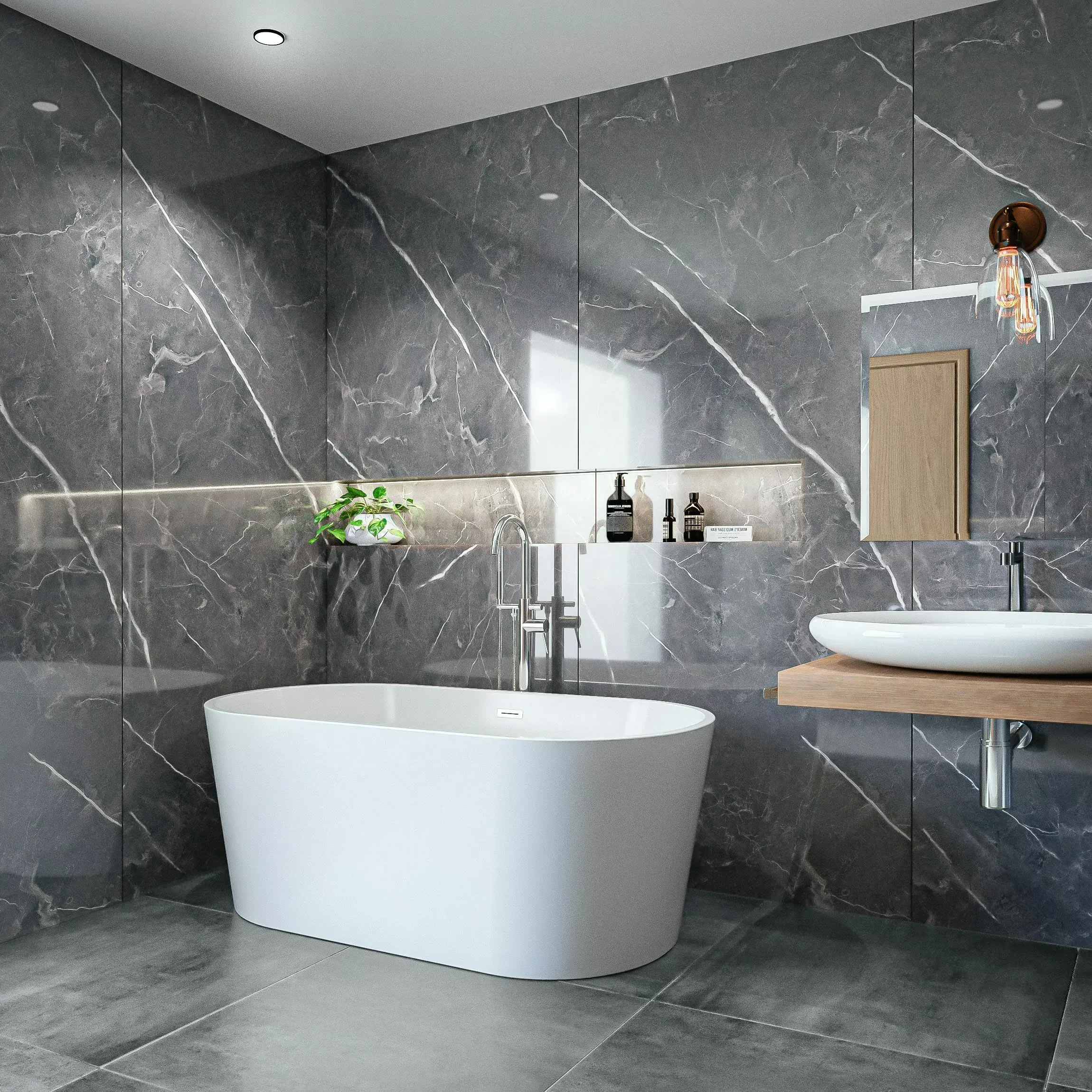
Wall panels and tiles are the two most popular wall covering choices in the homes, and the difference between them goes far beyond how they look. One installs in a day with no grouting and no specialist skill. The other lasts 50 years and adds real value to your property. Getting the choice right saves money, time, and a lot of maintenance headaches down the line.
Wall panels are large-format sheets made from PVC, MDF, WPC, or acrylic that fix directly onto a wall with adhesive or a clip system. Tiles are individual hard units of ceramic, porcelain, or natural stone fixed with adhesive mortar and grouted joints. Both cover walls. Both come in hundreds of finishes. The gap between them opens up the moment installation begins.
Wall panels cost between £9 and £146 per panel, install in a single day, and need nothing more than a wipe-down to stay clean. Tiles range from £4 to £62 per square metre on materials alone, add £150 to £250 per day in professional labour, and need regular grout cleaning and resealing to stay waterproof. PVC panels last 10 to 20 years. Porcelain tiles last 30 to 50 years. Natural stone lasts over 100 years with correct maintenance.
For waterproofing, wall panels win. For durability and design, tiles win. For bathrooms on a budget, panels are the faster and cheaper solution. For premium kitchens, period properties, and long-term family homes, tiles deliver a finish and a lifespan that panels cannot match. The right choice depends on four things — the room, the budget, the maintenance commitment, and how long the finish needs to last.
Table of Contents
What Are Wall Panels?
Wall panels are large-format rigid or semi-rigid sheets fixed directly to walls as a surface covering, manufactured in materials including PVC, MDF, WPC, acrylic, and natural stone composite. Standard UK dimensions measure 2,400 mm × 1,200 mm, with bespoke sizes available across most ranges.
Wall panels serve 3 primary functions: waterproofing a surface, providing a decorative finish, and reducing grout maintenance. The 4 most common wall panel materials used in UK homes are:
- PVC Panels: 100% waterproof, lightweight sheets used predominantly in bathrooms and wet rooms.
- MDF Panels: Moisture-resistant, paintable boards used in living spaces and hallways.
- WPC Panels: Wood plastic composite boards offering high durability in high-humidity environments.
- Acrylic Panels: Gloss-finish, non-porous sheets suited to shower enclosures and splashbacks.
What Are Tiles?
Tiles are thin, flat units of hard material fixed to walls using adhesive mortar and grouted joints, manufactured from ceramic, porcelain, natural stone, glass, or marble. Wall tile formats range from 75 mm × 75 mm mosaic sheets to large-format slabs of 1,200 mm × 2,400 mm.
Tiles serve 3 core functions: surface protection, decorative finish, and long-term structural durability. The 5 most common wall tile types installed across UK properties are:
- Ceramic Tiles: Kiln-fired clay tiles suited to low-to-medium moisture environments such as kitchens.
- Porcelain Tiles: Dense, low-porosity tiles with a water absorption rate below 0.5%, used in bathrooms and wet rooms.
- Natural Stone Tiles: Marble, slate, and limestone tiles requiring periodic sealing, used in premium residential interiors.
- Glass Tiles: Non-porous, reflective tiles used as splashbacks and feature walls.
- Mosaic Tiles: Small-format tiles ranging from 25 mm × 25 mm to 100 mm × 100 mm, used for decorative detailing.
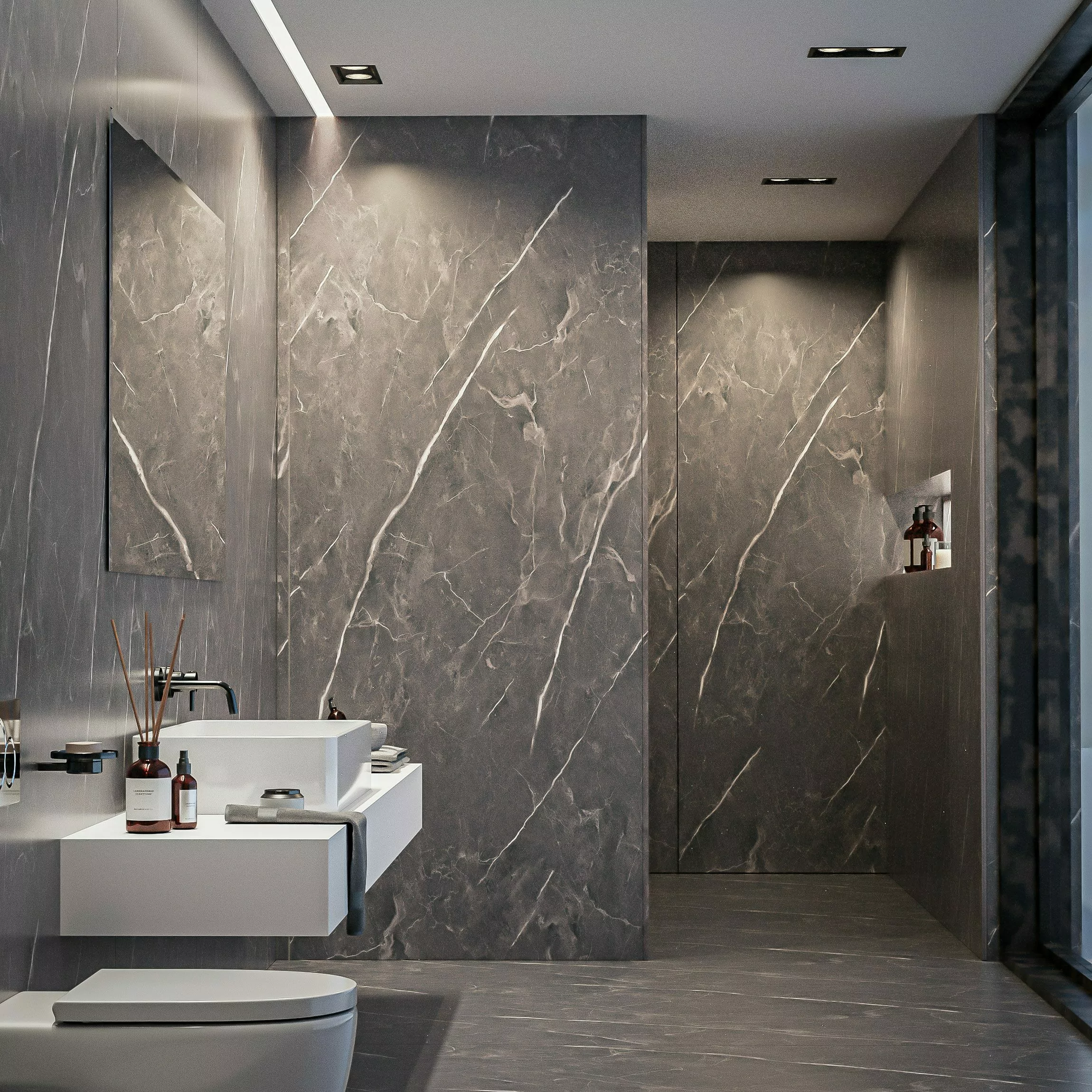
What Is the Difference Between Wall Panels and Tiles?
Wall panels cover a wall in one large sheet with no gaps, while tiles are small individual pieces fixed side by side with grout lines in between. Think of panels as one big puzzle piece and tiles as many small puzzle pieces fitted together.
The key differences between wall panels and tiles are:
- Installation: Wall panels stick directly onto a wall with adhesive or clips — no grouting needed. Tiles need adhesive, spacers, and grout, which takes more time and skill.
- Surface Finish: Wall panels give a smooth, seamless look with no lines. Tiles leave visible grout lines between each piece.
- Waterproofing: PVC and acrylic panels are 100% waterproof with no gaps for water to enter. Porcelain tiles absorb less than 0.5% water, but grout lines let moisture in without proper sealing.
- Cleaning: Wall panels wipe clean in seconds with no grout to scrub. Tiles need regular grout cleaning, especially in bathrooms and showers.
- Durability: Porcelain and natural stone tiles are harder and more scratch-resistant than PVC or MDF panels. Panels dent or scratch more easily under heavy impact.
- Design Choice: Tiles come in far more formats, sizes, and laying patterns including brick bond, herringbone, and stacked. Panels offer a clean, continuous surface but fewer pattern options.
- Cost: Wall panels generally cost less to install because no specialist tiling skill is required. Tiling carries higher labour costs due to the technical skill, adhesive, and grouting involved.
- Lifespan: Natural stone and porcelain tiles last 20 to 50 years with proper maintenance. PVC panels last 10 to 25 years depending on the environment and usage.
- Best Room Use: Wall panels suit bathrooms, wet rooms, and kitchens where speed and waterproofing matter most. Tiles suit any room where long-term durability and design variety are the priority.
The table below compares wall panels and tiles across the most important factors for UK homeowners:
| Factor | Wall Panels | Tiles |
| Installation Method | Adhesive or clip fix, no grouting | Adhesive, spacers, and grout required |
| Surface Finish | Seamless, grout-free | Jointed with visible grout lines |
| Waterproofing | 100% waterproof (PVC/acrylic) | Below 0.5% water absorption (porcelain) |
| Maintenance | Wipe clean, no grout upkeep | Regular grout cleaning and resealing |
| Durability | 10–25 years | 20–50 years |
| Scratch Resistance | Low to moderate | High (porcelain and stone) |
| Design Variety | Limited patterns, seamless finish | Wide range of sizes, materials, and patterns |
| Installation Skill | Low — DIY friendly | High — specialist tiler recommended |
| Labour Cost | Lower | Higher |
| Best Application | Bathrooms, wet rooms, kitchens | Any room, especially high-traffic areas |
Wall panels suit homeowners who want a fast, low-maintenance, waterproof finish. Tiles suit homeowners who prioritise long-term durability, design variety, and a premium finish.
Are Wall Panels Better Than Tiles?
Wall panels are better than tiles for speed, waterproofing, and easy maintenance, while tiles are better for durability, design variety, and long-term value. Neither option wins outright — the better choice depends on the room, budget, and finish required.
When Wall Panels Are the Better Choice
Wall panels work better than tiles in the following situations:
- Quick Installation: Wall panels go up in hours with no drying or curing time, making them far faster than tiling.
- Wet Rooms and Bathrooms: PVC and acrylic panels create a 100% waterproof, grout-free surface with no gaps for water to sneak through.
- Low Budgets: Wall panels cost less in both materials and labour compared to a full tiled installation.
- DIY Projects: Wall panels need no specialist skill, making them a practical choice for confident DIY homeowners.
- Rental Properties: Low cost and fast installation make wall panels a smart option for landlords needing quick, clean refurbishments.
When Tiles Are the Better Choice
Tiles work better than wall panels in the following situations:
- Long-Term Durability: Porcelain and natural stone tiles last 20 to 50 years, far outlasting most panel materials.
- Design Flexibility: Tiles come in hundreds of formats, materials, and laying patterns including herringbone, brick bond, and stacked — giving far more creative freedom.
- High-Traffic Areas: Tiles handle heavy daily wear, scratching, and impact far better than PVC or MDF panels.
- Premium Interiors: Natural stone and large-format porcelain tiles deliver a high-end finish that adds measurable value to a property.
- Heat Resistance: Ceramic and porcelain tiles handle high temperatures comfortably, making them the right choice behind hobs and fireplaces where panels are not suitable.

Which Option Offers Better Waterproof Performance: Wall Panels or Tiles?
PVC and acrylic wall panels offer stronger waterproof performance than tiles because panels create a fully sealed, grout-free surface with no joints for water to penetrate. Tiles are water-resistant but not fully waterproof, because grout lines between each tile remain vulnerable to moisture over time.
How Wall Panels Handle Water
PVC wall panels carry a 100% waterproof rating with no grout lines, no seams, and no joints across the surface. Acrylic panels are non-porous and repel water entirely. A correctly installed panel system with properly sealed edges stops water from reaching the wall behind — keeping the substrate dry and protected.
How Tiles Handle Water
Porcelain tiles carry a water absorption rate below 0.5%, classified as impervious under BS EN ISO 10545-3 standards — making them highly water-resistant on the tile surface itself. Ceramic tiles absorb between 3% and 6% water, making them less suitable for fully wet environments like shower enclosures.
Grout lines are the weak point in any tiled wall. Unsealed or deteriorating grout allows water to reach the wall substrate, leading to damp, mould, and structural damage over time. Natural stone tiles are porous and need resealing every 1 to 3 years to maintain water resistance.
For wet rooms and shower enclosures, wall panels are the stronger waterproofing choice. Tiles perform well when installed with quality grout and maintained consistently, but grout degradation over time reduces their waterproof integrity.
Which Lasts Longer: Wall Panels or Tiles?
Tiles last longer than wall panels, with porcelain and natural stone tiles lasting 20 to 50 years compared to 10 to 25 years for most panel materials. The lifespan of both options depends on material quality, installation standard, and the environment they are used in.
How Long Wall Panels Last
- PVC Panels: Last 10 to 20 years in bathroom and wet room environments with regular cleaning.
- Acrylic Panels: Last 15 to 25 years, though UV exposure in sunlit rooms causes yellowing over time.
- MDF Panels: Last 10 to 15 years in low-to-moderate humidity — prolonged moisture exposure speeds up deterioration significantly.
- WPC Panels: Last 20 to 30 years, making them the longest-lasting panel material due to their composite construction.
How Long Tiles Last
- Ceramic Tiles: Last 20 to 30 years in standard wall applications with basic upkeep.
- Porcelain Tiles: Last 30 to 50 years due to their dense, low-porosity composition and high surface hardness.
- Glass Tiles: Last 25 to 30 years in low-impact settings such as splashbacks and feature walls.
- Natural Stone Tiles: Last 50 to 100 years with correct sealing and periodic maintenance, making natural stone the longest-lasting wall covering material available.

What Are the Benefits of Wall Panels?
Wall panels offer fast installation, 100% waterproofing, low maintenance, and affordable costs, making them a practical wall covering choice for bathrooms, wet rooms, and kitchens. The full benefits of wall panels are listed below:
- Grout-Free Surface: Wall panels create a seamless, grout-free finish that eliminates the need for grout cleaning, resealing, or mould treatment entirely.
- Fast Installation: Wall panels fix directly onto a wall surface in hours using adhesive or a clip system, with no drying or curing time required.
- 100% Waterproof: PVC and acrylic panels repel water entirely across the full surface, making them the strongest waterproofing option for wet rooms and shower enclosures.
- DIY Friendly: Wall panels require no specialist tiling skill, making them accessible for confident DIY homeowners without professional help.
- Low Maintenance: Wall panels wipe clean with a damp cloth and require no specialist cleaning products, grout brushes, or periodic resealing.
- Affordable Cost: Wall panels carry lower material and labour costs than tiling, making them a budget-friendly option for full bathroom or kitchen refurbishments.
- Lightweight: Wall panels weigh significantly less than tiles, reducing stress on wall substrates and making handling and cutting easier during installation.
- Thermal and Acoustic Insulation: WPC and MDF panels provide a degree of thermal and acoustic insulation that standard ceramic or porcelain tiles do not offer.
- Covers Existing Surfaces: Wall panels fix directly over existing tiles or painted walls in good condition, removing the need for costly and time-consuming surface preparation.
What Are the Limitations of Wall Panels?
Wall panels are less durable than tiles, more susceptible to surface damage, and offer fewer design options, making them a weaker long-term choice for high-traffic or premium interiors. The full limitations of wall panels are listed below:
- Lower Durability: PVC and MDF panels last 10 to 25 years compared to 30 to 50 years for porcelain tiles, making them a shorter-term wall covering solution.
- Scratch and Impact Damage: Wall panels scratch, dent, and scuff more easily than porcelain or natural stone tiles under regular impact or heavy use.
- Limited Design Range: Wall panels offer far fewer format, pattern, and material options compared to tiles, restricting creative freedom in premium interior schemes.
- Not Heat Resistant: PVC and acrylic panels are not suitable behind hobs, cookers, or fireplaces — high temperatures cause warping, discolouration, and surface damage.
- UV Yellowing: Acrylic and PVC panels exposed to direct sunlight yellow over time, reducing the aesthetic quality of the surface finish.
- Difficult to Repair: Damaged wall panels require full sheet replacement rather than a simple single-unit repair, increasing the cost and disruption of maintenance work.
- Lower Property Value: Wall panels do not add the same premium finish or perceived property value as natural stone or large-format porcelain tiles in high-end interiors.
- Joint Visibility: Panel-to-panel joining strips and edge trims are visible on the finished surface, which some homeowners find less aesthetically refined than a fully tiled finish.
- Not Suitable for Floors: Most wall panel materials are not rated for floor use, limiting their application to vertical surfaces only.
What Are the Benefits of Tiles?
Tiles offer outstanding durability, design variety, heat resistance, and long-term property value, making them the preferred wall covering for permanent, high-quality interior installations. The full benefits of tiles are listed below:
- Long Lifespan: Porcelain tiles last 30 to 50 years and natural stone tiles last 50 to 100 years, far outlasting any wall panel material currently available.
- Wide Design Range: Tiles come in hundreds of sizes, materials, colours, and laying patterns including herringbone, brick bond, stacked, and chevron, offering unmatched creative flexibility.
- High Scratch and Impact Resistance: Porcelain and natural stone tiles resist heavy daily wear, scratching, and surface impact far better than PVC, MDF, or acrylic panels.
- Heat Resistant: Ceramic and porcelain tiles withstand high temperatures without warping or discolouring, making them the correct choice behind hobs, cookers, and fireplaces.
- Adds Property Value: A professionally tiled bathroom or kitchen using natural stone or large-format porcelain increases perceived property value and buyer appeal significantly.
- Hygienic Surface: The hard, dense surface of porcelain and ceramic tiles does not harbour bacteria or allergens, making tiles a highly hygienic choice for kitchens and bathrooms.
- Fade Resistant: Tiles do not yellow, fade, or discolour with UV exposure, maintaining their original appearance for decades without surface treatment.
- Repairable: Individual damaged tiles replace without disturbing the surrounding surface, keeping long-term repair costs low and targeted.
- Suitable for Floors and Walls: Tiles rated for floor use work across both vertical and horizontal surfaces, providing a consistent material finish throughout a room.
- Eco-Friendly Options: Ceramic and porcelain tiles are manufactured from natural clay and minerals, with many UK suppliers offering recycled content tiles for sustainable interior projects.
What Are the Limitations of Tiles?
Tiles require specialist installation, longer fitting times, higher labour costs, and regular grout maintenance, making them a more demanding and expensive option than wall panels. The full limitations of tiles are listed below:
- Specialist Installation Required: Tiling demands a trained and experienced tiler for correct adhesive coverage, consistent spacing, and accurate grouting — errors in any stage compromise the finish and waterproofing.
- Longer Installation Time: A full bathroom tiling project takes 2 to 5 days including adhesive and grout curing time, compared to a single-day panel installation.
- Higher Labour Costs: Professional tiling carries significantly higher labour costs than wall panel installation due to the skill level, time, and materials involved.
- Grout Maintenance: Grout lines require regular cleaning, resealing, and eventual replacement to prevent mould growth, staining, and moisture penetration — particularly in wet rooms and shower enclosures.
- Heavy Weight: Large-format porcelain and natural stone tiles are heavy, placing significant load on wall substrates and requiring assessment of wall structure before installation.
- Cold Surface: Tiles conduct cold temperatures, creating an uncomfortable surface feel in bathrooms during winter months without underfloor heating to compensate.
- Cracking Risk: Tiles crack under structural movement, substrate flexing, or heavy point impact — cracked tiles require careful removal and replacement to avoid disturbing adjacent units.
- Difficult Surface Preparation: Tiling requires a flat, stable, and correctly primed substrate — uneven or weak walls need extensive preparation before any tile adhesive is applied.
- Higher Overall Cost: The combined cost of tiles, adhesive, grout, spacers, and professional labour makes tiling a more expensive upfront investment than wall panel installation.
How Much Do Wall Panels and Tiles Cost — And Which Is Cheaper Overall?
Wall panels are cheaper overall than tiles because installation requires no specialist labour, no grout, and no adhesive curing time. Tiles cost less per square metre on materials alone, but professional fitting adds significantly to the total project cost.

How Much Do Wall Panels Cost?
Wall panel prices range from £9 to £146 per panel depending on material and size. The cost per square metre by wall panel type is:
- Entry-Level Acoustic Wood Panels: From £34.99 per panel — covers 1.44 sqm per panel (2,400 mm × 600 mm).
- PVC Shower Panels: From £47.95 per panel — covers 2.4 sqm per panel (2,400 mm × 1,000 mm).
- Waterproof Reeded Panels: From £27.77 per sqm on a 3-pack covering 1.80 sqm.
- Flexible Lite Panels: From £27.99 per panel for curved and compact wall applications.
- Premium Design Panels: From £59.99 to £79.99 per panel for decorative slat and multi-width finishes.
Wall panels are DIY-friendly. A standard bathroom panel installation takes 4 to 8 hours with no extra grouting, primer, or spacer costs.
How Much Do Tiles Cost?
Tile prices range from £4 to £62 per square metre across the full range. The cost per square metre by tile type is:
- Entry-Level Ceramic Tiles: From £14.95 per sqm for standard wall formats.
- Mid-Range Porcelain Tiles: From £19.95 to £34.95 per sqm.
- Natural Slate Tiles: From £34.95 to £49.95 per sqm.
- Premium Large-Format Porcelain: From £39.95 to £62 per sqm for XL and XXL slab formats.
- Mosaic Tile Sheets: From £4.99 per sheet for decorative feature areas.
Professional tiling in the UK costs £150 to £250 per day. A standard bathroom tiling project takes 2 to 5 days, adding £300 to £1,250 in labour alone — plus £50 to £150 for adhesive, grout, and spacers.
Which Is Cheaper Overall?
Wall panels are the cheaper option when total project cost is considered. A 10 sqm bathroom wall panel installation costs £280 to £600 in materials with no labour required. An equivalent tiled bathroom costs £200 to £620 in tiles plus £300 to £1,000 in professional labour — a total of £500 to £1,620.
- Choose wall panels for a fast, budget-friendly, waterproof finish with no professional fitting costs.
- Choose tiles for long-term durability and premium aesthetics where a higher upfront investment returns value over a 30 to 50-year lifespan
Which Is Easier to Install — Wall Panels or Tiles?
Wall panels are significantly easier to install than tiles. Panels fix directly onto a wall using adhesive or a clip system with no grouting, no curing time, and no specialist skill required. Tiling demands precise adhesive coverage, consistent spacing, accurate grouting, and a flat prepared substrate — all of which require experience to execute correctly.
Wall Panel Installation vs Tile Installation
- Wall Panels: Fix with adhesive or screws, cut with a saw, no drying time, DIY-friendly, completable in a single day.
- Tiles: Require adhesive, spacers, grout, a spirit level, and a tile cutter — plus 24 to 48 hours drying time before grouting.
Can You Fit Wall Panels Yourself?
Yes — wall panels are designed for confident DIY installation without specialist tools or training. A standard bathroom wall panel installation completes in 4 to 8 hours using basic equipment.
The tools required for wall panel installation are:
- Tape Measure and Pencil: Mark panel positions and cutting lines accurately before fixing.
- Fine-Tooth Saw or Jigsaw: Cut panels to size around windows, sockets, and edges.
- Panel Adhesive or Screws: Fix panels directly onto a clean, dry wall surface.
- Sealant Gun: Apply waterproof sealant along all edges and joins in wet areas.
- Spirit Level: Ensure each panel sits perfectly straight before fixing permanently.
Wall panels use tongue and groove connections that align automatically, reducing the margin for fitting errors significantly compared to tiling.

Can You Tile a Wall Yourself?
Yes — wall tiling is a DIY task, but it requires significantly more skill, preparation, and time than fitting wall panels. Errors in adhesive coverage, tile alignment, or grouting affect both the appearance and waterproofing of the finished surface.
The tools required for wall tiling are:
- Tile Adhesive and Notched Trowel: Apply consistent adhesive coverage across the substrate before each tile is pressed into position.
- Tile Spacers: Maintain consistent grout joint widths of 1.5 mm to 10 mm between every tile.
- Tile Cutter or Angle Grinder: Cut tiles to fit edges, corners, and around pipework accurately.
- Spirit Level and Batten: Ensure the first horizontal row is perfectly level before tiling upwards.
- Grout and Grout Float: Fill all joints once adhesive has cured for a minimum of 24 hours.
- Grout Sealer: Seal grout lines in wet areas to prevent moisture penetration and mould growth.
A standard bathroom tiling project takes a skilled DIYer 2 to 4 days from substrate preparation through to final grouting and sealing.
When Should You Hire a Professional?
Hire a professional tiler when the substrate is uneven, the tile format is large, the laying pattern is complex, or the area is a fully wet room or shower enclosure where waterproofing is critical.
Hire a professional for the following situations:
- Large-Format Tiles: Porcelain slabs of 600 mm × 1,200 mm or larger are heavy, difficult to cut cleanly, and require precise adhesive coverage — errors are costly and difficult to reverse.
- Natural Stone Tiles: Marble, slate, and limestone require specific adhesive types, back-buttering technique, and correct sealing — incorrect installation causes permanent staining and cracking.
- Wet Rooms and Shower Enclosures: A fully tanked and waterproofed substrate is essential before any tiling begins — professional installation ensures compliance with BS 5385 British Standard for wall and floor tiling.
- Uneven or Weak Substrates: Walls with movement, flex, or significant undulation require professional assessment and preparation before any surface covering is applied.
- Complex Laying Patterns: Herringbone, chevron, and diagonal patterns demand precise planning, cutting, and alignment to avoid visible errors across the finished surface.
Wall panel installation rarely requires a professional unless the wall substrate has structural issues or the installation forms part of a larger bathroom or kitchen refurbishment project.
Which Is Better for Bathrooms — Wall Panels or Tiles?
PVC and acrylic wall panels are better for bathrooms where waterproofing, speed, and low maintenance are the priority, while porcelain tiles are better for bathrooms where long-term durability and premium aesthetics matter most.
Why Wall Panels Work Well in Bathrooms
- 100% Waterproof Surface: PVC panels carry zero water absorption with no grout lines for moisture to penetrate.
- Mould-Free Finish: The seamless, grout-free surface eliminates the conditions in which bathroom mould develops.
- Fast Installation: A full bathroom wall panel installation completes in a single day with no curing time required.
- Easy Cleaning: Wall panels wipe clean with a damp cloth and require no specialist cleaning products or periodic resealing.
Why Tiles Work Well in Bathrooms
- Long Lifespan: Porcelain bathroom tiles last 30 to 50 years with correct installation and basic maintenance.
- Heat and Steam Resistance: Porcelain and ceramic tiles perform consistently in high-humidity, high-temperature bathroom environments without warping or discolouring.
- Design Variety: Bathroom tiles come in hundreds of formats, colours, and finishes including large-format marble effect, mosaic, and metro — offering far greater creative flexibility than panels.
- Premium Finish: A fully tiled bathroom using large-format porcelain or natural stone adds measurable buyer appeal and property value.

Which Is Better for Kitchens — Wall Panels or Tiles?
Porcelain and ceramic tiles are better for most kitchen applications due to their heat resistance, scratch resistance, and long-term durability, while wall panels suit kitchen splashback areas where a fast, seamless, low-maintenance finish is preferred.
Why Wall Panels Work Well in Kitchens
- Fast Splashback Installation: Kitchen wall panels fix directly over existing surfaces in hours with no specialist preparation or grouting required.
- Seamless Wipe-Clean Surface: The grout-free finish removes the common problem of grease and food residue building up in kitchen grout lines.
- Budget-Friendly Refresh: Wall panels deliver a clean, updated kitchen appearance at a lower cost than a full retile.
Why Tiles Work Better in Most Kitchens
- Heat Resistance: Ceramic and porcelain tiles withstand high temperatures directly behind hobs, ovens, and cookers — PVC and acrylic panels are not suitable in these positions as heat causes warping and discolouration.
- Scratch Resistance: Porcelain kitchen tiles resist daily scratching, impact, and abrasion from cookware and utensils far better than PVC or MDF panels.
- Hygienic Surface: The dense, non-porous surface of porcelain tiles does not harbour bacteria, making tiles the more hygienic long-term choice for food preparation areas.
- Wider Design Range: Kitchen tiles come in metro, brick, patterned, and large-format styles that offer far more design flexibility for kitchen splashbacks, feature walls, and floor-to-ceiling installations.
Are Wall Panels Easier to Clean Than Tiles?
Yes — wall panels are easier to clean than tiles because the surface is seamless and grout-free, wiping down in seconds with a damp cloth. Tiles need regular grout scrubbing, mould treatment, and periodic resealing — especially in bathrooms and kitchens.
How to Clean Wall Panels
- Daily Cleaning: Wipe with a damp cloth or soft sponge — no specialist products needed.
- Stubborn Marks: Apply a mild non-abrasive household cleaner directly to the surface.
- Avoid: Abrasive pads, bleach-based cleaners, and steam — these scratch or discolour PVC and acrylic panel surfaces.
How to Clean Tiles
- Daily Cleaning: Wipe with a damp cloth and a mild pH-neutral cleaner to protect grout.
- Grout Cleaning: Scrub grout lines with a stiff brush every 4 to 8 weeks in wet areas to remove mould and staining.
- Resealing: Reseal grout lines every 1 to 3 years in bathrooms and wet rooms to maintain waterproofing.
- Natural Stone Tiles: Require stone-safe cleaners and annual resealing to prevent permanent staining.
Which Looks Better — Wall Panels or Tiles?
Tiles look better in most interiors because tiles offer more materials, formats, and laying patterns that deliver a premium, bespoke finish. Wall panels suit modern and contemporary spaces where a clean, seamless look is the goal.
Where Wall Panels Look Best
- Feature Walls: Oak, walnut, and smoked wood slat panels create warm, textured feature walls in living rooms and bedrooms.
- Modern Bathrooms: Large-format PVC panels in marble and stone effects deliver a sleek, grout-free finish for minimalist schemes.
- Contemporary Kitchens: Seamless gloss or matt panel splashbacks create a clean, uninterrupted look behind worktops.
Where Tiles Look Better
- Luxury Bathrooms: Large-format polished porcelain and natural stone tiles deliver a premium finish panels cannot match.
- Designer Kitchens: Metro, patterned, and mosaic tiles add character and individuality to kitchen splashbacks and feature walls.
- Period and Traditional Interiors: Victorian, encaustic, and natural stone tiles suit period properties far better than any panel material.
Are Wall Panels or Tiles Better for Specific Rooms?
The better choice depends on the room’s function, moisture level, and the finish required. The room-by-room breakdown is given below:
- Bathroom: Wall panels win for waterproofing and low maintenance. Tiles win for durability and premium finish.
- Wet Room and Shower Enclosure: Wall panels win for a fully sealed, grout-free waterproof surface. Tiles win where a premium tiled finish is the design priority with professional tanking completed.
- Kitchen Splashback: Wall panels win for a fast, seamless, grease-resistant finish. Tiles win directly behind hobs and cookers where heat resistance is essential.
- Living Room and Bedroom: Wall panels win for feature walls and media walls with acoustic wood slat finishes. Tiles win for fireplace surrounds where heat resistance is required.
- Hallway: Tiles win for heavy foot traffic, dirt resistance, and daily impact. Wall panels work well as decorative half-wall panelling on the lower wall section.
- Rental Properties: Wall panels win for fast installation, low cost, and easy replacement in high-turnover spaces.
How Sustainable Are Wall Panels and Tiles?
Tiles are the more eco-friendly choice because ceramic and porcelain tiles are made from natural clay and minerals, last 30 to 50 years, and are fully recyclable. Wall panel sustainability varies significantly by material.
How Sustainable Are Wall Panels?
- PVC Panels: Made from petroleum-derived plastic — not easily recyclable in standard UK waste streams.
- MDF Panels: Use recycled wood fibre but contain formaldehyde-based adhesives that affect indoor air quality.
- WPC Panels: Made from recycled wood fibre and recycled plastic — the most sustainable panel material available.
- Acoustic Wood Slat Panels: FSC-certified wood veneer over MDF or felt backing reduces raw material environmental impact.
How Sustainable Are Tiles?
- Ceramic and Porcelain Tiles: Made from natural clay, feldspar, and silica — no petroleum-based inputs required.
- Recycled Content Tiles: Select porcelain ranges carry up to 90% recycled content, significantly reducing carbon footprint per square metre.
- Long Lifespan: A porcelain tile lasting 30 to 50 years needs no replacement during the full lifecycle of most UK properties.
- Natural Stone Tiles: Quarried directly from the earth with no synthetic processing — the lowest embodied energy of any tile material.

When Should You Choose Wall Panels Instead of Tiles?
Choose wall panels over tiles when speed, waterproofing, low budget, and easy maintenance are the priority. The situations where wall panels are the right choice are given below:
- Tight Budget: Wall panels cost less in materials and require no professional fitting, making them the lower-cost option for full bathroom or kitchen refurbishments.
- Quick Renovation: Wall panels install in a single day with no curing or drying time — ideal for rental properties, quick refurbishments, and time-sensitive projects.
- Wet Rooms and Shower Enclosures: PVC and acrylic panels deliver a 100% waterproof, grout-free surface with no risk of moisture penetrating the wall substrate.
- DIY Installation: Wall panels need no specialist tiling skill, making them the practical choice for confident DIY homeowners.
- Low Maintenance: The grout-free surface wipes clean instantly with no scrubbing, resealing, or mould treatment required.
- Feature Walls: Acoustic wood slat panels in oak, walnut, and smoked finishes suit living rooms, bedrooms, and media walls where a warm, textured finish is the goal.
- Covering Existing Surfaces: Wall panels fix directly over existing tiles or painted walls in good condition, removing the need for costly surface preparation or removal.
When Should You Choose Tiles Instead of Wall Panels?
Choose tiles over wall panels when long-term durability, design variety, heat resistance, and premium finish are the priority. The situations where tiles are the right choice are given below:
- Long-Term Investment: Porcelain tiles last 30 to 50 years and natural stone tiles last 50 to 100 years — far outlasting any wall panel material.
- Behind Hobs and Cookers: Ceramic and porcelain tiles withstand high temperatures safely — PVC and acrylic panels warp and discolour under direct heat.
- Premium Interiors: Large-format porcelain and natural stone tiles deliver a high-end finish that adds measurable property value and buyer appeal.
- High-Traffic Areas: Porcelain tiles resist daily scratching, impact, and heavy wear far better than PVC or MDF panels in hallways and busy kitchens.
- Design Flexibility: Tiles come in hundreds of formats, materials, and laying patterns including herringbone, brick bond, and chevron — offering far more creative freedom than panels.
- Period and Traditional Properties: Victorian, encaustic, and natural stone tiles suit period interiors where panel materials look out of place.
- Floors and Walls Combined: Porcelain tiles rated for both floor and wall use create a consistent, unified finish across an entire room.
Can You Mix Wall Panels and Tiles in the Same Room?
Yes — mixing wall panels and tiles in the same room is a practical and increasingly popular interior design approach in UK homes. The two materials complement each other well, with each covering the areas where the other performs best.
The most effective ways to mix wall panels and tiles in the same room are given below:
- Tiles on the Floor, Panels on the Walls: Use porcelain floor tiles for durability and impact resistance underfoot, with PVC or acrylic wall panels above for a seamless, waterproof, grout-free wall finish.
- Tiled Shower Area, Panels Elsewhere: Tile the shower enclosure with large-format porcelain for a premium wet zone finish, and use panels on the remaining bathroom walls for a fast, low-maintenance surround.
- Panel Feature Wall with Tiled Splashback: Use acoustic wood slat panels as a living room or bedroom feature wall alongside a tiled fireplace surround or kitchen splashback where heat resistance is needed.
- Half-and-Half Bathroom Walls: Fix decorative wall panels on the upper half of bathroom walls and tiles on the lower half — a clean, contemporary split that balances design interest with practical waterproofing at floor level.
- Kitchen Splashback Panels with Tiled Floor: Install seamless wall panels behind worktops for a grease-resistant, easy-clean splashback surface while using durable porcelain tiles on the kitchen floor.
The key to mixing both materials successfully is maintaining a consistent colour palette and finish — pairing warm wood-effect panels with stone-effect porcelain tiles, or keeping both materials within the same neutral tone range, creates a cohesive, intentional look rather than a mismatched one.
Should I Choose Wall Panels or Tiles for My Home?
Choose wall panels for speed, budget, and low maintenance — choose tiles for durability, design variety, and long-term value. The right answer depends on four factors: budget, room function, how long the finish needs to last, and the level of maintenance acceptable over time.
The decision guide for choosing between wall panels and tiles is given below:
- Choose Wall Panels for bathrooms, wet rooms, and rental properties where a fast, waterproof, low-maintenance finish is needed at the lowest overall project cost.
- Choose Tiles for permanent family homes, premium bathrooms, kitchens behind hobs, hallways, and any space where a long-lasting, high-quality finish justifies the higher upfront investment.
- Choose Both where different areas of the same room have different functional needs — tiles for heat-exposed and high-traffic zones, panels for wet walls and decorative feature surfaces.
The total cost, lifespan, and maintenance commitment of each option are the three most important factors in making the right choice for any specific room or property.
What Should I Look for When Buying Wall Panels in the UK?
When buying wall panels in the UK, check the waterproof rating, material type, panel size, surface finish, and installation method first. Getting these wrong means buying panels that are not suitable for the room — the most common and costly mistake UK homeowners make.
- Waterproof Rating: PVC and acrylic panels are 100% waterproof — the only safe choice for showers and wet rooms. MDF and wood slat panels handle light moisture only — use these panels in living rooms, bedrooms, and hallways.
- Material Type: PVC suits bathrooms. MDF suits dry rooms. Acoustic wood slat panels suit feature walls and media walls. WPC and SPC suit bathrooms and kitchens needing both waterproofing and a decorative finish.
- Panel Size: Standard panels measure 2,400 mm × 600 mm. XL panels measure 3,000 mm × 600 mm for rooms taller than 2,400 mm. Always order 10% more than the wall area to cover cuts and wastage.
- Surface Finish: Matt hides fingerprints best in busy areas. Gloss reflects light and makes small rooms feel bigger. Satin sits between the two — a good all-rounder for bathrooms and kitchens.
- Installation Method: Tongue and groove is the easiest and fastest — panels click together perfectly. Adhesive fix bonds panels onto plasterboard, existing tiles, or painted walls. Screw fix suits heavier panels in commercial spaces.
- Fire Rating: Choose Class B or Class C fire-rated panels for kitchens and hallways in UK homes.
- Formaldehyde Emissions: MDF panels carry an E1 or E0 emission rating — always pick E0 for rooms with limited ventilation as E0 releases the lowest emission level.
What Should I Look for When Buying Wall Tiles in the UK?
When buying wall tiles in the UK, check the water absorption rating, wall or floor suitability, tile size, surface finish, and BS compliance before buying anything. Picking the wrong tile for the wrong room leads to cracking, leaking, and expensive repairs.
- Water Absorption Rating: Porcelain tiles absorb below 0.5% water — safe for wet rooms and shower enclosures under BS EN ISO 10545-3. Ceramic tiles absorb 3% to 6% — fine for kitchen walls and low-moisture bathrooms but not shower enclosures. Decorative wall-only tiles absorb above 10% — dry rooms only.
- Wall-Only vs Floor and Wall Tiles: Wall-only tiles crack under foot traffic — never put them on floors. Floor and wall tiles carry a PEI hardness rating of 3 to 5, making them safe for both surfaces. Always check the tile packaging before buying.
- Tile Size: Small format tiles from 100 mm to 300 mm work well in compact bathrooms and feature walls. Medium format from 300 mm to 600 mm suits most standard UK bathrooms and kitchens. Large format from 600 mm to 1,200 mm creates a seamless look but needs a flat, professionally prepared wall.
- Surface Finish: Matt suits busy bathrooms and kitchens — hides marks well. Gloss brightens small spaces and suits kitchen splashbacks. Polished suits premium feature walls — avoid on floors as polished tiles get slippery when wet.
- Rectified vs Non-Rectified: Rectified tiles are cut to exact dimensions and allow tight grout joints of 1.5 mm. Non-rectified tiles vary by up to 2 mm in size and need wider joints of 3 mm to 5 mm. Always use rectified tiles for large-format installations above 600 mm.
- Grout Colour: Light grout stains quickly in wet areas — choose dark or mid-tone grout in bathrooms and kitchens for a finish that stays cleaner for longer.
- Slip Resistance: R9 is the minimum slip rating for wet bathroom and kitchen floors. R10 and R11 suit shower trays, wet room floors, and outdoor tiles. Slip resistance ratings do not apply to wall tiles.
- BS Standards: BS 5385 Part 1 covers correct substrate preparation, adhesive, and grouting for UK wall tiling. CE marking confirms the tile meets UK construction product regulations — always check both before buying.
