
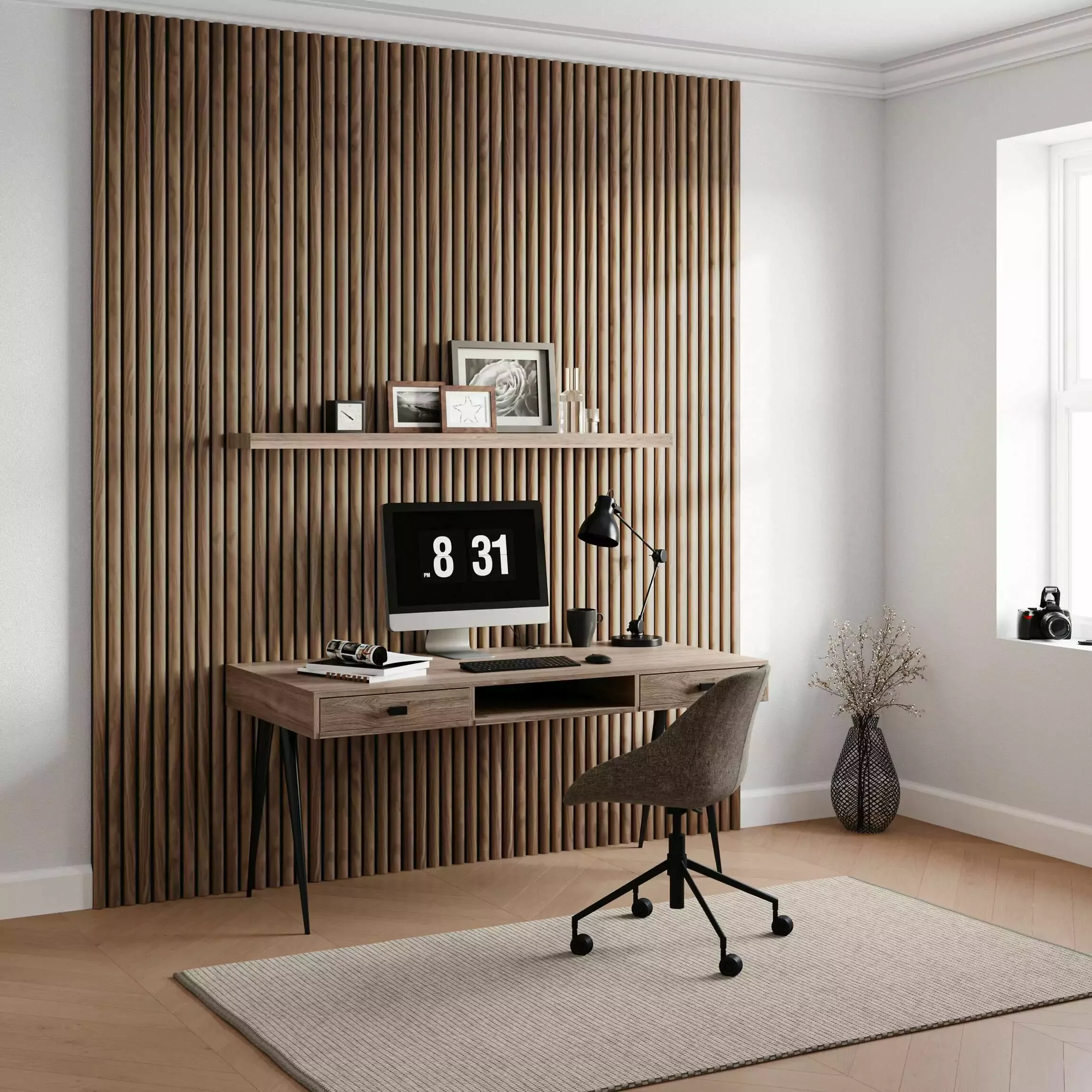
Acoustic panels and soundproofing are not the same thing, and choosing the right one comes down to one simple question: are you trying to fix echo in the room, or are you trying to stop noise coming through the room?
Acoustic panels help calm a space down by reducing sound bounce, so the room sounds clearer and less harsh. Soundproofing does a different job. Soundproofing helps reduce noise coming through walls, floors, and ceilings from neighbours, traffic, footsteps, or other rooms.
Acoustic panels are usually the easier and cheaper option, with prices often starting from £10 to £50 per m². Soundproofing usually costs more, often around £50 to £300+ per m², because soundproofing needs more materials and more work. Acoustic panels often suit simple DIY projects. Soundproofing usually suits bigger jobs and often works better with professional fitting.
Table of Contents
What Are Acoustic Panels?
Acoustic panels are sound-absorbing units mounted on walls or ceilings to reduce echo, reverberation, and internal noise reflections within a room. Acoustic panels absorb reflected sound energy — they do not block sound transmission between spaces.
Sound absorption occurs through friction, converting sound wave energy into heat within a porous material. Acoustic panels are rated by the Noise Reduction Coefficient (NRC) on a scale of 0 to 1, where 1.0 represents 100% absorption. Standard acoustic panels carry NRC ratings between 0.65 and 0.95.
The 4 most common acoustic panel materials are listed below:
- Mineral Wool (Rockwool): Absorbs mid-to-high frequencies with an NRC of up to 1.0.
- Fabric-Wrapped Fibreglass: Absorbs broadband frequencies across 125 Hz to 4,000 Hz.
- Melamine Foam: Reduces reverberation between 500 Hz and 8,000 Hz.
- Perforated Timber Panels: Targets low-to-mid frequencies between 250 Hz and 2,000 Hz.
Learn more in our complete guide to acoustic wall panels.
What Is Soundproofing?
Soundproofing is the process of blocking sound from passing between two rooms or spaces. Unlike acoustic wall panels, soundproofing stops sound from getting in or out — not from bouncing around inside a room.
Sound blocking performance is measured by the Sound Transmission Class (STC) rating. A higher STC number means less sound passes through. Standard interior walls carry an STC rating of 33 to 39. Professionally soundproofed walls reach STC ratings between 50 and 65.
Soundproofing works through 4 methods, listed below:
- Mass: Heavy, dense materials such as acoustic plasterboard block sound waves from passing through walls.
- Decoupling: Separating wall layers breaks the path sound travels through a structure.
- Absorption: Insulation materials such as Rockwool RW3 fitted inside wall cavities soak up sound energy.
- Damping: Compounds such as Green Glue turn sound vibrations into heat, stopping them from spreading.
Common soundproofing applications include party walls, floors, ceilings, home studios, and residential conversions.
What Is the Difference Between Acoustic Panels and Soundproofing?
Acoustic panels control sound inside a room, while soundproofing blocks sound from passing between rooms. The two solutions target separate problems and serve entirely different purposes.
| Feature | Acoustic Panels | Soundproofing |
| Main Purpose | Improve sound quality inside a room | Reduce sound passing between rooms |
| Main Problem Solved | Echo, reverberation, and sound bounce | Neighbour noise, traffic noise, footsteps, and sound transfer |
| How It Works | Absorbs reflected sound inside a room | Blocks and reduces sound through walls, floors, and ceilings |
| Best For | Living rooms, home offices, studios, classrooms, and meeting rooms | Party walls, floors, ceilings, flats, conversions, and noisy rooms |
| Does It Stop External Noise? | No | Yes |
| Does It Reduce Echo? | Yes | No |
| Main Materials | Mineral wool, fibreglass, PET fibre, melamine foam, timber panels | Acoustic plasterboard, acoustic insulation, resilient bars, membranes, damping compounds |
| Main Rating | NRC | STC |
| Installation Type | Surface-mounted on walls or ceilings | Built into walls, floors, and ceilings |
| DIY Friendly | Yes, in many cases | Only for small and simple jobs |
| Need Professional? | Not always | Often yes |
| Structural Changes | No | Yes, in most cases |
| Cost In The UK | £10 to £50 per m² | £50 to £300+ per m² |
| Installation Time | Usually hours | Usually days or longer |
| Best Choice For Echo | Yes | No |
| Best Choice For Noise Through Walls, Floors, And Ceilings | No | Yes |
| Best Choice For Rented Homes | Often yes | Usually no |
| Long-Term Solution | Good for room acoustics | Good for sound blocking |
| Common Mistake | Expecting acoustic panels to block neighbour noise | Expecting soundproofing to fix echo |
The key differences between acoustic panels and soundproofing are listed below:
- Primary Function: Acoustic panels absorb reflected sound within a room. Soundproofing blocks sound transmission between rooms.
- Problem Solved: Acoustic panels reduce echo, reverberation, and flutter within a space. Soundproofing reduces noise entering or leaving a space.
- Measurement Rating: Acoustic panels are rated by Noise Reduction Coefficient (NRC) on a scale of 0 to 1. Soundproofing is rated by Sound Transmission Class (STC) on a scale of 33 to 65+.
- Installation Method: Acoustic panels are surface-mounted on walls or ceilings. Soundproofing is built into walls, floors, and ceiling assemblies.
- Materials Used: Acoustic panels use fabric-wrapped fibreglass, mineral wool, or melamine foam. Soundproofing uses mass loaded vinyl, acoustic plasterboard, resilient channels, and damping compounds.
- Structural Impact: Acoustic panels require no structural changes to a room. Soundproofing requires significant structural modifications.
- Effectiveness Against External Noise: Acoustic panels provide no protection against external noise sources. Soundproofing reduces noise from neighbours, traffic, and adjoining rooms.
- Reversibility: Acoustic panels are removable and non-permanent. Soundproofing is a permanent structural installation.
- Typical Cost: Acoustic panels cost between £10 and £50 per m². Soundproofing costs between £50 and £300+ per m².
- Installation Time: Acoustic panels install within hours. Soundproofing requires days to weeks depending on the scale of work.
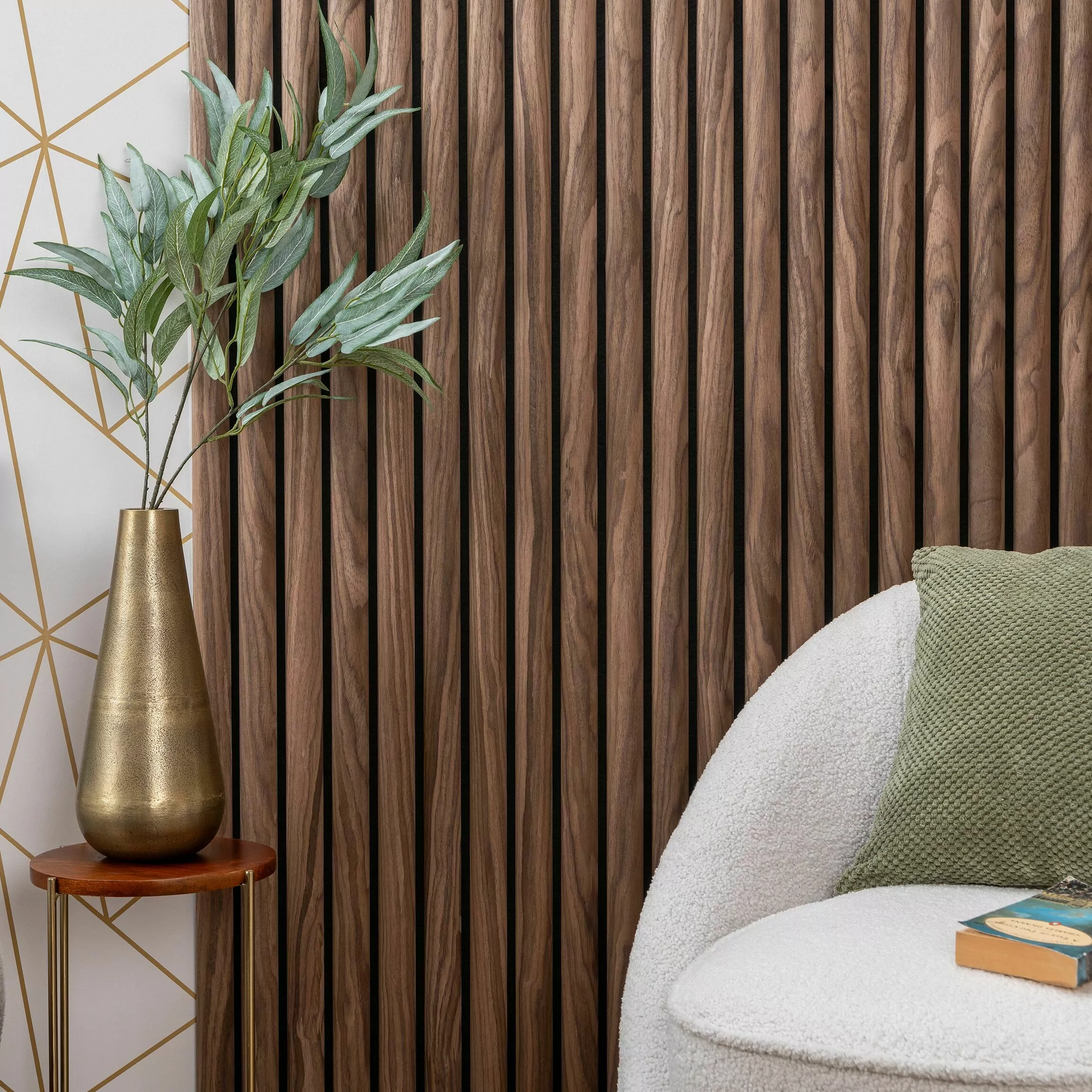
What Are the Benefits of Acoustic Wall Panels?
Acoustic wall panels reduce echo, reverberation, background noise reflections, and improve speech clarity within a room, delivering measurable acoustic improvement at a cost between £10 and £50 per m² with no structural modifications required.
The benefits of acoustic wall panels are listed below:
- Reduces Echo and Reverberation: Acoustic wall panels reduce reverberation time (RT60) by up to 75% in untreated rooms.
- Improves Speech Clarity: Acoustic wall panels reduce background noise reflections, improving speech intelligibility in offices, classrooms, and meeting rooms.
- Easy Installation: Acoustic wall panels mount using adhesive, impaling clips, or timber battens with no structural modifications required.
- Suitable for Rented Properties: Acoustic wall panels are removable without causing significant wall damage, making them suitable for rented residential and commercial properties.
- Aesthetically Versatile: Acoustic wall panels are available in over 50 fabric colours, custom prints, and timber finishes, integrating into existing interior designs.
- Cost-Effective Solution: Acoustic wall panels cost between £10 and £50 per m², compared to £50 to £300+ per m² for full soundproofing installations.
- Fire-Rated Options Available: Class A and Class B fire-rated acoustic wall panels meet UK Building Regulations Part B requirements for commercial and residential spaces.
- Eco-Friendly Options Available: PET acoustic wall panels contain up to 60% post-consumer recycled content, reducing environmental impact.
- No Professional Installation Required: Acoustic wall panels require only basic tools and no specialist trades, making them a practical DIY solution.
What Are the Disadvantages of Acoustic Wall Panels?
The disadvantages of acoustic wall panels are limited to sound absorption within a room, with no capability to block external noise, limited low-frequency absorption, and performance dependent on correct placement and coverage.
The disadvantages of acoustic wall panels are listed below:
- No Soundproofing Capability: Acoustic wall panels absorb sound within a room only. Blocking sound transmission between rooms requires a dedicated soundproofing solution.
- Limited Low-Frequency Absorption: Acoustic wall panels absorb frequencies above 250 Hz. Bass frequencies below 125 Hz require specialist bass trap panels.
- Coverage Area Required: Effective acoustic treatment requires acoustic wall panels to cover 15% to 25% of total wall surface area.
- Placement-Dependent Performance: Acoustic wall panels deliver optimal results when placed at first reflection points. Incorrect placement reduces acoustic improvement.
- Ongoing Maintenance Required: Fabric-wrapped acoustic wall panels require regular vacuuming or professional cleaning to maintain long-term acoustic performance.
- Not Suitable for Wet Areas: Acoustic wall panels require moisture-resistant variants for kitchens, bathrooms, or high-humidity environments.
What Are the Benefits of Soundproofing?
The benefits of soundproofing are blocking sound transmission between rooms, reducing external noise by up to 90%, improving sleep and wellbeing, increasing property value, and delivering a long-term permanent acoustic solution.
The benefits of soundproofing are listed below:
- Blocks Sound Transmission: Soundproofing prevents sound from passing between rooms, achieving STC ratings between 50 and 65 in professionally treated walls.
- Reduces External Noise: Soundproofing reduces noise from neighbours, traffic, and adjoining rooms by up to 90% depending on construction specification.
- Improves Sleep and Wellbeing: Soundproofing reduces night-time noise levels below the WHO recommended threshold of 40 dB, improving sleep quality and overall wellbeing.
- Increases Property Value: Professionally soundproofed rooms increase residential property value by 3% to 5% in high-density urban areas across the UK.
- Long-Term Permanent Solution: Soundproofing built into walls, floors, and ceilings delivers consistent noise reduction over the lifetime of a building.
- Meets UK Building Regulations: Soundproofing satisfies UK Building Regulations Part E requirements for airborne and impact sound insulation in new builds and conversions.
- Wide Application Range: Soundproofing performs effectively in party walls, floors, ceilings, home studios, residential conversions, and commercial properties.
What Are the Disadvantages of Soundproofing?
The disadvantages of soundproofing are high installation costs between £50 and £300+ per m², permanent structural modifications, reduced room dimensions, lengthy installation time, and the requirement for professional installation.
The disadvantages of soundproofing are listed below:
- High Installation Cost: Soundproofing costs between £50 and £300+ per m², compared to acoustic wall panels at £10 to £50 per m².
- Requires Structural Modification: Soundproofing requires permanent changes to walls, floors, and ceilings, making planning and preparation essential before installation.
- Reduces Room Dimensions: Soundproofing layers added to walls and ceilings reduce room dimensions by 75 mm to 150 mm per treated surface.
- Lengthy Installation Time: Soundproofing installations require days to weeks depending on the scale and complexity of the project.
- Requires Professional Installation: Soundproofing requires specialist trades including acoustic engineers, plasterers, and carpenters to achieve rated performance.
- Does Not Improve Room Acoustics: Soundproofing reduces noise transmission between rooms only. Reducing echo and reverberation within a room requires acoustic wall panels alongside soundproofing.
When Should You Choose Acoustic Panels?
Acoustic panels are the right choice when the primary problem is echo, reverberation, or poor sound clarity within a room, rather than noise passing between rooms.
Acoustic panels are the ideal solution in the following situations:
- Home Recording Studios: Acoustic panels reduce flutter echo and standing waves, delivering a clean, controlled sound environment for recording and mixing.
- Home Cinemas: Acoustic panels improve dialogue clarity and surround sound performance by absorbing reflected sound energy within the room.
- Open-Plan Offices: Acoustic panels reduce background noise reflections, improving speech intelligibility and concentration across open working environments.
- Restaurants and Dining Areas: Acoustic panels reduce reverberation in hard-surfaced dining spaces, lowering ambient noise levels and improving conversation clarity.
- Classrooms and Learning Spaces: Acoustic panels improve speech intelligibility by reducing reverberation time (RT60), supporting clearer communication between teachers and students.
- Rehearsal Rooms and Music Spaces: Acoustic panels control internal sound reflections, improving the listening environment for musicians and performers.
- Rented Residential Properties: Acoustic panels provide a non-permanent, removable acoustic treatment solution suitable for tenants unable to make structural modifications.
- Budget-Conscious Projects: Acoustic panels deliver measurable acoustic improvement at £10 to £50 per m², making them the most cost-effective noise control solution available.
When Is Soundproofing the Better Option?
Soundproofing is the better option when the primary problem is noise passing between rooms, external noise entering a space, or when a permanent long-term acoustic solution is required.
Soundproofing is the ideal solution in the following situations:
- Noisy Neighbours: Soundproofing party walls achieves STC ratings between 50 and 65, reducing airborne noise transmission from adjoining properties by up to 90%.
- Traffic and External Noise: Soundproofing external walls and windows reduces street noise, traffic, and urban sound pollution entering a residential or commercial space.
- Home Studios Requiring Full Isolation: Soundproofing prevents sound from leaving a recording space, protecting neighbouring rooms from high sound pressure levels during recording sessions.
- Residential Conversions and New Builds: Soundproofing satisfies UK Building Regulations Part E requirements for airborne and impact sound insulation in flats, conversions, and new build properties.
- Floors and Ceilings in Multi-Storey Properties: Soundproofing floor and ceiling assemblies reduces both airborne noise and impact noise such as footsteps between floors.
- Commercial Properties: Soundproofing meeting rooms, offices, and commercial spaces ensures speech privacy and reduces noise disruption between working areas.
- Permanent Long-Term Solution: Soundproofing built into the fabric of a building delivers consistent noise reduction over the lifetime of the structure, requiring no ongoing maintenance.
- High-Value Property Renovations: Soundproofing increases residential property value by 3% to 5% in high-density urban areas across the UK, making the investment financially beneficial long term.
Can Acoustic Panels Provide Soundproofing?
Acoustic panels cannot provide soundproofing. Acoustic panels absorb reflected sound energy within a room — they do not block sound transmission between rooms.
The 2 core reasons acoustic panels do not provide soundproofing are listed below:
- Different Physical Principles: Acoustic panels work through sound absorption, converting sound wave energy into heat within a porous material. Soundproofing works through mass, decoupling, damping, and absorption within structural assemblies — entirely different physical mechanisms.
- Different Performance Ratings: Acoustic panels are rated by Noise Reduction Coefficient (NRC) measuring internal sound absorption. Soundproofing is rated by Sound Transmission Class (STC) measuring sound blocking between spaces. The two ratings measure completely different acoustic properties.
A common misconception is that adding more acoustic panels to a room reduces noise from neighbours or external sources. Increasing acoustic panel coverage from 15% to 100% of wall surface area reduces reverberation time significantly but delivers zero reduction in sound transmission between rooms.
Achieving both sound absorption and sound blocking within a single space requires combining acoustic wall panels with a dedicated soundproofing system. Acoustic panels treat the room acoustics — soundproofing treats the structure.

What Materials Are Used in Each?
Acoustic panels use porous, sound-absorbing materials including mineral wool, fibreglass, melamine foam, and perforated timber. Soundproofing uses dense, mass-based materials including acoustic plasterboard, mass loaded vinyl, resilient channels, and damping compounds.
The materials used in acoustic panels are listed below:
- Mineral Wool (Rockwool): Absorbs mid-to-high frequencies with an NRC of up to 1.0, making it one of the most effective acoustic panel core materials.
- Fabric-Wrapped Fibreglass: Absorbs broadband frequencies across 125 Hz to 4,000 Hz with NRC ratings between 0.75 and 0.95.
- Melamine Foam: Reduces reverberation between 500 Hz and 8,000 Hz with a lightweight construction weighing as little as 9 kg per m³.
- Perforated Timber Panels: Targets low-to-mid frequencies between 250 Hz and 2,000 Hz, combining acoustic performance with a decorative finish.
- Recycled PET Fibre: Delivers NRC ratings between 0.75 and 0.90 using up to 60% post-consumer recycled content.
The materials used in soundproofing are listed below:
- Acoustic Plasterboard: Dense gypsum boards weighing 12.5 kg to 15 kg per m² increase wall mass, reducing airborne sound transmission.
- Mass Loaded Vinyl (MLV): A flexible, dense membrane weighing 3 kg to 6 kg per m² that blocks airborne sound transmission through walls, floors, and ceilings.
- Resilient Channels: Metal channels that decouple wall linings from structural frames, breaking the path of sound vibration through a structure.
- Green Glue Damping Compound: A viscoelastic compound applied between rigid panels that converts sound vibration into heat energy, reducing sound transmission by up to 90%.
- Rockwool RW3 Insulation: Dense acoustic insulation installed within wall and floor cavities, absorbing sound energy between structural layers.
- Staggered Stud Frames: Timber or metal frame assemblies that separate wall layers, eliminating direct structural contact and reducing sound vibration transfer.
What Are the Types of Acoustic Wall Panels Available in the UK?
The types of acoustic wall panels available in the UK are fabric-wrapped wall panels, timber perforated panels, foam panels, PET fibre panels, diffuser panels, and bass trap panels, each designed for specific acoustic treatment requirements.
The types of acoustic wall panels available in the UK are listed below:
- Fabric-Wrapped Acoustic Panels: Fibreglass or mineral wool core panels wrapped in decorative fabric, delivering NRC ratings between 0.75 and 0.95 across 125 Hz to 4,000 Hz frequency ranges.
- Timber Perforated Panels: Wooden wall panels with precision-drilled perforations targeting low-to-mid frequencies between 250 Hz and 2,000 Hz, combining acoustic performance with a decorative timber finish.
- Acoustic Foam Panels: Lightweight open-cell foam panels absorbing mid-to-high frequencies between 500 Hz and 8,000 Hz, commonly used in home recording studios and rehearsal rooms.
- PET Fibre Acoustic Panels: Recycled polyester fibre panels delivering NRC ratings between 0.75 and 0.90, containing up to 60% post-consumer recycled content and meeting Class B fire ratings.
- Diffuser Panels: Timber or plastic panels with geometric surface profiles that scatter sound energy across a room, reducing flutter echo without reducing overall sound energy levels.
- Bass Trap Panels: Thick, dense mineral wool or fibreglass panels targeting low frequencies below 250 Hz, installed in room corners where bass energy accumulates.
- Class A Fire-Rated Acoustic Panels: Fabric-wrapped mineral wool panels meeting Class A fire rating requirements under BS EN 13501-1, suitable for commercial, hospitality, and public sector installations across the UK.
- Printed Acoustic Panels: Fabric-wrapped panels featuring custom photographic or graphic prints, delivering NRC ratings between 0.65 and 0.90 alongside bespoke aesthetic finishes.
- Ceiling Acoustic Panels (Baffles): Suspended horizontal or vertical panels installed from ceiling structures, treating sound reflections from above in open-plan offices, restaurants, and commercial spaces.
What Soundproofing Methods Work Best for UK Walls, Floors, and Ceilings?
The best soundproofing methods for UK walls, floors, and ceilings are adding mass, filling gaps, using acoustic insulation, separating surfaces, and stopping vibration. Each soundproofing method solves a different noise problem, so the best result comes from using more than one method together.
The best soundproofing methods for UK walls, floors, and ceilings are listed below:
- Add Mass: Heavy layers such as acoustic plasterboard help walls, floors, and ceilings block more sound.
- Fill Cavities: Acoustic mineral wool inside walls, floors, and ceilings helps absorb sound inside empty spaces.
- Separate Surfaces: Resilient bars, floating floors, and isolated ceiling systems stop sound vibration moving through solid parts of the building.
- Reduce Vibration: Acoustic damping compounds between boards turn sound vibration into small amounts of heat.
- Seal Gaps: Acoustic sealant around edges, sockets, pipes, and cracks stops sound leaking through small openings.
- Treat Walls Properly: Independent stud walls, acoustic insulation, and double plasterboard work best for noisy party walls and internal walls.
- Treat Floors Properly: Floating floor systems, acoustic underlay, and insulation between joists work best for footsteps and household noise.
- Treat Ceilings Properly: Resilient bar ceilings, suspended ceilings, and acoustic insulation work best for noise coming from rooms above.
- Block Airborne Noise: Heavy boards, insulation, and sealed joints work best for voices, music, and television noise.
- Reduce Impact Noise: Floating floors, soft underlay, and separated ceiling systems work best for footsteps, dragging chairs, and dropped items.
- Use More Than One Method: UK walls, floors, and ceilings pass sound through surfaces, gaps, and structure, so one soundproofing method rarely solves the whole problem.
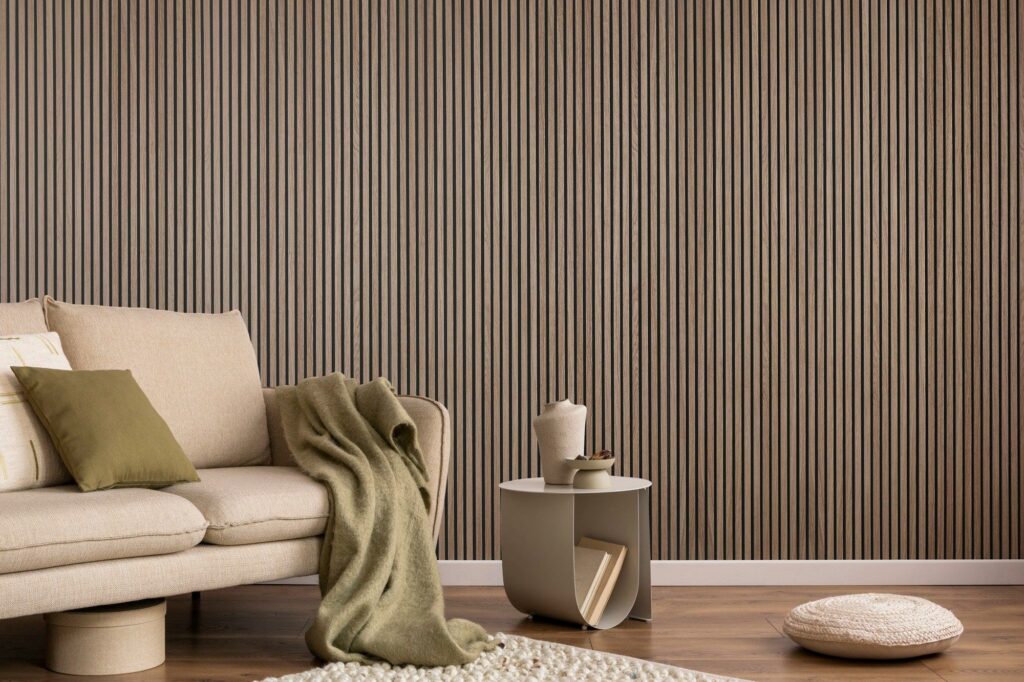
How Much Do Acoustic Panels Cost in the UK?
Acoustic panels in the UK usually cost £10 to £50 per m², depending on the panel material, panel thickness, panel finish, fire rating, and installation method. Basic foam panels sit at the lower end of the price range. Decorative timber and fabric-wrapped acoustic panels sit at the higher end.
The main acoustic panel cost factors in the UK are listed below:
- Basic Foam Panels: Basic acoustic foam panels usually cost £10 to £20 per m².
- PET Fibre Panels: PET fibre acoustic panels usually cost £20 to £35 per m².
- Fabric-Wrapped Panels: Fabric-wrapped acoustic panels usually cost £25 to £50 per m².
- Timber Acoustic Panels: Timber acoustic panels usually cost £30 to £50 per m² or more.
- Panel Thickness: Thicker acoustic panels usually cost more because thicker acoustic panels absorb more sound.
- Panel Finish: Printed finishes, timber veneers, and custom fabrics increase acoustic panel cost.
- Fire Rating: Fire-rated acoustic panels usually cost more than standard acoustic panels.
- Installation Cost: DIY acoustic panel installation keeps costs lower, while professional fitting increases total project cost.
- Room Size: Larger rooms need more acoustic panel coverage, so total acoustic panel cost rises with wall and ceiling area.
- Coverage Level: Acoustic panel treatment usually works best when acoustic panels cover around 15% to 25% of the room surface area.
How Much Does Soundproofing Cost in the UK?
Soundproofing in the UK usually costs £50 to £300+ per m², depending on the wall, floor, ceiling, materials, and labour. Simple soundproofing costs less. Stronger soundproofing costs more because stronger soundproofing uses more layers and more work.
The main soundproofing costs in the UK are listed below:
- Per Square Metre: Soundproofing usually costs £50 to £300+ per m².
- Wall Soundproofing: Wall soundproofing usually costs £114 to £156 per m².
- Floor Soundproofing: Floor soundproofing for a 16 m² room usually costs £1,000 to £1,400.
- Ceiling Soundproofing: Ceiling soundproofing for a 16 m² room usually costs £1,800 to £2,200.
- Full Room Soundproofing: Full room soundproofing usually costs £3,000 to £6,000 for smaller rooms and more for larger rooms.
- DIY Soundproofing: DIY soundproofing costs less because DIY soundproofing removes labour costs.
- Professional Installation: Professional soundproofing costs more because professional soundproofing includes fitting, sealing, boarding, and finishing.
- Low-Cost Systems: Basic soundproofing systems cost less because basic soundproofing systems use fewer materials.
- High-Cost Systems: High-performance soundproofing systems cost more because high-performance soundproofing systems use insulation, resilient bars, acoustic boards, and extra layers.
- Main Cost Factors: Room size, noise type, surface type, material quality, and labour all change the final soundproofing cost.
How Much Does Soundproofing Cost in the UK?
Soundproofing in the UK usually costs £50 to £300+ per m², depending on the wall, floor, ceiling, materials, and labour. Simple soundproofing costs less. Stronger soundproofing costs more because stronger soundproofing uses more layers and more work.
The main soundproofing costs in the UK are listed below:
- Per Square Metre: Soundproofing usually costs £50 to £300+ per m².
- Wall Soundproofing: Wall soundproofing usually costs £114 to £156 per m².
- Floor Soundproofing: Floor soundproofing for a 16 m² room usually costs £1,000 to £1,400.
- Ceiling Soundproofing: Ceiling soundproofing for a 16 m² room usually costs £1,800 to £2,200.
- Full Room Soundproofing: Full room soundproofing usually costs £3,000 to £6,000 for smaller rooms and more for larger rooms.
- DIY Soundproofing: DIY soundproofing costs less because DIY soundproofing removes labour costs.
- Professional Installation: Professional soundproofing costs more because professional soundproofing includes fitting, sealing, boarding, and finishing.
- Low-Cost Systems: Basic soundproofing systems cost less because basic soundproofing systems use fewer materials.
- High-Cost Systems: High-performance soundproofing systems cost more because high-performance soundproofing systems use insulation, resilient bars, acoustic boards, and extra layers.
- Main Cost Factors: Room size, noise type, surface type, material quality, and labour all change the final soundproofing cost.
Soundproofing costs more when the goal is stronger noise blocking, not simple noise reduction. Party walls, floors, and ceilings usually cost more because party walls, floors, and ceilings need thicker soundproofing systems.
What Are the Best Solutions for Common UK Sound Problems?
The best solution for a common sound problem depends on where the noise comes from and what kind of noise causes the problem. Acoustic panels help with echo inside a room. Soundproofing helps stop noise moving through walls, floors, and ceilings.
The best solutions for common UK sound problems are listed below:
- Echo In Living Rooms: Acoustic wall panels, rugs, curtains, and soft furniture help soften sound and make the room feel quieter.
- Noisy Neighbours Through Walls: Soundproofing on the shared wall helps reduce voices, TV noise, and general household noise from next door.
- Footsteps From Upstairs: Floor soundproofing and ceiling soundproofing help reduce footstep noise and impact noise from above.
- Voices Through Internal Walls: Adding insulation and extra wall layers helps reduce speech noise between rooms.
- TV Noise Through Walls: Soundproofing materials on the wall help reduce sound travelling into the next room.
- Traffic Noise From Outside: Better wall insulation, better sealing, and better windows help reduce road noise coming into the room.
- Noise From Upstairs Ceilings: Ceiling soundproofing helps reduce noise from walking, talking, and moving furniture above.
- Noise Through Floors: Floor soundproofing helps reduce noise travelling between upstairs and downstairs spaces.
- Echo In Home Offices: Acoustic wall panels help make calls sound clearer and stop the room sounding too empty.
- Home Cinema Noise: Acoustic panels improve the sound inside the room, while soundproofing helps stop film noise spreading to other rooms.
- Home Studio Noise: Acoustic panels help control sound inside the room, while soundproofing helps stop music or recording noise leaving the room.
- Restaurant And Dining Room Noise: Acoustic panels help reduce the loud, busy sound that builds up in hard rooms.
- Classroom And Meeting Room Noise: Acoustic panels help people hear speech more clearly by reducing sound bounce.
- Noise In Rented Homes: Rugs, curtains, soft furniture, and removable acoustic panels help reduce echo without major building work.
- Bass And Deep Sound Problems: Bass trap panels help reduce deep sound build-up better than standard wall panels.
The best result comes from choosing the right fix for the right problem. Acoustic panels work best for echo and sound bounce. Soundproofing works best for neighbour noise, traffic noise, and sound passing through walls, floors, and ceilings.
How Do You Install Acoustic Wall Panels, and Can You DIY or Do You Need a Professional?
Installation of acoustic wall panels is usually easy, and many acoustic wall panel jobs are suitable for DIY. Professional installation is helpful for large rooms, heavy panels, timber slat panels, ceiling-mounted panels, or projects where neat alignment matters.
The main acoustic wall panel installation methods are listed below:
- Adhesive Fixing: Acoustic wall panels can stick straight to the wall with panel adhesive or strong grab adhesive on clean, dry, flat surfaces.
- Screw Fixing: Acoustic wall panels can be fixed with screws for a stronger hold, especially on heavier acoustic wall panels.
- Batten Fixing: Acoustic wall panels can attach to timber battens when extra spacing, neat levelling, or a more secure finish is needed.
- Clip Systems: Some acoustic wall panels use hidden clips that make fitting and removal easier.
- Peel-And-Stick Panels: Lightweight acoustic wall panels sometimes come with self-adhesive backing for very simple DIY fitting.
The basic acoustic wall panel installation steps are listed below:
- Measure The Wall: Measure the wall width and wall height before buying acoustic wall panels.
- Plan The Layout: Mark the acoustic wall panel position first so the rows look straight and even.
- Prepare The Surface: Clean the wall and remove dust, grease, and loose paint before fitting acoustic wall panels.
- Cut Panels To Size: Trim acoustic wall panels carefully where sockets, corners, or edges need a tighter fit.
- Fix The Panels: Apply adhesive, screws, clips, or battens based on the acoustic wall panel type.
- Check Alignment: Keep each acoustic wall panel level during fitting so the finished wall looks neat.
- Finish The Edges: Add trims or leave equal gaps around the layout, depending on the acoustic wall panel style.
The main DIY acoustic wall panel benefits are listed below:
- Lower Cost: DIY acoustic wall panel fitting saves labour cost.
- Simple Tools: Many acoustic wall panel jobs only need a tape measure, pencil, spirit level, saw, adhesive gun, and screws.
- Fast Installation: Small acoustic wall panel projects often take a few hours, not several days.
- Good For Small Rooms: DIY acoustic wall panel fitting works well in small living rooms, home offices, and bedrooms.
The main reasons to use a professional acoustic wall panel installer are listed below:
- Heavy Panels: Large timber acoustic wall panels and dense decorative panels need stronger and more accurate fixing.
- Large Feature Walls: Professional fitting helps large acoustic wall panel layouts stay straight and balanced.
- Ceiling Panels: Ceiling acoustic panel fitting is harder and needs safer fixing.
- Commercial Spaces: Offices, restaurants, and public spaces often need cleaner finishing and fire-rated product compliance.
- Complex Cutting: Walls with many sockets, switches, alcoves, or uneven corners need more precise panel cutting.
How Do You Install Soundproofing, and Can You Do Soundproofing Yourself or Hire a Professional?
Soundproofing installation uses 4 main steps: seal gaps, add insulation, add mass, and reduce direct contact between surfaces. DIY soundproofing suits small jobs. Professional soundproofing suits full walls, floors, ceilings, and higher-performance noise control.
The main soundproofing installation steps are listed below:
- Check The Noise Source: Identify whether the noise comes through the wall, floor, ceiling, door, or window.
- Seal The Gaps: Seal gaps around sockets, skirting boards, pipes, edges, and joints because sound passes through small openings.
- Add Acoustic Insulation: Fit acoustic mineral wool inside stud walls, floor joists, and ceiling voids to absorb sound inside cavities.
- Add Mass: Fix acoustic plasterboard, soundproof boards, or other dense layers to block more sound.
- Reduce Vibration Transfer: Use resilient bars, floating floor layers, or isolation systems to reduce sound moving through the structure.
- Finish The Surface: Seal board edges and complete the wall, floor, or ceiling finish properly to keep the system airtight.
The most common soundproofing methods are listed below:
- Wall Soundproofing: Wall soundproofing usually uses acoustic insulation, resilient bars, acoustic plasterboard, and acoustic sealant.
- Floor Soundproofing: Floor soundproofing usually uses acoustic underlay, floating floor systems, insulation between joists, and perimeter strips.
- Ceiling Soundproofing: Ceiling soundproofing usually uses acoustic insulation, resilient bars, double plasterboard, and sealed edges.
The main DIY soundproofing situations are listed below:
- Small Jobs: DIY soundproofing works best for sealing gaps, fitting acoustic underlay, and adding simple wall layers.
- Lower Cost Projects: DIY soundproofing reduces labour cost.
- Basic Upgrades: DIY soundproofing suits simple noise reduction, not full acoustic isolation.
The main reasons to hire a professional are listed below:
- Large Jobs: Professional installation works better for full walls, floors, and ceilings.
- Better Performance: Professional fitting improves soundproofing performance because each layer, joint, and gap affects the result.
- Heavy Materials: Acoustic boards and floor systems are large, dense, and harder to fit accurately.
- Complex Systems: Resilient bars, floating floors, and full ceiling systems need more skill and more precision.
DIY soundproofing is suitable for small and simple upgrades, while professional soundproofing is the better option for full soundproofing systems. Larger soundproofing projects need correct system design, accurate fitting, and complete sealing to work properly.
What Are the Most Common Mistakes People Make When Choosing Between Acoustic Panels and Soundproofing?
The most common mistake is thinking acoustic panels stop noise coming through walls, floors, or ceilings, when acoustic panels only reduce echo inside a room. Acoustic panels and soundproofing do different jobs, so choosing the wrong one often leads to poor results.
The most common mistakes people make when choosing between acoustic panels and soundproofing are listed below:
- Using Acoustic Panels To Stop Neighbour Noise: Acoustic panels do not block noise from next door, outside traffic, or other rooms. Acoustic panels only help with sound inside the room.
- Using Soundproofing To Fix Echo: Soundproofing does not make a room sound less echoey. Soundproofing helps stop noise travelling in or out.
- Not Checking The Real Problem First: The best choice depends on the problem. Echo needs acoustic panels. Noise coming through walls, floors, or ceilings needs soundproofing.
- Expecting One Product To Do Everything: Acoustic panels do not do the same job as soundproofing, so one product usually does not fix every sound problem.
- Ignoring Where The Noise Comes From: Noise can come through walls, ceilings, floors, doors, windows, and even small gaps, so the sound path matters.
- Only Thinking About Walls: Many people treat one wall and forget that sound also travels through the floor, ceiling, door, and window areas.
- Choosing Based On Looks Only: Some panels look stylish, but appearance does not always mean strong sound control.
- Using Too Few Panels: A small number of acoustic panels often does not make much difference in a very echoey room.
- Poor Installation: Bad fitting, uneven spacing, or gaps can reduce the final result.
- Choosing The Cheapest Option First: Cheap products can help small sound problems, but bigger sound problems often need a better system.
- Trying Complex Soundproofing As A DIY Job: Simple jobs can suit DIY, but full soundproofing usually works better when installed properly.
- Expecting Total Silence: Acoustic panels and soundproofing can improve a room a lot, but no system removes every sound completely.
The easiest way to choose the right option is to ask one simple question first: is the problem sound bouncing around the room, or sound coming through the room? Acoustic panels help with sound inside the room. Soundproofing helps with sound coming through the structure.

What UK Building Regulations and Standards Should You Know About for Soundproofing?
The main UK soundproofing rules to know are Part E in England and Wales, and Section 5 Noise in Scotland, because those rules set the sound insulation standards for walls, floors, and ceilings in homes, flats, and conversions. Soundproofing rules matter most for new homes, flats, and buildings changed into homes.
The main UK soundproofing regulations and standards are listed below:
- Part E In England: Part E covers resistance to the passage of sound in homes, flats, rooms for residential use, and some school buildings.
- Part E In Wales: Part E covers the same main soundproofing area in Wales and applies to residential building work and conversions.
- Section 5 In Scotland: Scotland uses Section 5 Noise in the Building Standards Technical Handbook instead of Part E.
- New Builds: New houses and flats usually need separating walls and separating floors that meet minimum sound insulation standards.
- Conversions: Buildings changed into flats or homes usually need soundproofing upgrades because converted buildings still need to meet sound rules.
- Party Walls: Shared walls between homes need stronger sound insulation because party walls carry neighbour noise most easily.
- Separating Floors And Ceilings: Floors and ceilings between homes need soundproofing because sound also travels up and down through the structure.
- Airborne Sound: Airborne sound rules cover noise such as voices, television sound, and music passing through walls and floors.
- Impact Sound: Impact sound rules cover noise such as footsteps, dropped items, and furniture movement, mainly through floors.
- Pre-Completion Testing: Many projects need sound testing before completion to show the wall and floor build-up meets the required standard.
- Robust Details: Some new build projects use approved construction details instead of site sound testing, where that route is accepted.
- Building Control Approval: Building Control or the local verifier checks whether the work follows the correct regulation route.
- Workmanship Matters: Good soundproofing needs the correct system and correct fitting because gaps, poor sealing, and bad junctions reduce performance.
- Fire And Other Rules Still Apply: Soundproofing work also needs to fit other building rules such as fire safety, structure, and ventilation.
